Vending and Food Service Solutions in Anaheim
October 10, 2026 · 16 min read
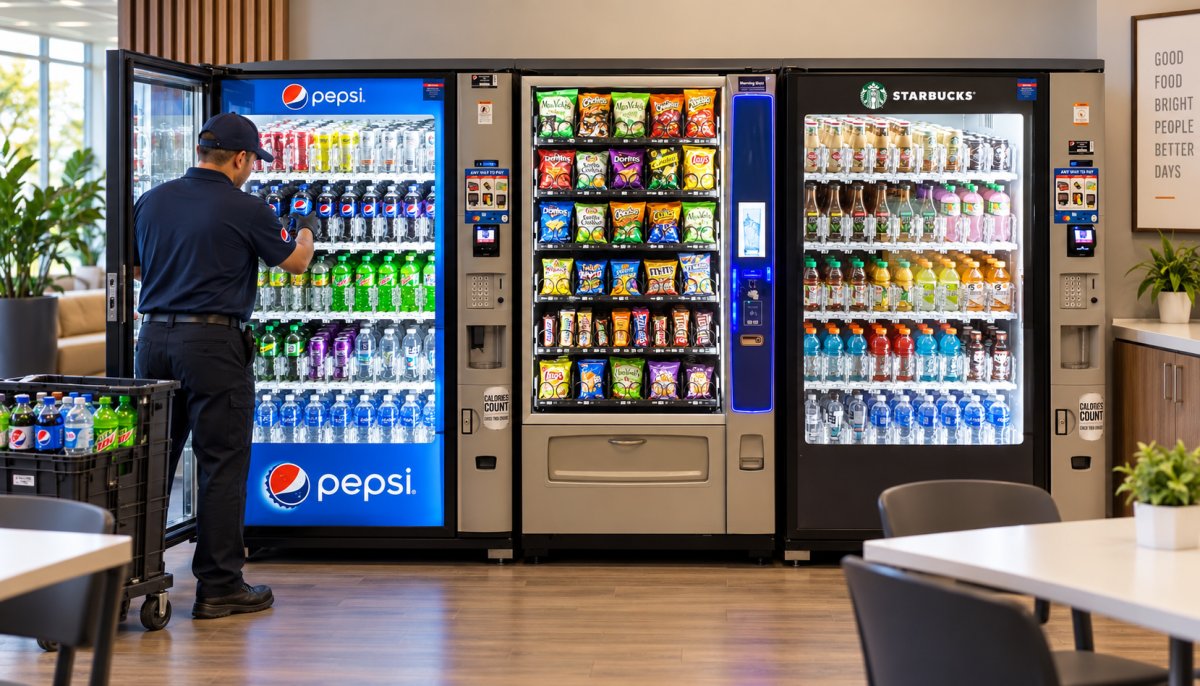
What if food service at your Anaheim facility could fit the day’s routine without adding restocking and maintenance to your team’s workload? Managed vending makes vending and food service a practical part of a location, with snack, drink, or combo machines supported through installation, regular restocking, and maintenance.
Choosing a setup takes more than picking a machine. An office break room, hotel lobby, school, industrial facility, and medical site serve different people and schedules. Product selection, placement, and access should reflect who uses the space and when they need a quick bite or drink.
This guide explains how managed vending can complement a facility’s food service and what to consider when planning a setup in Anaheim. You’ll learn how machine types differ, how to match products to users and daily routines, and which ongoing service tasks can be handled for you. Start with the needs of your location, then choose an arrangement that fits the space and keeps vending support off your team’s to-do list.
Key Takeaways
- Managed vending can complement existing food service with convenient access to packaged snacks and drinks.
- Choose snack, drink, or combo machines based on the people using the space, available area, and daily routines.
- Plan vending and food service by identifying users, assessing the space, selecting a machine format, and accounting for ongoing service.
- Consider peak periods and the products people expect when shaping a setup for your facility.
- Vending SoCal supports commercial locations across Southern California with installation, regular restocking, and maintenance.
What Vending and Food Service Means for a Commercial Location
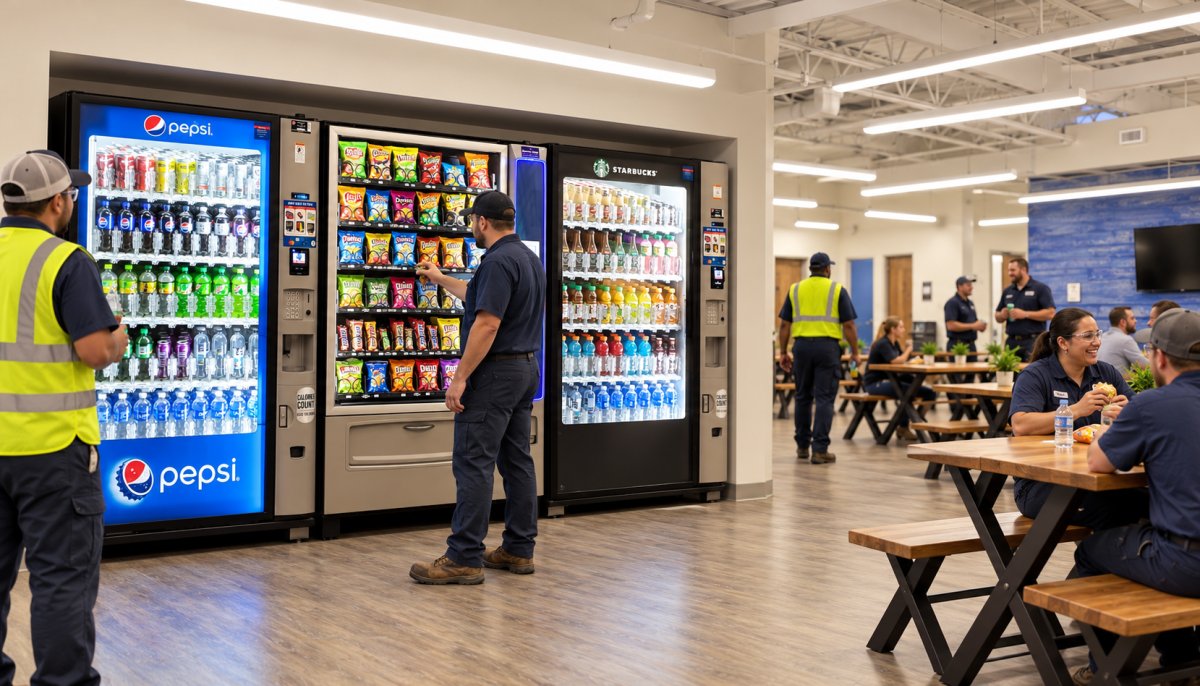
Food service at a commercial site doesn’t have to mean a staffed café or a full dining program. Managed vending is another way to provide convenient access to packaged snacks and drinks through machines placed at a workplace, hotel, school, residential community, or other facility.
Managed vending provides self-service access to packaged snacks and drinks, with installation, restocking, and maintenance handled as part of the service. It can support a broader vending and food service plan, but it does not automatically replace other meal options. A machine may cover a snack break or a quick drink without being expected to provide every meal.
How vending fits into a broader food service plan
Staffed dining and vending serve different purposes. A cafeteria or food counter may provide prepared meals and direct assistance during its operating hours. A vending machine provides self-service access to packaged items. If dining options close before a site’s activities end, or there is no suitable food outlet on-site, vending can address a specific convenience need. Consider both placement and access: a machine is useful only when people can reach it during the hours they need it.
Vending can also complement a facility’s existing meal arrangements. It gives employees or visitors another option between meals while scheduled dining, catering, or nearby restaurants meet other needs. For background on how the format has developed, see History and types of vending machines.
Which locations can benefit from managed vending?
The right role for vending depends on who uses the facility and what food options are already available. Guest-facing locations and employee-focused workplaces have different routines:
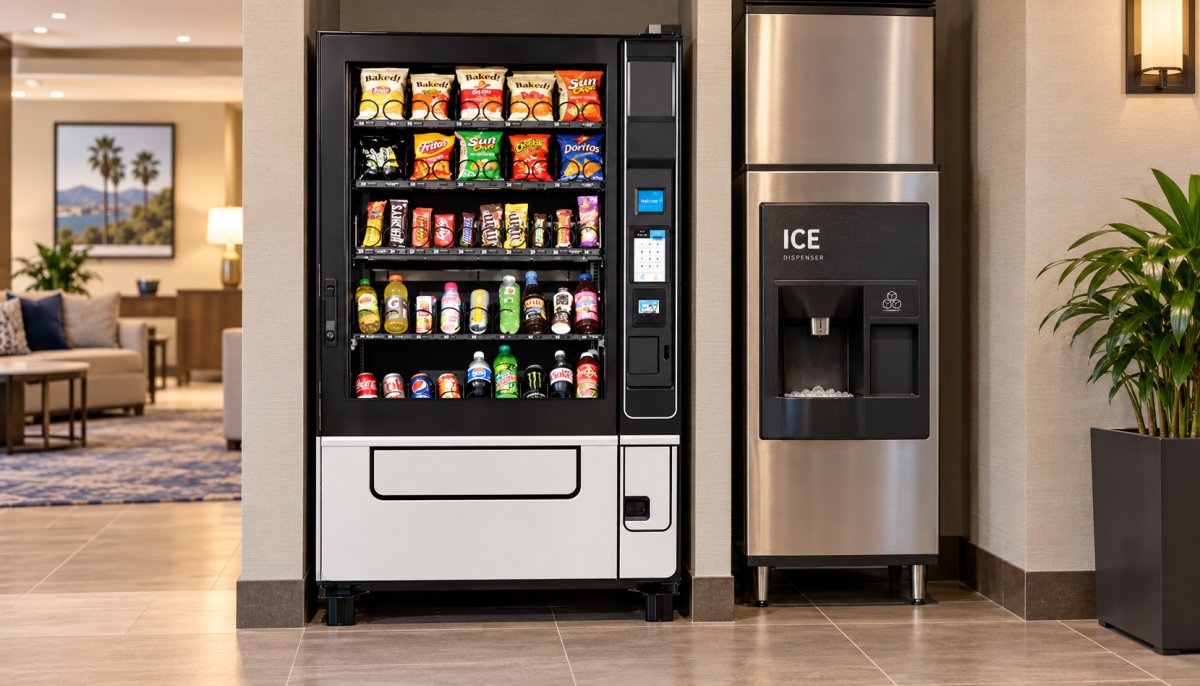
- Hotels: Guests may want a convenient snack or drink between outings or outside staffed dining hours. A well-placed machine can complement hotel dining; hotel vending service is designed for guest-facing settings.
- Offices and industrial sites: Employees may have staggered breaks, shift schedules, or limited time to leave the premises. Vending provides an on-site option without taking the place of a full meal program.
- Residential communities: Residents may value access to snacks and drinks in shared areas. Choose a location that suits the building’s common spaces and the people who use them.
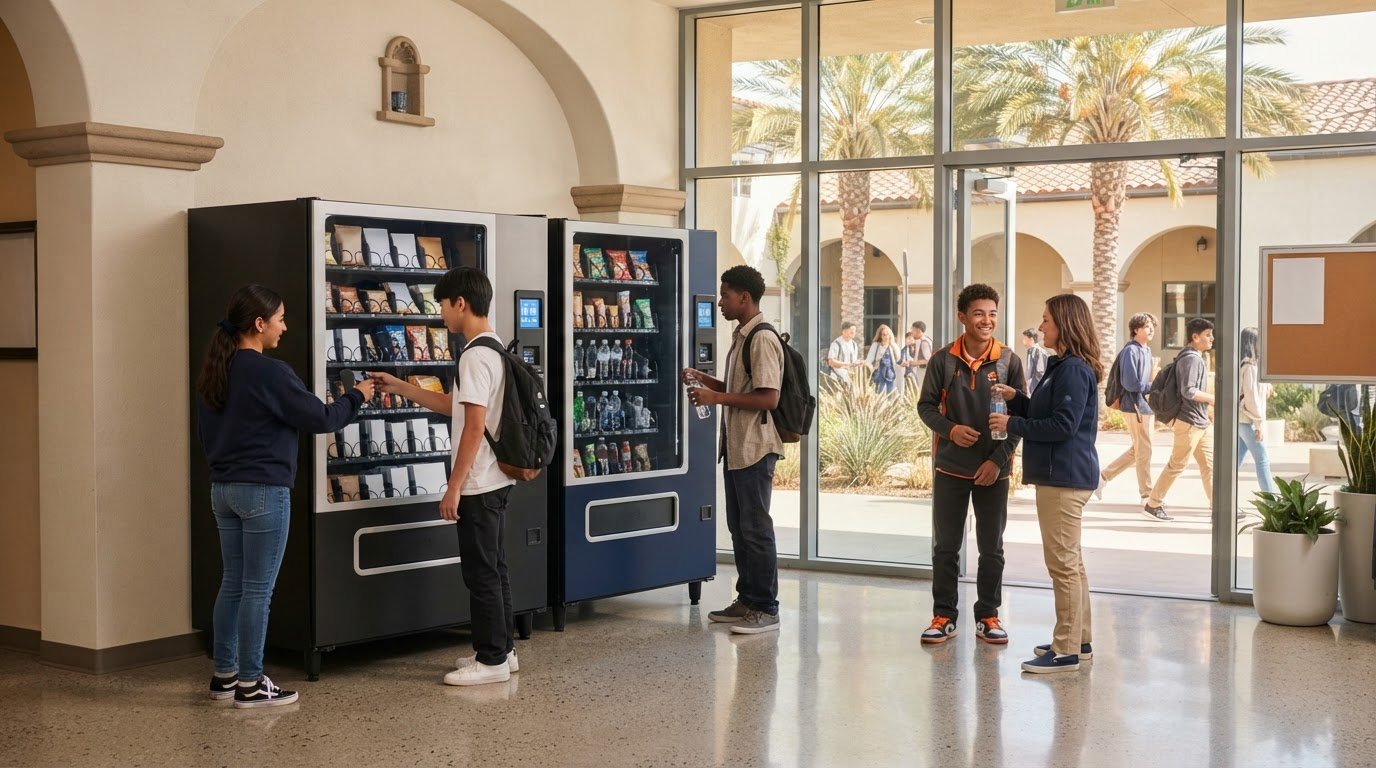
- Schools: Students and staff have distinct schedules and product needs. Placement and selection should fit the facility’s routines.
- Medical facilities: Patients, visitors, and staff may spend different amounts of time on-site. Vending can serve visitors and staff alongside other food options.
Thinking about each group separately helps define a useful role for vending, rather than expecting one setup to meet everyone’s needs.
How Managed Vending and Food Service Works Day to Day
A managed setup is designed to keep vending from becoming another recurring job for facility staff. Planning starts with the location: who uses it, where a machine could fit, and what types of snacks or drinks make sense. Machine placement and installation are planned around the site, followed by regular restocking and maintenance.
The service includes machine installation, product replenishment, and maintenance, so facility staff do not have to manage each routine vending task. This clear division of responsibilities makes vending and food service easier to coordinate with a site’s daily operations.
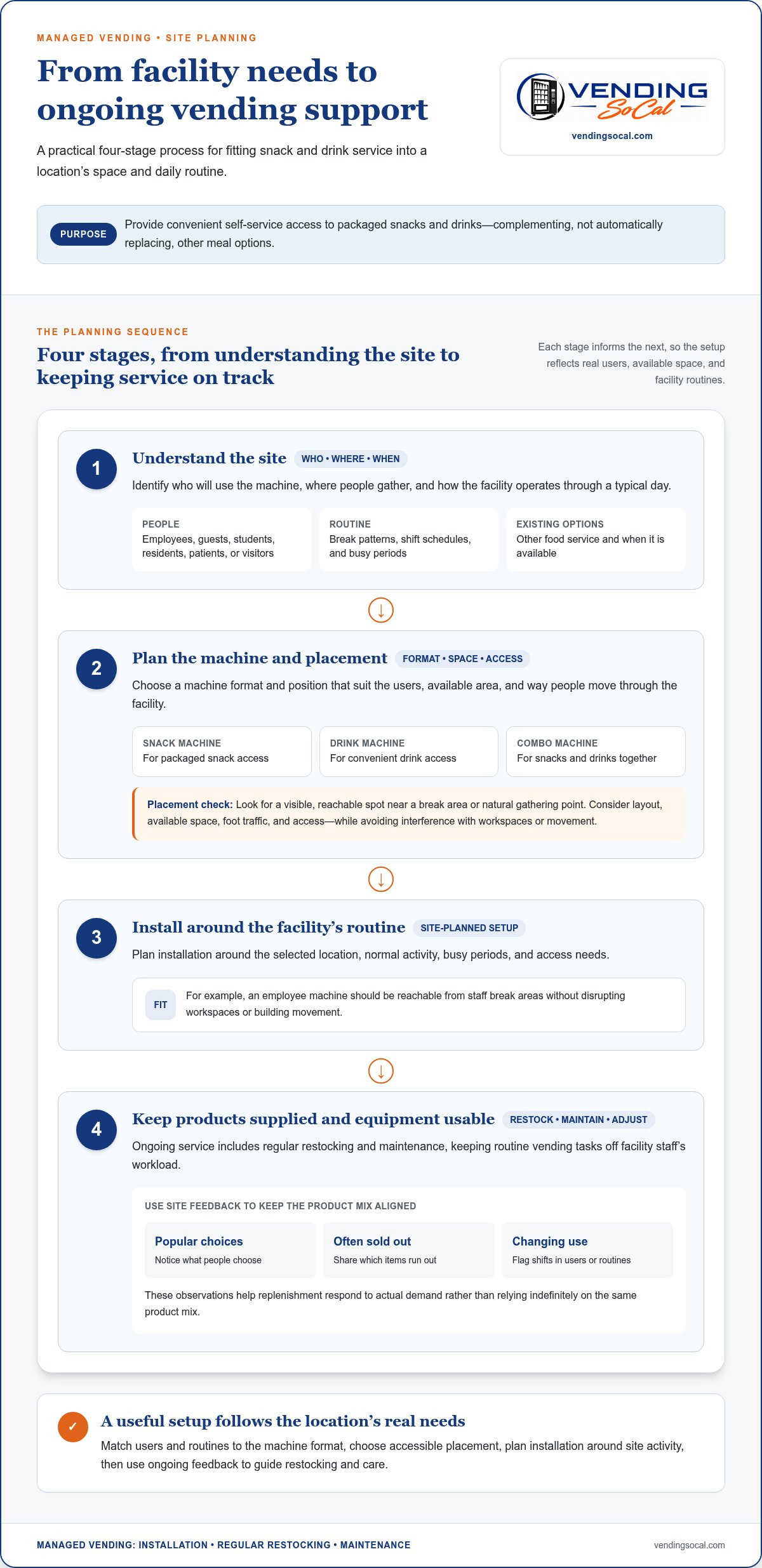
- Understand the site. Identify who will use the machine, where people gather, and how the facility operates during a typical day.
- Plan the setup. Choose a snack, drink, or combo machine and a placement that works for the space and its users.
- Install the machine. Plan installation around the chosen location and the facility’s normal routines.
- Provide ongoing care. Regular restocking and maintenance help keep the machine supplied and in usable condition.
Installation and machine placement at the site
Placement affects whether a vending machine feels convenient or gets overlooked. A visible spot near a break area or another natural gathering point may work well; a narrow corridor or an area with limited access may not. Consider the layout, available space, foot traffic, and who can reach the machine. Browsing vending machine formats can help clarify which setup suits the location.
Timing matters, too. Plan installation around the facility’s usual activity, including busy periods and access needs. For example, an employee machine should be reachable from staff break areas without interfering with workspaces or movement through the building.
Restocking and maintenance as ongoing service
Product needs can change as routines shift. A workplace with changing shifts may see different usage patterns from a site where most people arrive and leave at set times. Facility managers can share observations about popular choices, items that are often sold out, or changes in who uses the space. That feedback helps keep replenishment aligned with actual demand instead of relying on the same product mix indefinitely.
Maintenance is another part of ongoing care. Keeping equipment in usable condition supports a smoother experience for people who rely on it and means facility staff do not have to take on machine upkeep themselves. For perspective on the wider convenience services industry, NAMA’s industry resources cover topics such as standards, advocacy, and trends. With installation, restocking, and maintenance handled as part of the service, staff can focus on their primary responsibilities while the vending setup receives regular attention.
Compare Vending Formats and Food Service Needs Before Deciding
The right format depends on what people need and how vending fits into the site’s wider food service plan. Snack, drink, and combo machines provide self-service access to packaged items. They do not serve the same role as staffed dining or a meal program, which can offer prepared food and service during set hours. Vending can fill a focused convenience need alongside those options.
Compare formats against the people using the facility, their schedules, available space, and the variety they expect. No single option suits every location.
| Format | May fit when | Consider |
|---|---|---|
| Snack machine | Packaged food choices are the main priority. | Which snack types users want and where they’re likely to take a break. |
| Drink machine | Convenient beverage access is the primary need. | Where people pass through or pause, and when they can reach the machine. |
| Combo machine | A location wants snacks and drinks in one machine format. | Whether the available space and expected variety suit a combined selection. |
When a snack, drink, or combo machine may fit
A snack machine may suit a break area where people primarily want packaged food. A drink machine may be a practical fit when beverages are the main request, such as in a shared space used throughout the day. If users want both categories nearby, a combo machine brings snacks and drinks together in one format. Compare the options with the site’s space and intended use before settling on a setup.
Match the offer to the people using the facility
Start with the location’s daily rhythm. Employees may use a machine during scheduled breaks, while hotel guests, residents, students, and visitors may come and go at different times. A machine near a common route may serve more people than one tucked away, but access hours still matter. If a space is available only during certain periods, choose products with those users and routines in mind.
Then consider variety. A workplace serving a consistent group may have different preferences from a facility used by changing visitors. Think about what people are likely to want, when they’ll use the machine, and whether another food option already covers meals. These observations help shape a useful product mix without assuming a particular brand, menu, or nutritional standard.
Use the comparison as a starting point, not a fixed rule. A strong vending and food service plan addresses a real convenience need while fitting the facility’s layout, access, and existing food arrangements.
Plan a Vending and Food Service Setup in Four Practical Steps
A useful vending plan starts with the location, not the machine. In Anaheim, consider who will use the facility, when they’ll need access, and how a machine can fit into the site’s normal activity. These four steps turn those details into a practical vending and food service setup.
Assess users, traffic, and available space
Different settings have different rhythms. Hotel guests may pass through common areas at varied times, while workplace employees may take breaks around shifts. Apartment residents use shared spaces according to their schedules. At an industrial facility, staff access and the flow of work areas can shape where a machine makes sense. Look for a visible, reachable location that fits the space without disrupting everyday movement.
- Identify the users. List the groups a machine would serve, such as employees, guests, residents, students, or visitors. Note when they’re typically on-site and when demand may peak. A facility with shift changes, for example, may have different busy periods from a location where most visitors arrive during the day.
- Assess the space. Consider foot traffic, visibility, and practical access. Identify possible locations where users can approach the machine without blocking entrances, work areas, or common routes. Think about how people move through the space during busy periods, not only when the facility is quiet.
- Choose a format and product mix. Decide whether snacks, drinks, or both best match what users expect. A drink-focused setup may suit a space where beverages are the main request, while a combo format can bring snacks and drinks together. Let the intended use and available space guide the choice.
- Plan ongoing service. Include installation, regular restocking, and maintenance in the plan. Share which products users look for and note changes in schedules or access. That context helps keep the arrangement relevant as the facility’s routines evolve, without making replenishment and upkeep an extra internal assignment.
Set expectations for products and ongoing support
Before settling on a plan, describe the site’s peak periods, access needs, and the types of products users expect. These details connect machine placement and format to actual routines rather than assumptions. Also consider what the facility’s existing dining or meal options already cover, so vending fills a convenient role instead of being expected to meet every food need.
Vending SoCal provides managed vending support for commercial locations across Southern California, including Anaheim. When planning, outline the intended users, available space, and support needs. That gives the conversation a practical focus.
Vending and Food Service Support for Southern California Locations
Vending SoCal provides managed vending for commercial locations across Southern California, including Anaheim, Irvine, Santa Ana, and other Orange County communities. The service brings installation, regular restocking, and maintenance together, giving facilities a way to make packaged snacks and drinks available without assigning every vending task to their own staff.
Local planning starts with the needs of the site. A guest-facing location may need a different approach from a workplace, school, or industrial facility. The goal is to shape a practical setup around the people who use the building, their routines, and the space available.
Examples of sites served across the local area
In a hotel, guests may look for a convenient snack or drink while moving between their room, shared spaces, and activities. Hotel vending can support that guest-facing need as part of the property’s wider food options. In an office, employees may use vending during breaks or between tasks, so placement and product selection should reflect workplace routines.
Other settings have their own considerations. Apartment communities can plan around shared spaces and resident access; industrial facilities may consider staff movement and work schedules. Schools and medical locations serve students, patients, visitors, and staff, whose needs and time on-site can differ. A site-specific plan keeps the setup relevant instead of treating every facility alike.
What to share when starting a service conversation
A useful first conversation can focus on the facility rather than a long list of machine details. Sharing a few practical observations helps define a setup that suits the site:
- Location and setting: Describe the facility and the area where vending might be useful.
- User groups: Note whether the machine would serve employees, guests, residents, students, patients, or visitors.
- Traffic and routines: Explain when people are on-site, where they tend to gather, and when busy periods occur.
- Product needs: Indicate whether snacks, drinks, or a combination would best suit the users.
- Access considerations: Describe how people move through the space and when they can reach the proposed location.
These details provide a useful starting point and connect day-to-day patterns with a vending and food service arrangement that makes sense for the facility. You do not need to have every decision settled before describing what the location needs.
Make the Next Step Simple
A practical setup begins with a clear priority. Decide what you want vending and food service to make easier at your Anaheim location, whether that is access to a quick refreshment or a convenient option in a shared space. A specific goal makes it easier to plan around your facility’s needs.
You do not need every detail decided before moving forward. Start with the area you have in mind and the need it should address. Then discuss a setup that fits your site and the way the location already operates.
A well-planned setup should feel like a natural fit for the people who use your facility, not another task for your team to manage. Contact Vending SoCal to discuss vending for your location.
Start with your facility’s everyday needs and the space where vending could help. Vending SoCal can help plan a convenient arrangement for your site.
Frequently Asked Questions
Is vending considered food service?
Yes. Vending is one way to provide food and drinks at a commercial facility, but it works differently from staffed dining. Users select packaged products from a machine rather than ordering from a person. For example, an employee arriving before a café opens might use vending for a snack, while the café remains the option for a prepared meal. Vending serves that specific need without replacing the site’s broader meal arrangements.
Can vending machines support a hotel’s food service?
Yes. A hotel can use vending to give guests another option for snacks and drinks in a shared area, alongside its existing dining choices. Placement should suit the property’s layout and the way guests move through it, without obstructing common routes. Vending SoCal provides commercial vending service in Anaheim, Brea, Buena Park, Costa Mesa, Cypress, Fountain Valley, Fullerton, Garden Grove, Huntington Beach, Irvine, La Habra, La Palma, Newport Beach, Orange, Santa Ana, Tustin, Westminster, and Stanton.
What types of vending machines are available for businesses?
Commercial options include snack machines, drink machines, and combo machines that provide both categories. A snack-focused setup may suit a break area where packaged food is the priority; a drink machine may fit a space where users mainly want beverages. A combo format can serve a location seeking both. Consider the people using the machine and their route through the facility before deciding how to use the available space.
How often are vending machines restocked?
There isn’t one restocking schedule that suits every location. Frequency depends on how often people use the machine and which products they choose. A machine near a busy employee break area may be used differently from one serving a smaller group in a shared building. In a managed arrangement, regular restocking is part of the service, and usage patterns can help guide replenishment as the site’s needs change.
How much does commercial vending service cost?
There’s no single price that applies to every commercial vending setup. The arrangement depends on factors such as the facility’s location, machine format, products users need, and service requirements. An office and an industrial facility may have different layouts and routines, which can shape their plans. Sharing those details gives Vending SoCal a practical starting point for discussing an option suited to your site.
Can vending serve a location with different shifts or operating hours?
Yes. Vending can suit facilities where people use the space at different times, provided the machine is accessible while they’re on-site. A shift-based workplace, for instance, can consider where employees pass during breaks and which products are useful across those routines. For a location with varied visitor patterns, placement and selection may need a different approach. Start by noting access hours and peak periods.
Does vending replace a cafeteria or other food service?
Not necessarily. Vending can provide a separate option for packaged snacks and drinks while a cafeteria or dining room continues to serve meals. It may also address a smaller refreshment need in an area away from the main dining space. Before choosing a setup, identify what the current food options already cover and what users still need. That makes it easier to give vending a clear, complementary role.
Frequently Asked Questions
The right role for vending depends on who uses the facility and what food options are already available. Guest-facing locations and employee-focused workplaces have different routines: Thinking about each group separately helps define a useful role for vending, rather than expecting one setup to meet everyone’s needs. A managed setup is designed to keep vending from becoming another recurring job for facility staff. Planning starts with the location: who uses it, where a machine could fit, and what types of snacks or drinks make sense. Machine placement and installation are planned around the site, followed by regular restocking and maintenance. The service includes machine installation, product replenishment, and maintenance, so facility staff do not have to manage each routine vending task. This clear division of responsibilities makes vending and food service easier to coordinate with a site’s daily operations.
Yes. Vending is one way to provide food and drinks at a commercial facility, but it works differently from staffed dining. Users select packaged products from a machine rather than ordering from a person. For example, an employee arriving before a café opens might use vending for a snack, while the café remains the option for a prepared meal. Vending serves that specific need without replacing the site’s broader meal arrangements.
Yes. A hotel can use vending to give guests another option for snacks and drinks in a shared area, alongside its existing dining choices. Placement should suit the property’s layout and the way guests move through it, without obstructing common routes. Vending SoCal provides commercial vending service in Anaheim, Brea, Buena Park, Costa Mesa, Cypress, Fountain Valley, Fullerton, Garden Grove, Huntington Beach, Irvine, La Habra, La Palma, Newport Beach, Orange, Santa Ana, Tustin, Westminster, and Stanton.
Commercial options include snack machines, drink machines, and combo machines that provide both categories. A snack-focused setup may suit a break area where packaged food is the priority; a drink machine may fit a space where users mainly want beverages. A combo format can serve a location seeking both. Consider the people using the machine and their route through the facility before deciding how to use the available space.
There isn’t one restocking schedule that suits every location. Frequency depends on how often people use the machine and which products they choose. A machine near a busy employee break area may be used differently from one serving a smaller group in a shared building. In a managed arrangement, regular restocking is part of the service, and usage patterns can help guide replenishment as the site’s needs change.
There’s no single price that applies to every commercial vending setup. The arrangement depends on factors such as the facility’s location, machine format, products users need, and service requirements. An office and an industrial facility may have different layouts and routines, which can shape their plans. Sharing those details gives Vending SoCal a practical starting point for discussing an option suited to your site.
Yes. Vending can suit facilities where people use the space at different times, provided the machine is accessible while they’re on-site. A shift-based workplace, for instance, can consider where employees pass during breaks and which products are useful across those routines. For a location with varied visitor patterns, placement and selection may need a different approach. Start by noting access hours and peak periods.
Not necessarily. Vending can provide a separate option for packaged snacks and drinks while a cafeteria or dining room continues to serve meals. It may also address a smaller refreshment need in an area away from the main dining space. Before choosing a setup, identify what the current food options already cover and what users still need. That makes it easier to give vending a clear, complementary role.