Best Vending Machine Company Near Me in Orange County
October 25, 2026 · 14 min read
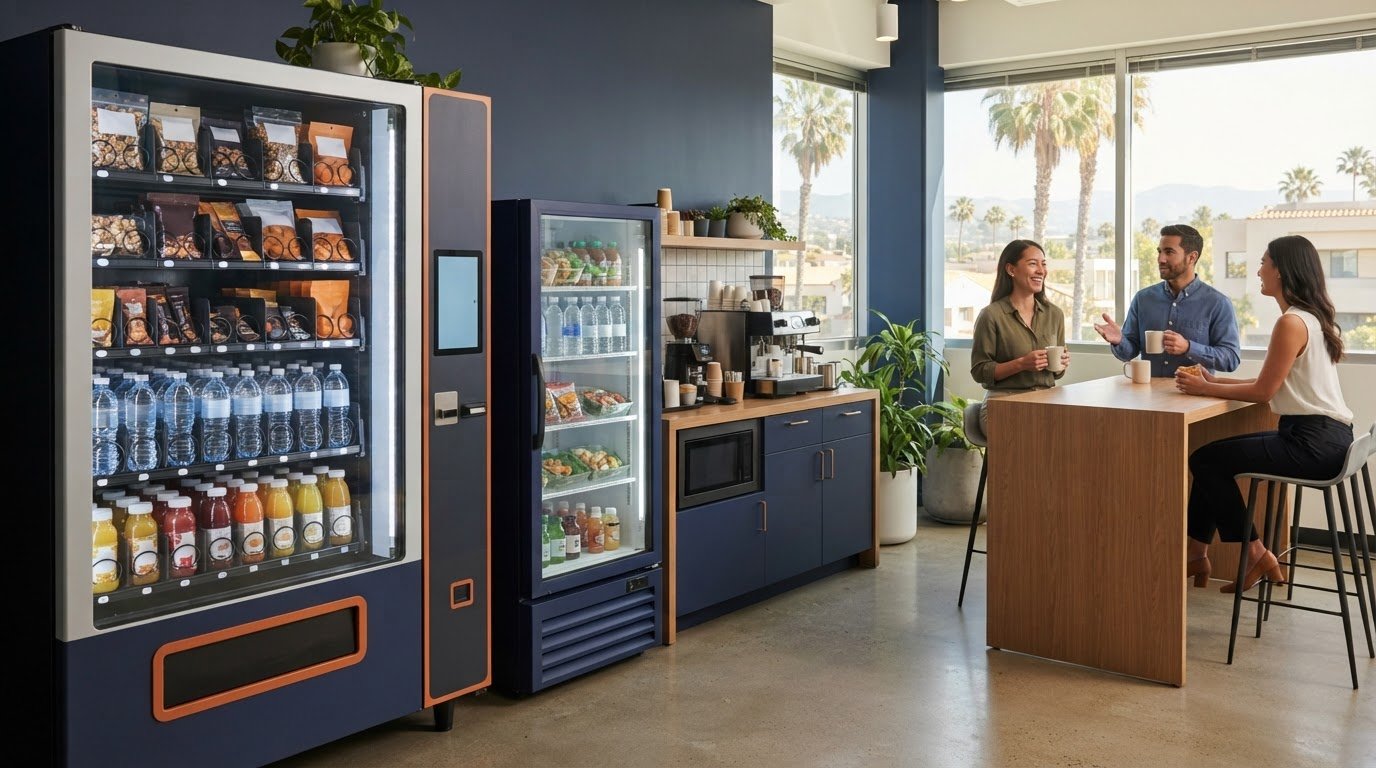
Yes, workplace vending can include healthier snacks and drinks when the selection reflects the people who use it. A vending machine company near me can help plan a convenient assortment for an Orange County workplace.
A useful service involves more than installing a machine and leaving it there. Product stocking and maintenance matter too: the setup should suit the location and remain useful over time.
This guide covers healthier choices, vending machines, smart coolers, and office coffee as workplace amenities. It also explains how local service, stocking, and upkeep can work, and when Vending SoCal’s vending services may suit your Orange County facility.
Key Takeaways
- Plan snack and drink selections around what people at your location will actually use, including healthier choices.
- Compare vending machines, smart coolers, and office coffee by considering the space, convenience, and upkeep each requires.
- Understand how location needs and product demand shape stocking schedules and routine maintenance.
- Assess local service by looking beyond reviews to the practical support your facility needs, including restocking and repairs.
- Explore vending service options for hotels, apartments, industrial sites, and schools in Orange County.
Do you offer healthy snack and drink options?
Vending selections can include healthier snacks and drinks alongside familiar favorites. Options might include nuts, dried fruit, whole-grain crackers, water, and unsweetened beverages. The right mix depends on who uses the machine, what they prefer, and how much space is available.
Start with a simple selection plan. Ask employees or visitors which snacks and drinks they prefer, then balance their responses with practical options. For example, pair a popular salty snack with nuts and offer water alongside sweetened drinks. Review what sells and what remains untouched when the machine is restocked. This feedback helps keep the assortment useful instead of filling slots with products people overlook.
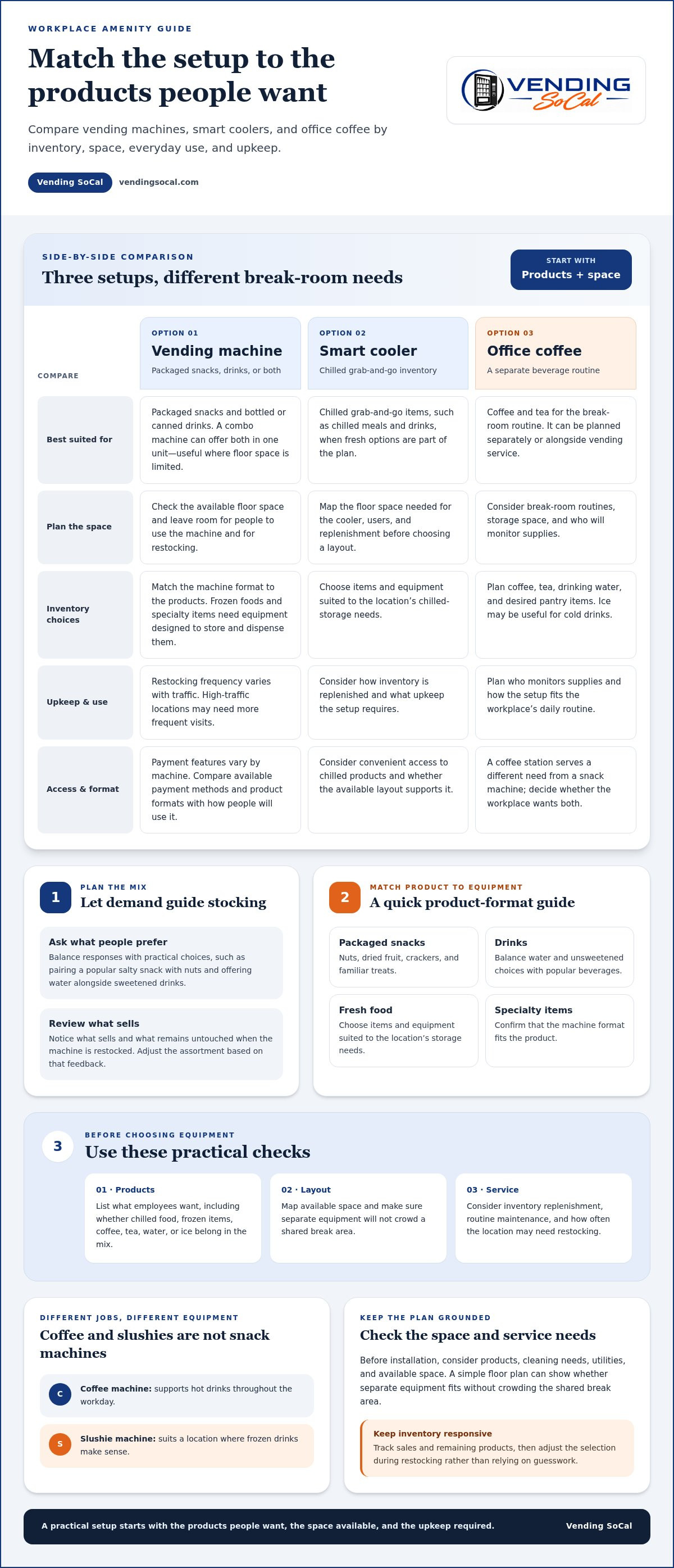
Machine type shapes the menu. Snack machines suit packaged foods, while drink machines focus on bottled or canned beverages. Combo machines offer snacks and drinks in one unit, which can work well where floor space is limited. Frozen foods and specialty products require equipment designed to store and dispense them. Match the machine to the products before planning the menu.
- Packaged snacks: Consider nuts, dried fruit, crackers, and familiar treats.
- Drinks: Balance water and unsweetened choices with popular beverages.
- Fresh food: Choose items and equipment suited to the location’s storage needs.
- Specialty products: Confirm that the machine format fits the item.
The National Institute of Standards and Technology describes a vending machine as a self-service device that accepts coins, paper currency, tokens, cards, or keys. For a workplace, payment access is one consideration; the menu and restocking plan matter just as much.
When comparing local vending companies, consider product flexibility, restocking, maintenance, and how the selection can reflect site preferences. Compare the service as well as the machine, since both shape the day-to-day experience.
Vending machine permits depend on the site, equipment, and products. For an Orange County location, the relevant local permitting authority can explain requirements for the specific setup.
There is no standard commission rate for every location. Rates depend on the agreement, sales, product mix, and service responsibilities, so consider the full terms rather than one percentage alone.
Office coffee can complement snacks and drinks, but it serves a different break-room need. Decide whether employees want packaged snacks, fresh-food options, frozen items, or coffee before choosing equipment. A focused menu makes it easier to plan capacity, assess preferences, and adjust products during restocking.
Vending machines, smart coolers, and office coffee
Choose equipment based on the break-room needs, available space, and products employees want. A combo vending machine offers packaged snacks and drinks in one footprint. A smart cooler can suit chilled grab-and-go items, while a coffee station serves a different routine. Compare how people access products, how inventory is replenished, and what upkeep the setup requires.
Smart coolers and traditional vending machines handle purchases differently. Before choosing, map the available floor space and list the products that need refrigeration or standard storage. A cooler may suit chilled meals and drinks; a vending machine may better organize packaged snacks and beverages. Make sure the layout leaves room for users and restocking.
Office coffee can be planned separately or alongside vending service. First, list the essentials: coffee, tea, drinking water, and any pantry items the workplace wants available. Ice may also be useful for cold drinks. The right setup depends on break-room routines, storage space, and who monitors supplies. A tea-drinking team, for example, may value tea as much as coffee, while a warm-weather workplace may prioritize cold drinks and ice.
Slushie and coffee machines meet different needs. A slushie machine suits a location where frozen drinks make sense; a coffee machine supports hot drinks throughout the workday. Neither replaces a snack machine. Consider the products, cleaning needs, utilities, and available space before installation. A simple floor plan can show whether separate equipment will fit without crowding a shared break area.
- Vending machine: Match the machine format to packaged snacks, drinks, or both.
- Smart cooler: Consider chilled inventory and convenient access to fresh options.
- Coffee and tea: Plan beverage supplies around the break-room routine.
- Water and ice: Include them when cold drinks are part of the workplace’s needs.
The National Institute of Standards and Technology describes vending machines as accepting coins, paper currency, tokens, cards, or keys. Payment features vary by machine, so compare available methods and product formats with how people will use the setup.
Inventory and service frequency should reflect actual use. Restocking frequency varies with traffic, and high-traffic locations may need more frequent visits. Track which products sell and which remain, then adjust the selection during restocking. This keeps healthier choices, familiar favorites, and drinks aligned with demand rather than guesswork.
To plan a setup, note the available space, preferred products, and whether coffee or chilled food belongs in the mix. These details help shape a practical equipment and inventory plan.
Company history and local presence
A company’s history can show how its service has developed, but longevity alone doesn’t prove a good fit. Look for a clear timeline, examples of facilities served, and consistent information about stocking, repairs, and maintenance. For an Orange County workplace, a provider’s experience with settings such as offices, hotels, or industrial facilities can help you judge whether its approach matches your location.
Local presence matters in practical ways. Orange County communities include Irvine, Anaheim, and Santa Ana, and route planning can affect restocking and equipment support. Consider your facility’s location, how staff and visitors use the break area, and what access a service visit requires. A distribution hub with shift changes has different traffic patterns from a small office.
Review published company information for specific, verifiable details. A history page might explain when the business began serving a type of facility or how its equipment options changed. Compare those details with your needs rather than treating a long history as a guarantee. If employees work across multiple sites, consistent product selection and service coordination may matter more than a broad menu at one location.
Equipment and service categories can help show whether a provider’s focus suits your workplace. A traditional vending machine differs from a cooler or micro market, while office coffee service has its own supplies and upkeep. These terms may appear together in local searches, so identify what your facility needs before comparing company profiles.
- Facility fit: Compare experience serving offices, hotels, or industrial workplaces.
- Local operations: Consider travel routes, building access, and restocking logistics.
- Product variety: Look for a selection suited to employees, guests, or visitors.
- Equipment scope: Distinguish vending machines from coolers and micro markets.
For multiple locations, prepare a short brief for each site. Note the address, operating pattern, available floor space, and people expected to use the equipment. A hotel lobby may need convenient guest access, while a manufacturing break room may serve employees during scheduled shifts. These differences clarify what local service means for your organization.
Finally, compare published company information with the day-to-day details that affect your facility. A clear service description, relevant facility examples, and an understandable process for inventory and repairs offer more useful context than broad claims about being local. This approach helps you assess fit without relying on a company’s history alone.
Vending machine services in my city
Across Orange County, service planning starts with the building and its daily routine. An office in Irvine may have one shared break room, while an Anaheim hotel may serve guests across several floors. Those differences affect machine placement, product mix, restocking access, and who reports equipment issues. A useful local plan connects each task to the people using the machine and the staff maintaining the facility.
Start with a site walk-through. Identify a practical location, nearby power access, foot traffic, and the route used for deliveries. In Santa Ana, a machine near a staff lounge may serve a different audience from one near a public lobby. Note the building’s access procedures and operating hours when planning installation. A clear site plan helps prevent blocked walkways and keeps equipment near its intended users.
Stocking works best as a repeatable process. Record which items sell, which remain, and which products employees request. Use that information to adjust the next restocking visit instead of ordering the same mix indefinitely. If a facility has multiple machines, track each one separately. A product that sells quickly in a break room may go untouched in a reception area.
- Placement: Match the machine location to traffic and building access.
- Inventory: Review sales and remaining stock by machine.
- Repairs: Record the machine, issue, and affected location.
- Maintenance: Keep a clear process for reporting equipment concerns.
When reporting a repair, note the machine’s exact location and describe the issue clearly. For example, say whether it is not dispensing, showing an error, or having a payment problem. These details help identify the affected equipment and prepare for service. Make the reporting process easy for employees to find, such as in a break-room notice or facility handbook.
Maintenance needs also depend on the setting. A manufacturing floor may require equipment away from busy work paths, while a hotel lobby needs convenient guest access. In either case, define who handles access, where service staff should check in, and how inventory changes are recorded. These steps help keep support organized across Orange County locations.
Before choosing a service arrangement, write down the site address, user groups, preferred machine location, and access instructions. Add the products people expect and the person responsible for reporting issues. This brief gives a local provider practical information to plan installation, stocking, repairs, and maintenance around your facility.
Use the brief to compare the expected daily audience with the service provider’s suitability guidance. Vending SoCal says locations in Orange County with 20 or more people per day are typically ideal for vending service. Treat that benchmark as a prompt to discuss local traffic and usage, rather than assuming every room has the same demand.
Also agree on how service requests will be handled, including who submits them and what details to provide about the machine and its location. Vending SoCal says most service calls for vending machine problems are completed within 24-48 hours. Keeping the reporting contact and issue details easy to find can help facility staff coordinate follow-up and keep users informed.
Vending machine companies with best local reviews
Local reviews can show how a vending provider handles everyday service, not just installation. Read comments about restocking, product variety, communication, and equipment issues. For an Orange County workplace, reviews from facilities with similar needs are more useful than feedback from an unrelated setting. An office manager’s experience may not reflect a hotel lobby or industrial break room.
Start with Google reviews and Yelp, then look for specific details rather than relying on the star score alone. A useful review might describe how a provider handled an empty machine, adjusted inventory, or followed up after a repair request. General comments such as “great service” offer less context. Look for repeated, recent examples of the same service issue or strength.
Read positive and critical feedback together. One complaint may concern a specific visit, while repeated comments about missed restocking or unclear communication can suggest a pattern. Check whether the business responds with a practical explanation or next step. A direct reply adds context, but it does not replace the reviewer’s account.
- Service consistency: Look for repeated comments about reliable stocking and follow-through.
- Problem handling: Note how reviews describe repairs, payment issues, or product concerns.
- Facility fit: Prioritize feedback from offices, hotels, schools, or similar settings.
- Response quality: See whether replies address the specific concern clearly.
Compare reviewers’ experiences with your own priorities. If keeping a break room stocked is the main concern, reviews about product selection and inventory are especially relevant. If equipment reliability matters most, focus on accounts of repair reporting and follow-up. This gives each review a practical purpose instead of treating every comment as equally important.
Consider the date and detail in each account. A clear description of the location type, issue, and resolution is more informative than a brief rating without context. For example, a review about a payment problem may offer insight into the provider’s communication process. Avoid drawing conclusions from one post or assuming every location receives identical service.
Use reviews as one part of a careful comparison, alongside the company’s service descriptions and your facility’s needs. Write down any questions they raise, such as how product requests are handled or how to report a repair. Use those points to guide a discussion about service for your Orange County location.
Vending SoCal: Hotel Vending Service
Vending SoCal provides hotel vending service for Orange County properties seeking convenient snack and drink access for guests. Service includes planning machine placement and management around the facility’s layout and guest needs. Hotel operators can consider where guests are likely to use a machine, such as a lobby or shared amenity area, and which products suit that setting.
Vending SoCal also provides apartment, industrial, and school vending services. Each setting has different needs, so the location and people using the equipment help shape the service. Hotel operators interested in vending for their property can contact Vending SoCal to discuss their facility.
Make the Next Step Simple
Before choosing a vending machine company near me, turn your priorities into a brief your team can use. Describe the experience you want employees or guests to have, the products that belong in the space, and who will coordinate decisions at your facility. A clear goal keeps the conversation focused on what matters at your location, not just the equipment.
Then bring that brief to a conversation with Vending SoCal. Share the facility type, intended users, preferred placement, and any practical access details. This gives you a useful starting point for discussing service needs and the right approach for your Orange County property. You can make the decision at a comfortable pace, with your priorities in view.
A well-planned refreshment area can make everyday breaks easier. Contact Vending SoCal to discuss what fits your facility.
Frequently Asked Questions
How does the process work?
The process starts with a facility review covering intended users, machine location, and product needs. The service plan matches snack, drink, or combo equipment to the space. After installation, regular stocking and maintenance support ongoing use. For example, a property manager can identify who receives service updates and who reports changes in guest or employee demand. A clear contact path helps routine adjustments reach the right person.
Frequently Asked Questions
The process starts with a facility review covering intended users, machine location, and product needs. The service plan matches snack, drink, or combo equipment to the space. After installation, regular stocking and maintenance support ongoing use. For example, a property manager can identify who receives service updates and who reports changes in guest or employee demand. A clear contact path helps routine adjustments reach the right person.