Commercial Vending Services in Orange County
October 16, 2026 · 17 min read
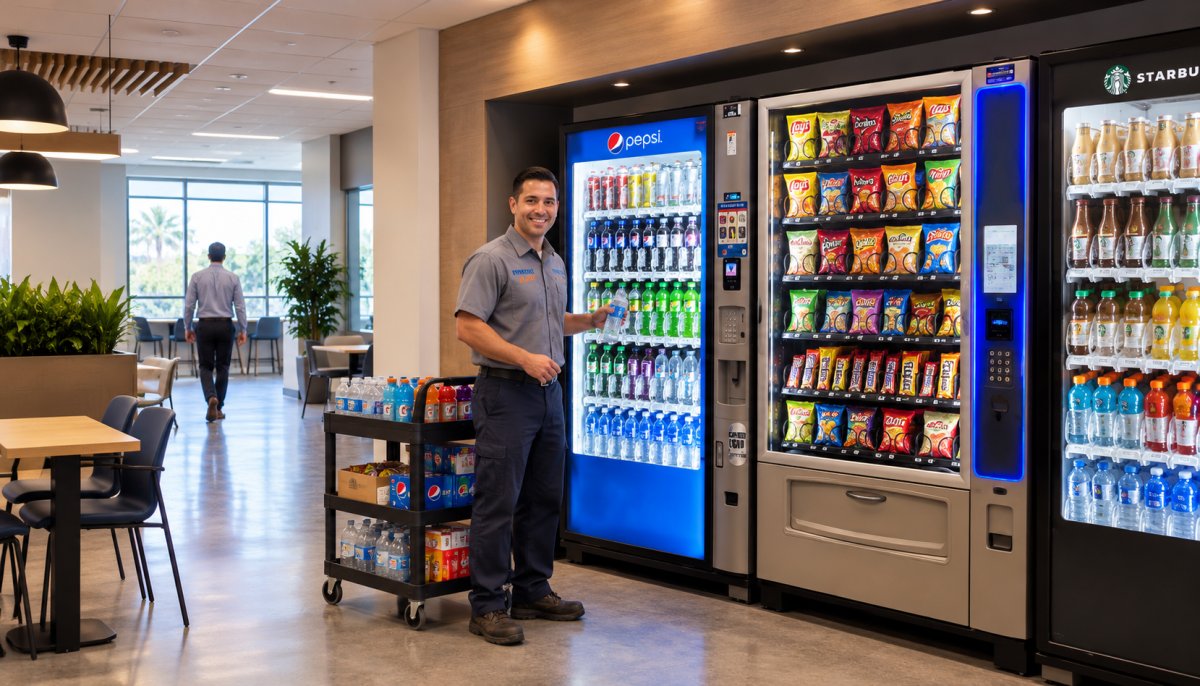
What if adding a vending amenity didn’t add another task to your facility checklist? Missed restocking, equipment problems, and unclear service responsibilities can turn a convenience into extra work. Professional commercial vending services give your team a simpler way to provide snacks and drinks.
Vending SoCal manages snack, drink, and combo machines, including installation, restocking, and maintenance. Your team can focus on running the facility instead of tracking inventory or arranging repairs.
This guide explains how commercial vending can fit different workplaces, what setup and ongoing management involve, and which details matter when planning a machine for your site. Vending SoCal serves commercial locations across Southern California, including Orange County communities such as Irvine and Anaheim. The aim is a useful, well-managed amenity that takes routine vending tasks off your staff’s plate.
Key Takeaways
- Learn how managed vending can work as a facility amenity, and what installation, restocking, and maintenance involve.
- Understand how a no-cost placement model works and what the host facility contributes.
- Match snack, drink, or combo machines to your facility’s space, traffic, and users.
- See why local support and a clear repair process matter when choosing a vending partner in Southern California.
- Explore how professional management can reduce the routine work involved in keeping vending available.
What are Commercial Vending Services and How Have They Evolved?
Commercial vending services are a managed amenity for workplaces and other commercial properties. Instead of assigning staff to source snacks, fill shelves, and troubleshoot equipment, a business can have a provider manage the machines and their ongoing care. This makes vending more than a convenience for employees and visitors. It also gives the facility a clear point of responsibility for stocking and maintenance.
The history of vending machines shows how the basic idea has changed over time. Today, vending can be managed as an ongoing service, with stocking, maintenance, and payment technology supporting the machine. Digital tools can help operators track sales and inventory, while service teams handle the practical work of keeping machines useful and presentable. Technology helps, but dependable management remains essential.
The Core Components of Professional Vending Management
A turnkey arrangement brings the main tasks under one provider. It starts with choosing a suitable location and coordinating installation, then continues with product replenishment and equipment care. The product mix and refill pattern should reflect how people use the machine. A break-room machine, for example, may need different selections and replenishment from a machine serving a busy facility floor. Sales and stock information can help guide refills instead of leaving employees to notice empty selections.
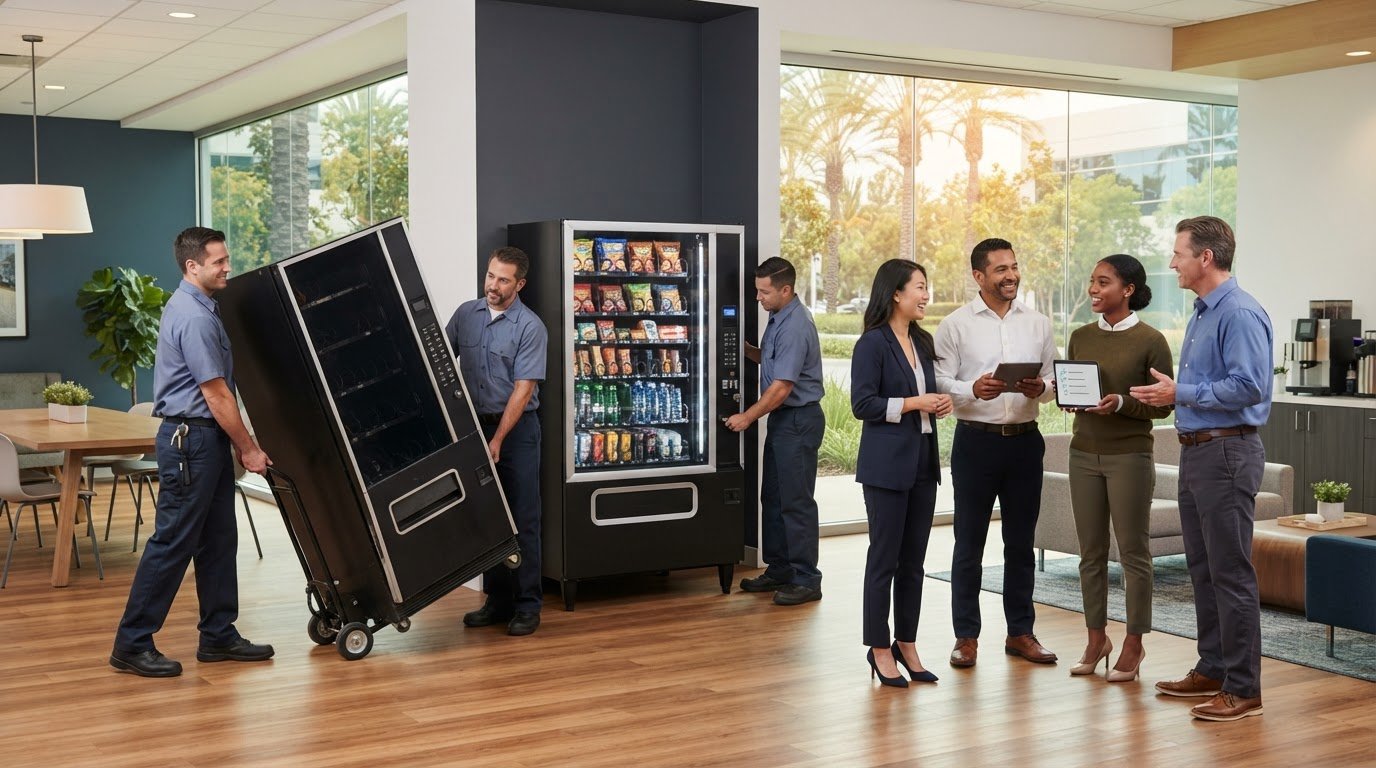
- Placement and installation: Choose a practical location and coordinate setup around facility needs.
- Restocking: Refill products based on demand and inventory information.
- Maintenance: Keep equipment in working order and establish a clear process for reporting and addressing repair needs.
Why Enclosed Machines Suit Busy, Semi-Public Sites
Closed vending machines can suit shared spaces where products should remain secured until purchase and access needs to stay simple. In a hotel lobby, for example, guests can select refreshments without staff monitoring an open display. Compared with unattended, open-shelf setups, enclosed machines also limit opportunities for products to be taken without payment.
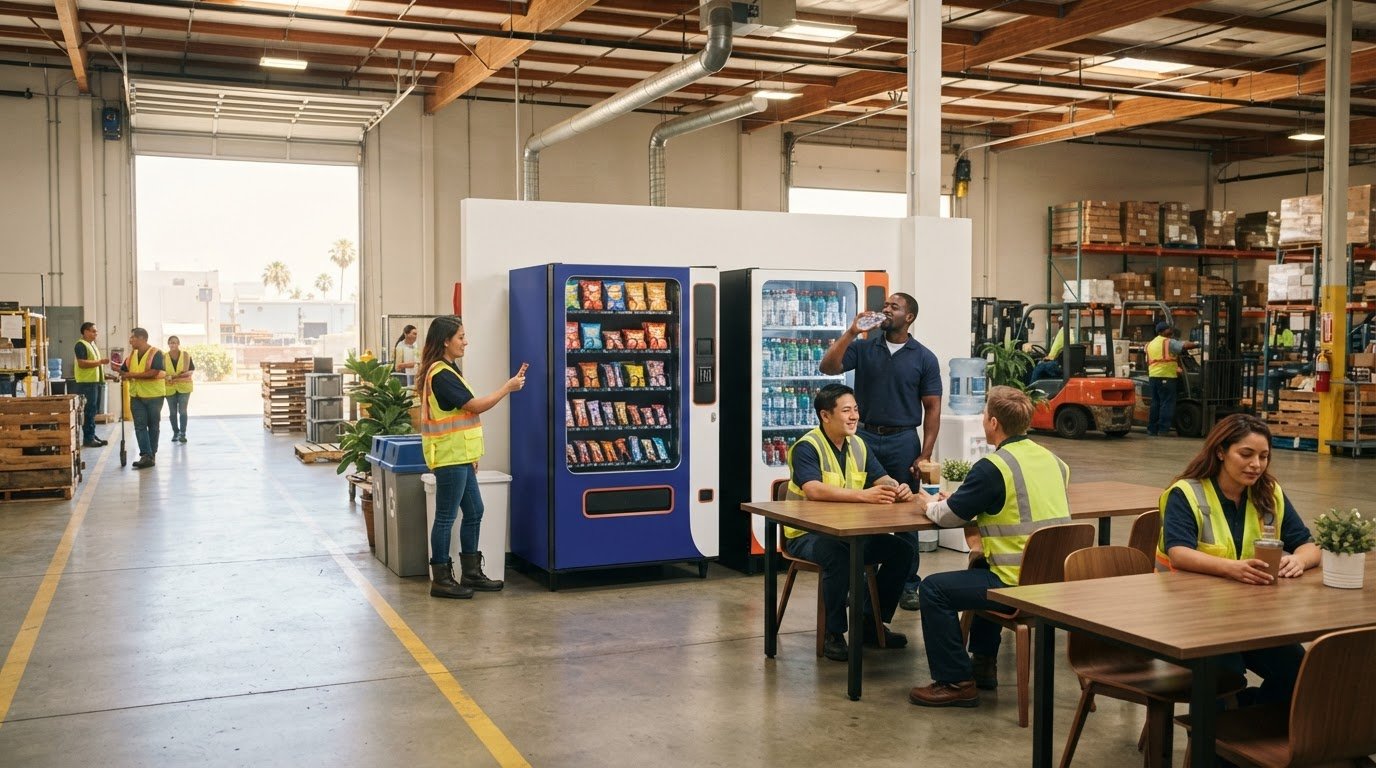
Space is another consideration. A logistics hub or manufacturing floor may need convenient refreshments without giving up room for a larger food area. A snack, drink, or combo machine can provide a compact option. Choose a format based on who uses the space, what they need, and where a machine can be placed safely and conveniently.
From Staff-Managed Supplies to a Dedicated Service
Self-managed snack supplies may seem simple, but the tasks accumulate: someone must monitor stock, place orders, organize storage, and handle equipment issues. When duties are split across a team, it can be unclear who is responsible for the next refill or repair. A professional service gives those tasks a defined owner, allowing facility staff to focus on their primary work.
With full-service vending, the provider manages the operation instead of leaving the host to oversee daily details. For Orange County facilities, a local partner can support sites in communities such as Irvine and Anaheim. The aim is an amenity that works in the background, with a service team responsible for its upkeep.
The Hands-Off Vending Model: How No-Cost Placement Works
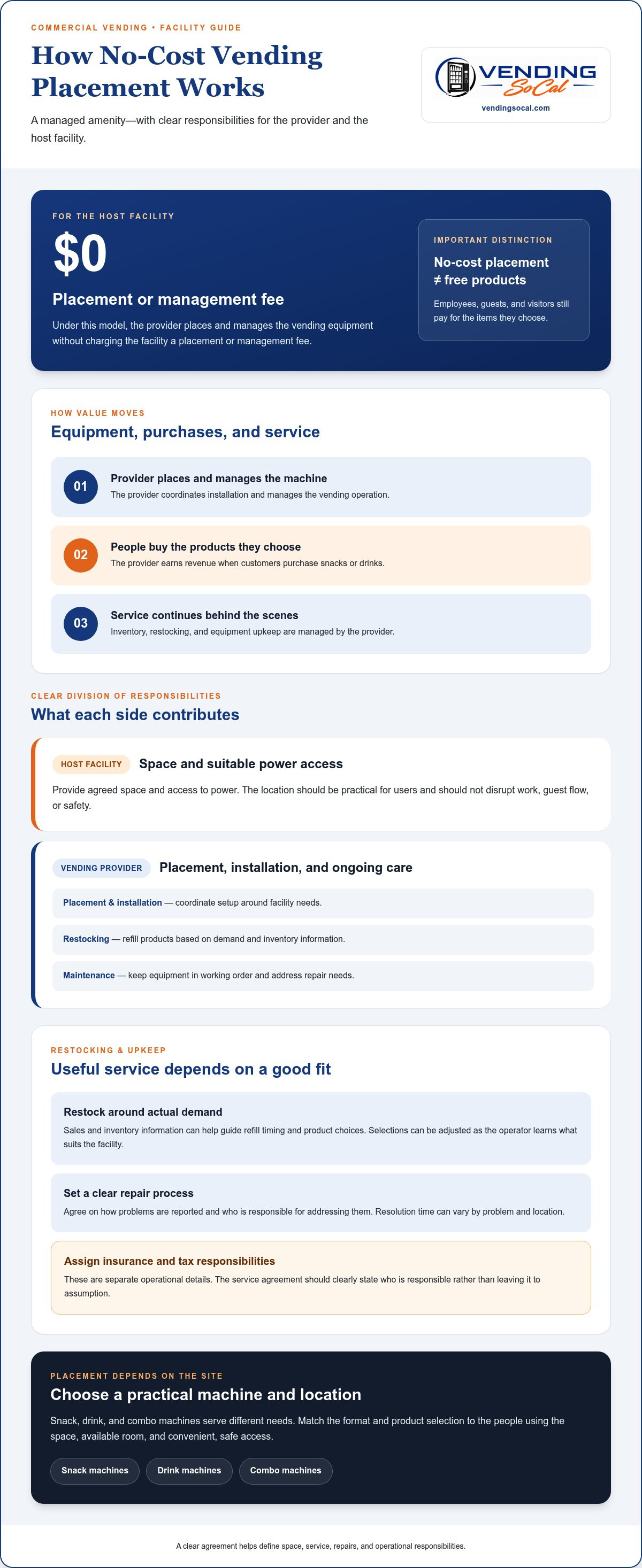
A no-cost placement model works this way: the provider places and manages vending equipment, then earns revenue when people buy products from it. The host facility provides suitable space and access to power. Under this arrangement, the business pays no placement or management fee for the vending service. This is different from “free vending” for users. Employees, guests, and visitors still pay for the items they choose.
For the facility, the value is moving routine tasks out of the team’s hands. The provider manages inventory and equipment upkeep, including restocking and maintenance. Insurance and tax responsibilities are separate operational details. They should be clearly assigned in the service agreement, rather than assumed. A clear division of responsibilities helps prevent confusion later.
Placement depends on the site. The machine needs a practical location that people can access without disrupting work, guest flow, or safety. The facility provides the agreed space and suitable power access, while the provider coordinates installation and manages the vending operation. Snack, drink, and combo machines serve different needs, and vending machine options can help illustrate how formats vary.
Inventory Management and Modern Restocking
Restocking works best when it reflects what people actually buy. Where remote inventory monitoring is used, sales and stock information can help the service team identify popular items and plan refills. Monitoring can support better timing, but it cannot guarantee that a machine will never run low. Product selection matters too: shift workers at a distribution site may want different choices from hotel guests or clinic visitors.
Smart restocking uses sales and inventory information to help plan refills, reduce unnecessary trips, and support machine uptime. Product preferences and refill needs can change, so the selection can be adjusted as the operator learns what suits the facility.
Maintenance and Technical Support
Reliable upkeep starts with a clear way to report a problem and a service team responsible for addressing it. A machine that stops accepting payment or dispensing products disrupts the amenity, so maintenance should be part of the provider’s ongoing role, not another task for facility staff. For Orange County sites, local service support keeps the operation connected to the area. The time needed to resolve an issue can vary by problem and location.
Some modern machines can provide diagnostic information that helps technicians identify potential issues. Capabilities vary by equipment, so the practical standard is a defined maintenance process: staff know how to report a fault, the provider can assess it, and the machine is serviced as needed. This is what makes placement a managed service rather than another facility responsibility.
Industry-Specific Solutions: Tailoring Vending to Your Facility
A machine that suits a hotel lobby may not work as well on a warehouse floor. The right setup depends on who will use it, when they need it, the space available, and the time they have for a break. Effective commercial vending services start with those daily routines, then match the machine type and product selection to the facility.
Hospitality and High-Traffic Residential
Hotel guests may arrive late, leave early, or want a quick drink between activities. A snack and drink machine near a lobby or another accessible common area gives them a convenient option without requiring a trip off-site. Place it where guests can reach it without blocking foot traffic. Product choices should reflect the property’s visitors and purchasing patterns instead of defaulting to the same assortment everywhere. A hotel vending service in Orange County can be planned around the guest experience and the property’s layout.
Apartment communities have a different rhythm. Residents may appreciate snacks or drinks in shared areas, including near laundry rooms where people spend time waiting. A well-placed, appropriately stocked machine can make everyday errands more convenient and contribute to a positive impression of the property. Choose a location that is easy to reach while keeping walkways and shared facilities clear. Product selection can be shaped around resident preferences and usage patterns.
Industrial, Logistics, and Manufacturing
Distribution centers and manufacturing plants often serve teams on different shifts, with break times shaped by production schedules. A machine near an appropriate break area can make snacks and drinks accessible without a long walk away from the work zone. Selections can include filling, quick-to-eat snacks for short breaks alongside drinks. The best mix depends on employee preferences and observed demand, not assumptions about what every worker wants.
Industrial environments also call for careful placement. Dust, temperature variation, traffic, and nearby equipment can affect where a machine should sit and how it can be maintained. The setup should reflect actual site conditions and avoid obstructing work areas, exits, or movement routes. Facility staff can help shape the plan by identifying where people take breaks and describing relevant conditions in the space.
Compact Spaces and Shift-Based Access
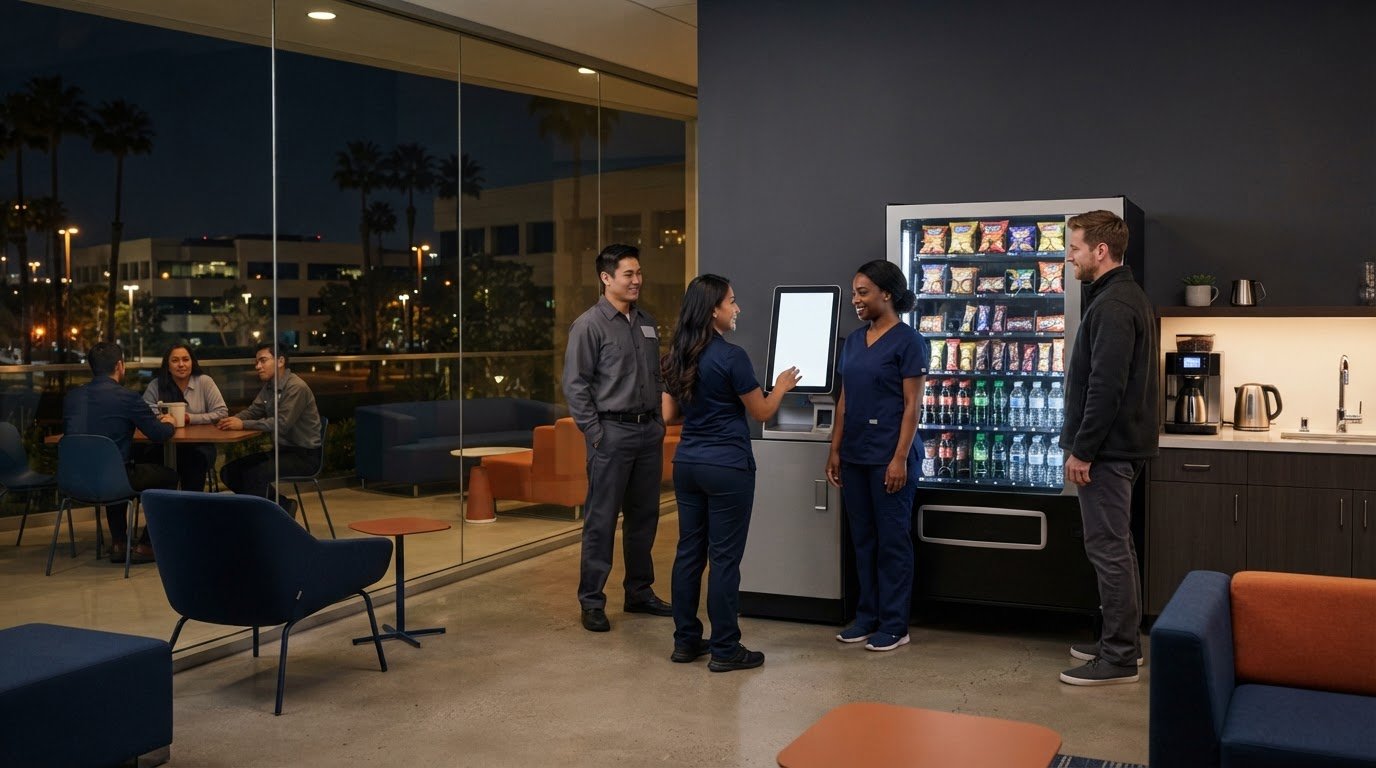
For a medical clinic or another facility with limited floor space, a combo machine can provide snacks and drinks in one footprint. It may suit a staff break area or waiting space where a larger setup would be impractical. Match the selection to the intended users and the purpose of the space.
Facilities operating across day, evening, or overnight shifts can plan vending around when staff are on site and which areas they can access during breaks. This helps make the amenity fit the facility’s schedule without assuming every machine or location is available around the clock.
Selecting a Vending Partner in Southern California: Key Criteria
A recognizable national name does not automatically mean dependable service at a specific site. With commercial vending services, local accountability matters: the provider needs to understand the facility’s access procedures, operating hours, layout, and the people who use the machines. A vending plan that suits an Orange County office may not suit a hotel or industrial site, even if they are nearby.
Local knowledge also helps with practical coordination. A provider serving Orange County can plan around facilities in communities such as Irvine and Anaheim. Vending SoCal’s Southern California service area reflects this regional focus. A strong working relationship should make clear who handles service questions and how facility staff can share feedback about the machine or product mix.
Local Support and Repair Expectations
Different problems call for different responses. A payment fault, a machine that stops dispensing, and a product concern may each need a different next step. Professional support starts with a clear reporting route, timely acknowledgement, and an update on what happens next. The provider should explain how urgent issues are prioritized and how staff will know when the machine is back in service. “Fast response” is meaningful only when the process behind it is clear.
Direct communication matters as much as location. A facility manager should not have to explain the same issue repeatedly to different departments. A consistent point of contact helps keep service history, access details, and product feedback together. Familiarity with the site can also make coordination smoother.
Product Fit and Agreement Clarity
A useful product selection should reflect the people using the machine, the time of day, and the facility’s preferences. For example, a site may want a balance of snacks and drinks or a selection shaped by employee feedback. Review how product requests are handled and how the mix can adapt as purchasing patterns become clearer.
Read the service agreement for clear explanations of responsibilities, maintenance, restocking, communication, and how either party can address a problem. Pay attention to renewal terms, exit provisions, and performance commitments. Look closely at any language that limits flexibility, and make sure the agreement explains how service quality is addressed. A strong service relationship should be clear about what the provider manages and how concerns are handled.
Vending SoCal provides managed vending across Southern California, including installation, restocking, and maintenance. For facility teams, the practical benefit is a defined service relationship instead of another internal task. A good fit should make clear who handles the work, how issues are reported, and how the offering can stay relevant to the people who use it.
Elevating Your Facility with Vending SoCal’s Professional Management
A vending amenity should make a facility more convenient, not give its manager another operation to oversee. Vending SoCal manages snack, drink, and combo machines for commercial environments across Southern California. The process is straightforward: understand the site, set up an appropriate machine, and manage the service so facility staff are not left coordinating routine restocking and maintenance.
This local focus is useful in busy Orange County properties, where each site has its own layout, access needs, and mix of employees, residents, or visitors. A machine in a workplace break area serves a different purpose from one in a hotel lobby. The plan should reflect how people use the space rather than rely on a one-size-fits-all setup.
Managed Vending for Busy Facilities
Vending SoCal provides snack, drink, and combo machines, with the format selected to suit the space and the people using it. A compact area may benefit from a combo machine, while a larger location may need separate snack and drink options. Explore the available vending machine options to see how different formats can support commercial sites.
Vending SoCal manages installation, restocking, and maintenance. That is the “Invisible Expert” approach: the service stays in the background while the amenity serves the people who use it. Facility teams have a clear service relationship without taking on the routine work of managing machine inventory themselves.
A Clear Path from Planning to Placement
Getting started begins with understanding the facility. Useful details include where a machine could go, who will use it, how busy the location is, and what snacks or drinks might suit the audience. These details help shape a practical recommendation, including whether a snack, drink, or combo machine is the best fit. Placement and installation can then be coordinated around the site’s needs.
After installation, the provider manages restocking and upkeep as part of the ongoing service. Product selection can reflect the location and adjust as usage becomes clearer. For an Orange County workplace, office vending service in Orange County can add a convenient break-room amenity without making staff responsible for day-to-day machine management.
Good commercial vending services should feel organized from the first conversation through ongoing operation. Vending SoCal brings local facility support and full-service management together, helping businesses add an amenity while keeping routine work off their teams. The result is a vending setup shaped for the facility, with a dedicated provider managing the operation.
Make Your Next Facility Upgrade Easier
A vending amenity can be a practical next step when you are reviewing how people use shared spaces. Notice where employees, guests, or residents already pause, what refreshments they might want nearby, and whether a machine can fit without disrupting daily activity. These observations can help shape a setup that feels useful from day one.
The right commercial vending services should fit the facility instead of creating another project for your team to manage. Consider which area would benefit most, then take the next step toward a vending plan designed around your site and its users.
A more convenient shared space can start with one thoughtful addition. Your team can stay focused on its work while the amenity serves the people who use your facility.
Frequently Asked Questions
How much does it cost to have a vending machine installed at my business?
Under the no-cost placement model, the host business pays no placement or management fee for the vending service, while customers pay for the products they purchase. The provider earns revenue through product sales. Review the service agreement for the responsibilities and terms that apply to your location, so everyone understands the arrangement before installation.
What types of commercial environments do you service in Southern California?
Vending SoCal serves hotels, apartments, offices, schools, colleges, industrial and manufacturing facilities, logistics hubs, car dealerships, government buildings, gyms, call centers, medical clinics, and hospitals. Its local coverage includes Anaheim, Brea, Buena Park, Costa Mesa, Cypress, Fountain Valley, Fullerton, Garden Grove, Huntington Beach, Irvine, La Habra, La Palma, Newport Beach, Orange, Santa Ana, Tustin, Westminster, and Stanton.
How often are the vending machines restocked and maintained?
Restocking and maintenance are part of the managed service, but refill frequency varies with product demand and site activity. A busy facility may need a different schedule from a smaller workplace. Product mix and sales patterns help inform replenishment. If a selection runs out faster than others, that information can guide adjustments to the refill plan and product quantities over time.
What happens if a vending machine breaks down or eats a customer’s money?
If a machine stops working, report the issue through the service contact provided for your facility so it can be addressed through maintenance. For a payment problem, note the machine’s location, the time, the product selection, and the payment method. These details can help identify the transaction and equipment issue. Resolution of a payment dispute depends on the transaction details and payment system.
Can I request specific snacks or drinks for my facility’s machines?
Yes. Your facility can share product preferences so the selection better suits the people using the machine. An office might request more filling snack choices, while a hotel may prioritize convenient drinks for guests. Preferences and purchasing patterns help shape the mix. Product choices are planned for the specific location rather than assuming every workplace or property wants the same assortment.
Do I need to sign a long-term contract for vending services?
Contract length and other terms are set out in the service agreement for the placement. Review its duration, renewal language, responsibilities, and process for addressing service concerns before proceeding. This gives your facility a clear understanding of the working arrangement, including what the provider manages and what the host business is responsible for during the service period.
What are the space and electrical requirements for a commercial vending machine?
A machine needs an appropriate location, enough room for access, and a standard power outlet. The available footprint and surrounding layout help determine which machine format suits the site. During planning, consider how people will approach the machine and whether it could obstruct a walkway or work area. Exact dimensions and electrical needs depend on the selected machine and are addressed as part of placement planning.
Are there healthy snack and drink options available for schools or gyms?
Product selections can be tailored to a facility’s preferences, including those of a school or fitness center. Share the kinds of snacks and drinks that suit your users, along with preferences about variety or portion size. The final mix should reflect the location and the people who use it. As sales patterns emerge, product choices can be refined to better match demand.
Frequently Asked Questions
Under the no-cost placement model, the host business pays no placement or management fee for the vending service, while customers pay for the products they purchase. The provider earns revenue through product sales. Review the service agreement for the responsibilities and terms that apply to your location, so everyone understands the arrangement before installation.
Vending SoCal serves hotels, apartments, offices, schools, colleges, industrial and manufacturing facilities, logistics hubs, car dealerships, government buildings, gyms, call centers, medical clinics, and hospitals. Its local coverage includes Anaheim, Brea, Buena Park, Costa Mesa, Cypress, Fountain Valley, Fullerton, Garden Grove, Huntington Beach, Irvine, La Habra, La Palma, Newport Beach, Orange, Santa Ana, Tustin, Westminster, and Stanton.
Restocking and maintenance are part of the managed service, but refill frequency varies with product demand and site activity. A busy facility may need a different schedule from a smaller workplace. Product mix and sales patterns help inform replenishment. If a selection runs out faster than others, that information can guide adjustments to the refill plan and product quantities over time.
If a machine stops working, report the issue through the service contact provided for your facility so it can be addressed through maintenance. For a payment problem, note the machine’s location, the time, the product selection, and the payment method. These details can help identify the transaction and equipment issue. Resolution of a payment dispute depends on the transaction details and payment system.
Yes. Your facility can share product preferences so the selection better suits the people using the machine. An office might request more filling snack choices, while a hotel may prioritize convenient drinks for guests. Preferences and purchasing patterns help shape the mix. Product choices are planned for the specific location rather than assuming every workplace or property wants the same assortment.
Contract length and other terms are set out in the service agreement for the placement. Review its duration, renewal language, responsibilities, and process for addressing service concerns before proceeding. This gives your facility a clear understanding of the working arrangement, including what the provider manages and what the host business is responsible for during the service period.
A machine needs an appropriate location, enough room for access, and a standard power outlet. The available footprint and surrounding layout help determine which machine format suits the site. During planning, consider how people will approach the machine and whether it could obstruct a walkway or work area. Exact dimensions and electrical needs depend on the selected machine and are addressed as part of placement planning.
Product selections can be tailored to a facility’s preferences, including those of a school or fitness center. Share the kinds of snacks and drinks that suit your users, along with preferences about variety or portion size. The final mix should reflect the location and the people who use it. As sales patterns emerge, product choices can be refined to better match demand.