Huntington Beach Vending: Hot Warehouse Buying Guide
October 15, 2026 · 15 min read
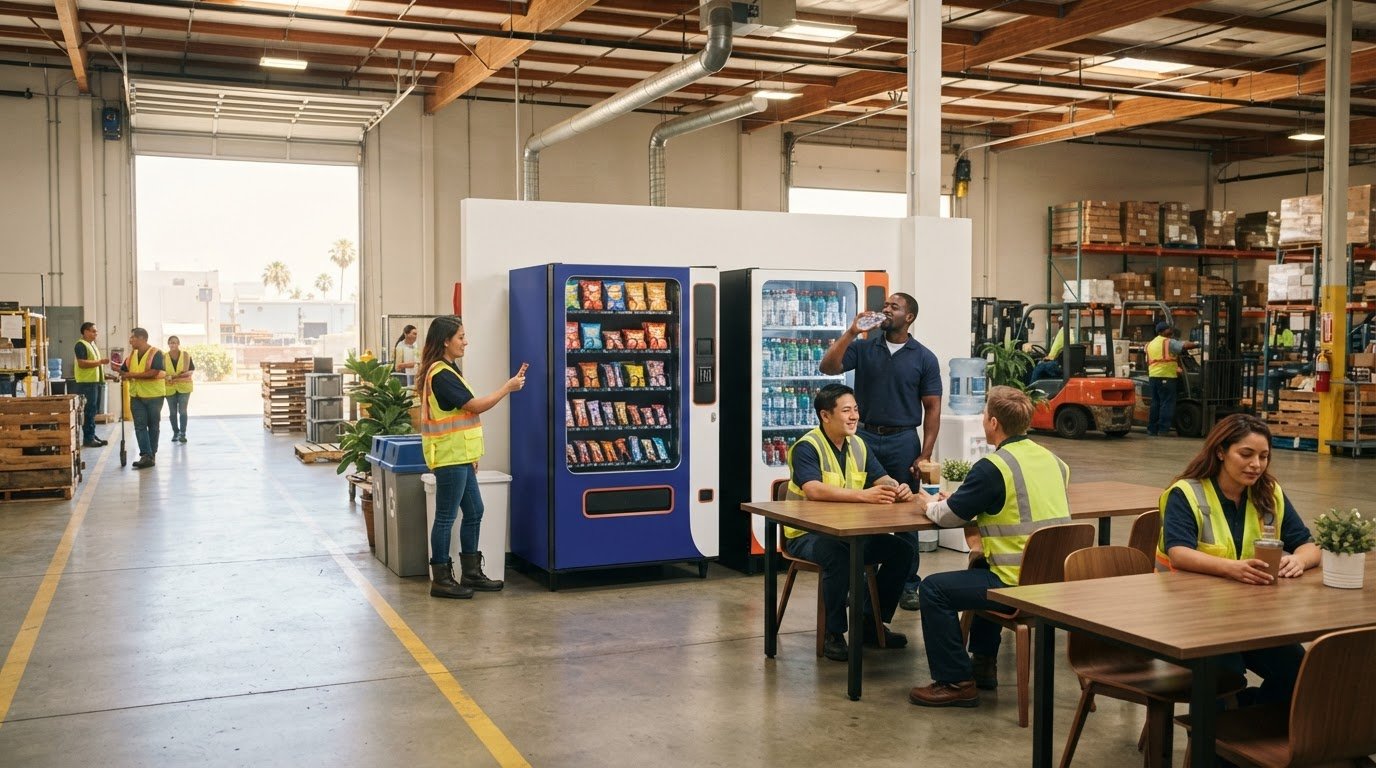
The best choice for Huntington Beach vending for hot warehouse environments depends on more than the machine itself. Where it sits, how employees reach it, and how the service fits the facility’s routines all matter. A spot that looks convenient on a floor plan may be less practical near a heat source or far from employees’ break areas.
Employees need snacks and drinks that suit their shifts and break schedules. Facility teams need a setup that doesn’t add another daily task. A practical site assessment connects those needs and helps narrow down placement and machine type.
This guide explains how to assess warehouse conditions, compare machine locations, and plan a product mix around employee routines. It also covers restocking and maintenance. Vending SoCal provides industrial vending service in Huntington Beach, including installation, regular restocking, and maintenance, so your team can focus on facility operations.
Key Takeaways
- Plan warehouse vending around internal foot traffic, break schedules, and convenient access, not public sidewalk activity.
- For Huntington Beach vending for hot warehouse environments, map warmer and less exposed areas before choosing a machine location.
- Choose snack, drink, or combo vending based on available space and how employees use break areas across shifts.
- Use a site checklist to connect employee routines and facility conditions with the vending setup.
- A managed industrial vending plan can account for facility conditions and workforce needs while reducing day-to-day vending tasks for your team.
Huntington Beach warehouse vending: Why heat changes the planning
Employee vending inside a warehouse calls for a different plan than sidewalk vending in a public space. Consider who works in the facility, how they move through it, and where they can take a break. For Huntington Beach vending for hot warehouse environments, start with the conditions employees and vending equipment would encounter inside the site.
Warehouses support different activities and traffic patterns, from receiving and storage to picking and dispatch. A general overview of warehouse operations and functions can help frame those differences, but your own facility map is the most useful planning tool. A machine near a shared break area may work well for one team, while a workforce spread across separate zones or shifts may need a different approach.
Which warehouse conditions should you assess first?
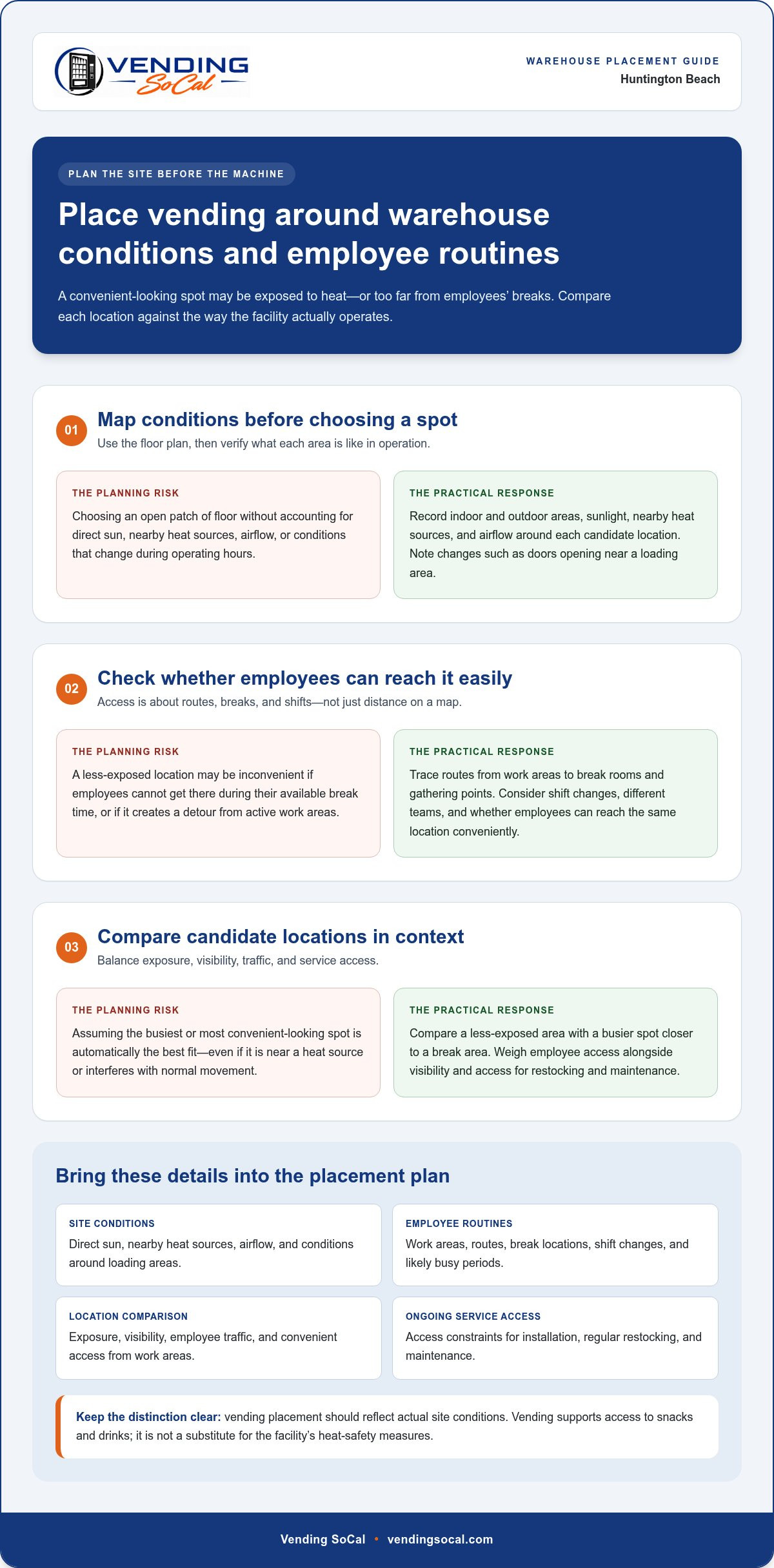
Map the site before choosing a location. Note indoor and outdoor areas, direct sun, nearby heat sources, and airflow around each possible spot. Then trace employee routes to break areas and mark shift changes and likely peak-use periods. This shows not just where space is available, but when and by whom it will be used.
- Identify warmer and cooler areas, direct sunlight, nearby heat sources, and airflow.
- Mark employee routes, break locations, and gathering points during shift changes.
- Estimate busy periods from the facility’s break schedule and work patterns.
- Describe each proposed location, including its conditions and access from work areas.
These details help shape a vending plan around the site. Vending SoCal’s industrial vending service serves commercial facilities such as warehouses, manufacturing sites, and logistics environments in Huntington Beach and nearby Southern California communities.
Why hot conditions matter to vending decisions
Heat is one placement consideration. It is not a reason to assume that a particular machine will or won’t perform in a specific spot. Exposure and location can affect where employees prefer to access vending and how easily they can reach it during a break. Keep employee comfort separate from equipment claims, and base the plan on the facility’s actual conditions rather than assumptions about temperature limits or performance.
If the most convenient spot is in direct sun or near a heat source, compare it with a less exposed location that employees can still reach easily. The better choice depends on your layout, access, and break patterns. A machine away from the work floor may avoid some exposure but be less useful if employees can’t reach it during their available break time.
Bring the mapped conditions, workforce routines, and likely placement areas into the planning discussion. This gives you a practical basis for choosing a setup that fits both the people using it and the space it occupies.
How to plan vending machine placement in a hot warehouse
A useful placement decision comes from seeing the facility in operation, not just identifying an empty patch of floor. Map conditions, assess employee access, and compare possible locations. For Huntington Beach vending for hot warehouse environments, this makes heat exposure one part of the site plan, rather than a guess about equipment performance.
A practical site walkthrough for warehouse managers
Start with a current floor plan, then walk the areas employees use. Mark break rooms, loading zones, pedestrian routes, shift-change gathering points, and possible machine locations. For each candidate spot, note direct sun, nearby heat sources, and airflow. A shaded or less exposed area may be worth considering if employees can reach it conveniently.
- Map conditions. Record indoor and outdoor areas, sun exposure, nearby heat sources, and airflow around potential locations. Include conditions that change during operating hours, such as doors opening near a loading area.
- Identify employee access. Trace routes from active work areas to break locations. Consider whether employees on different shifts can reach the same spot without taking an inconvenient detour.
- Compare placement options. Weigh exposure, visibility, employee traffic, and access for restocking and maintenance. Compare a location away from a heat source with a busier spot closer to a break area.
Questions to resolve before finalizing a location
Consider who is likely to use vending and when. Do employees take breaks together or at different times? Are there separate teams on different shifts? These patterns can help determine whether one central location makes sense or whether another spot better fits the workforce. Aim for convenient access without placing the machine in the way of normal movement.
Describe the site conditions during service planning. Include heat sources, airflow, direct sun, operating hours, employee routes, and access constraints. The CDC’s guidance on occupational heat stress prevention can help managers keep workplace heat considerations distinct from vending placement decisions. Vending supports employee access to snacks and drinks, but it is not a substitute for the facility’s heat-safety measures.
There’s no need to guess at temperature thresholds or equipment requirements. Share the actual conditions around the proposed location so the setup can be considered in context. Vending SoCal’s industrial vending service includes installation, regular restocking, and maintenance for commercial facilities. A clear site description helps align those managed services with your warehouse layout and workforce needs.
Snack, drink, or combo vending: choosing for warehouse shifts
The right machine category depends on what employees want during breaks, where they’ll use it, and how much traffic the area gets. A warehouse with one shared break room may need a different mix than a facility where teams use separate areas. For Huntington Beach vending for hot warehouse environments, weigh employee routines and the site plan together instead of choosing by machine category alone.
Start by identifying the main need at each location. Snack vending focuses on convenient food, drink vending on beverages, and combo vending brings both categories together. These are broad planning distinctions, not promises about specific products or machine features. The available vending machine types include snack, drink, and combo options.
- Snack vending: Consider it when employees prioritize convenient food and the break area has room for a snack-focused setup.
- Drink vending: Consider it when beverages are the main request or the facility wants a dedicated drink option. Don’t assume a particular cooling capability based on the category alone.
- Combo vending: Consider it when employees want both categories in one break area and a combined setup fits the available space and expected use.
Use shift schedules to guide the product mix. If teams share a break area at different times, consider preferences across shifts, not only those of the largest group. If separate teams use separate spaces, compare needs by location. A busy break area may call for a broader mix than a spot used by a smaller team. Ask employees what they’d value and use their feedback to guide the plan.
When a snack or drink machine may fit better
A snack-focused setup may suit employees who want convenient food during a short break. A drink-focused setup may make more sense when beverages are the main priority. In a hot workplace, keep employee comfort and vending decisions distinct from workplace heat-safety planning. OSHA’s heat illness prevention guidelines offer workplace guidance. Vending is an amenity, not a substitute for heat-safety measures. Let employee preferences and actual shift routines inform the choice.
When a combo machine can simplify the setup
A combo option may suit a single break area where employees want both snacks and drinks. It brings both categories into one setup, while separate machines may better fit distinct needs across different areas. The right choice depends on available space, expected traffic, and what employees want. Industrial planning should also account for how service fits the facility’s routines, not just which machine category you select.
Vending SoCal tailors snack, drink, or combo vending service to each facility’s needs, with installation, regular restocking, and maintenance included.
A warehouse vending checklist for Huntington Beach facilities
A clear checklist turns a site assessment into a practical service plan. Gather the details that show how employees will use vending and what your facility team needs from ongoing support. For Huntington Beach vending for hot warehouse environments, include site conditions as well as everyday operating routines. This connects placement, product categories, and managed service to the way your warehouse runs.
What to prepare before discussing warehouse vending
Pull together the facility’s Huntington Beach location, operating schedule, workforce patterns, and preferred break areas. Note which teams use each space and when they’re most likely to take breaks. Include employee preferences for snacks and drinks. One product mix may not suit every team or shift, so describe the range of needs rather than assuming one group represents the whole workforce.
- Location and access: Identify the proposed vending area, employee routes, and constraints that could affect placement or routine service visits.
- Traffic and timing: Note busy break periods, shift changes, and whether employees use one shared area or several.
- Site conditions: Record direct sun, nearby heat sources, airflow, and relevant operating hours.
- Product preferences: Summarize whether employees prioritize snacks, drinks, or both, and note differences between teams where relevant.
How to assess whether the service fits your operation
Compare your notes with the work involved in keeping vending available. Vending SoCal’s industrial vending service includes installation, regular restocking, and maintenance. Consider whether having those responsibilities managed would reduce tasks for your warehouse or facilities team. Service access should also fit the facility’s layout without disrupting employee movement or normal work.
A useful plan accounts for location, workforce, break schedule, placement conditions, and preferred machine category. If your facility has multiple work areas or shifts, explain how their needs differ. That context helps shape a plan around the site rather than forcing every warehouse into the same setup. The aim is a convenient employee amenity with less day-to-day vending work for your team.
Once you’ve gathered the details, Huntington Beach facility managers can plan installation, restocking, and maintenance with Vending SoCal’s industrial vending service.
Vending SoCal warehouse vending in Huntington Beach: what happens next
A warehouse vending plan should reflect the facility, not just the machine category. Vending SoCal provides managed industrial vending for commercial sites in Huntington Beach and surrounding Southern California communities. The service includes installation, regular restocking, and maintenance, helping facilities offer employee vending without taking on every recurring task themselves.
From facility needs to a managed vending plan
Gather the details that describe how your warehouse works: its location, warmer or less exposed areas, employee routes, break schedules, and access considerations. Add what employees tend to want during breaks. This context helps match the proposed location and workforce needs with snack, drink, or combo vending instead of assuming one setup suits every facility.
For example, a shared break area used by employees across shifts may call for a different category mix than a space used by one team. A spot that employees can reach easily but that is difficult to access for routine service may also need another look. Consider both sides of the setup: employee convenience and practical ongoing service.
Installation establishes the vending setup at the facility. Regular restocking and maintenance are part of the managed service, reducing the day-to-day vending work your facility team needs to coordinate. Clear information about the site and its operations gives the plan useful context from the outset.
Why local industrial service can reduce facility workload
Vending SoCal serves industrial facilities in Huntington Beach and nearby Southern California communities, including Anaheim, Brea, Buena Park, Costa Mesa, Cypress, Fountain Valley, Fullerton, Garden Grove, Irvine, La Habra, La Palma, Newport Beach, Orange, Santa Ana, Tustin, Westminster, and Stanton. Managed installation, restocking, and maintenance connect a warehouse’s needs with ongoing service instead of leaving your facility team to handle those responsibilities internally.
As you consider the next step, focus on the decisions that shape a workable plan: where vending can serve employees, how shifts use the break area, which category suits their needs, and what site conditions may affect placement. Sharing these details helps make the discussion specific to your facility and gives Vending SoCal a useful starting point for tailoring industrial vending to your location and workforce.
If your warehouse is in Huntington Beach, use the contact form to talk with Vending SoCal about your warehouse.
Make the next step fit your warehouse
A vending plan doesn’t have to address every employee preference at once. Treat it as a practical workplace amenity shaped by how your teams use the facility and what they value during breaks. If routines or workforce needs change, those observations can guide future updates to the setup.
For Huntington Beach vending for hot warehouse environments, start with real site conditions and employee needs. That gives Vending SoCal a grounded basis for planning a setup suited to your operation while keeping day-to-day vending tasks off your facility team’s list.
Start with the needs of your warehouse, then contact Vending SoCal to discuss a managed vending plan for your facility.
Frequently Asked Questions
Can vending machines work in a hot warehouse?
Vending can be part of a hot-warehouse plan, but suitability depends on the machine and the conditions at its proposed location. Don’t assume every setup will perform the same way in every environment. For Huntington Beach vending for hot warehouse environments, describe the area’s exposure, nearby heat sources, and airflow during planning. Keep vending decisions separate from workplace heat-safety measures, and don’t treat a vending setup as a substitute for them.
Where should a vending machine be placed in a warehouse?
Choose a spot employees can reach during breaks that also fits the facility’s layout and service access. For example, a break-room corner near a main pedestrian route may be easier to use than a location employees must reach by crossing an active work area. Compare candidate spaces for direct sun, nearby heat sources, foot traffic, and access for restocking. The best fit depends on the floor plan and employee routines.
What vending machine is best for a warehouse break room?
The best category depends on what employees want and how they use the break room. A snack machine suits a location where convenient food is the main need; a drink machine focuses on beverages; a combo option brings both categories together. If employees from several teams share the room, gather preferences across shifts before deciding. Consider available space and expected use rather than assuming one category works for every warehouse.
How do I choose vending options for warehouse employees on different shifts?
Compare what employees need across shifts, not just the group with the most visible break period. Ask team leads or employees which snack and drink categories they’d use, and note whether breaks happen together or at staggered times. A quieter overnight shift, for example, may have different preferences from a larger daytime group. Use those differences to guide the product mix and revisit it as workforce routines change.
Does Vending SoCal service warehouses in Huntington Beach?
Yes. Vending SoCal provides industrial vending service for Huntington Beach facilities, including warehouse, manufacturing, and logistics environments. Its Southern California service area also includes Anaheim, Brea, Buena Park, Costa Mesa, Cypress, Fountain Valley, Fullerton, Garden Grove, Irvine, La Habra, La Palma, Newport Beach, Orange, Santa Ana, Tustin, Westminster, and Stanton. Facility needs and workforce patterns help shape a vending plan suited to the site.
Who restocks and maintains warehouse vending machines?
Vending SoCal handles regular restocking and maintenance as part of its managed vending service. This keeps those recurring tasks off the facility team’s warehouse routine. Your site contact can share observations about employee preferences or changes in break-area use, helping keep service aligned with how the facility operates. Installation is also included.
What information should I prepare before requesting warehouse vending service?
Prepare the warehouse location, operating schedule, break areas, shift patterns, and an estimate of which teams will use vending. Note potential machine locations, direct sun or nearby heat sources, airflow, and access constraints that could affect installation or service visits. Summarize whether employees prefer snacks, drinks, or both. These details make it easier to plan around the facility’s actual layout and routines.
Frequently Asked Questions
Map the site before choosing a location. Note indoor and outdoor areas, direct sun, nearby heat sources, and airflow around each possible spot. Then trace employee routes to break areas and mark shift changes and likely peak-use periods. This shows not just where space is available, but when and by whom it will be used. These details help shape a vending plan around the site. Vending SoCal’s industrial vending service serves commercial facilities such as warehouses, manufacturing sites, and logistics environments in Huntington Beach and nearby Southern California communities.
Vending can be part of a hot-warehouse plan, but suitability depends on the machine and the conditions at its proposed location. Don’t assume every setup will perform the same way in every environment. For Huntington Beach vending for hot warehouse environments, describe the area’s exposure, nearby heat sources, and airflow during planning. Keep vending decisions separate from workplace heat-safety measures, and don’t treat a vending setup as a substitute for them.
Choose a spot employees can reach during breaks that also fits the facility’s layout and service access. For example, a break-room corner near a main pedestrian route may be easier to use than a location employees must reach by crossing an active work area. Compare candidate spaces for direct sun, nearby heat sources, foot traffic, and access for restocking. The best fit depends on the floor plan and employee routines.
The best category depends on what employees want and how they use the break room. A snack machine suits a location where convenient food is the main need; a drink machine focuses on beverages; a combo option brings both categories together. If employees from several teams share the room, gather preferences across shifts before deciding. Consider available space and expected use rather than assuming one category works for every warehouse.
Compare what employees need across shifts, not just the group with the most visible break period. Ask team leads or employees which snack and drink categories they’d use, and note whether breaks happen together or at staggered times. A quieter overnight shift, for example, may have different preferences from a larger daytime group. Use those differences to guide the product mix and revisit it as workforce routines change.
Yes. Vending SoCal provides industrial vending service for Huntington Beach facilities, including warehouse, manufacturing, and logistics environments. Its Southern California service area also includes Anaheim, Brea, Buena Park, Costa Mesa, Cypress, Fountain Valley, Fullerton, Garden Grove, Irvine, La Habra, La Palma, Newport Beach, Orange, Santa Ana, Tustin, Westminster, and Stanton. Facility needs and workforce patterns help shape a vending plan suited to the site.
Vending SoCal handles regular restocking and maintenance as part of its managed vending service. This keeps those recurring tasks off the facility team’s warehouse routine. Your site contact can share observations about employee preferences or changes in break-area use, helping keep service aligned with how the facility operates. Installation is also included.
Prepare the warehouse location, operating schedule, break areas, shift patterns, and an estimate of which teams will use vending. Note potential machine locations, direct sun or nearby heat sources, airflow, and access constraints that could affect installation or service visits. Summarize whether employees prefer snacks, drinks, or both. These details make it easier to plan around the facility’s actual layout and routines.