Employee-Paid vs. Employer-Subsidized Vending: Which Works Best?
November 8, 2026 · 6 min read
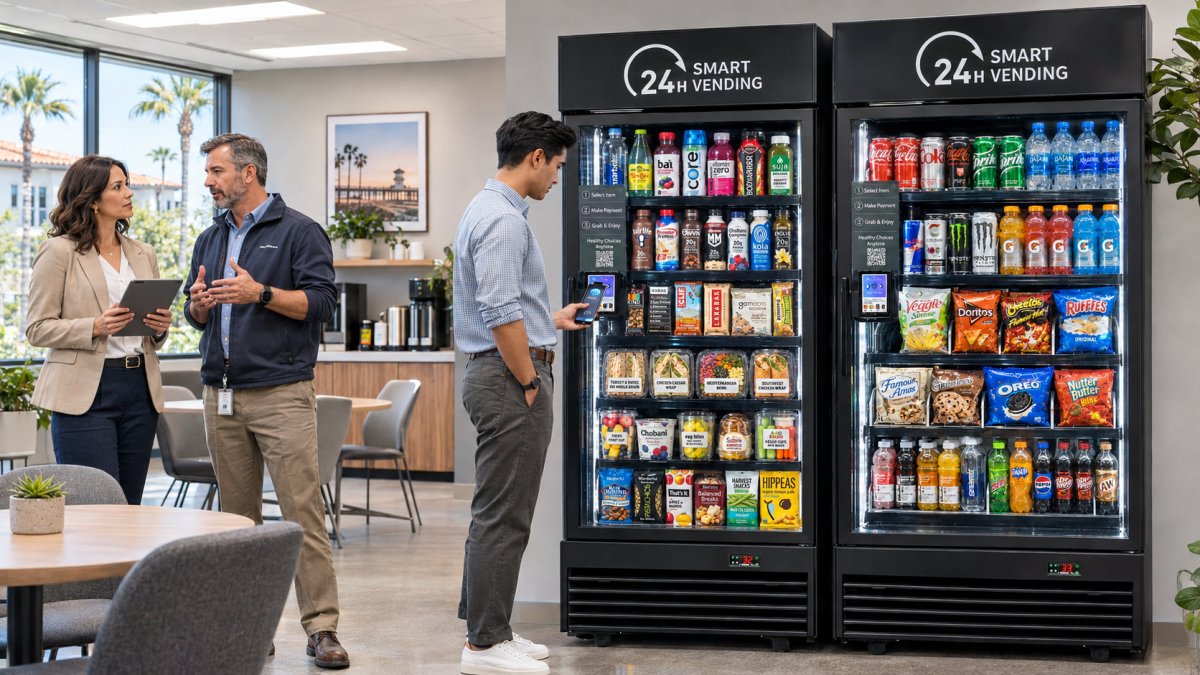
Employee-paid vending means employees buy snacks and drinks at the machine, and the employer pays nothing for the products. Employer-subsidized vending means the employer covers part or all of employee purchases under separately agreed terms. Employer subsidized vending machines depend on what the equipment and payment setup can support, so each arrangement is evaluated individually.
Key takeaways
- Employee-paid vending is the standard model, and qualifying locations get the machine, installation, stocking, and maintenance at no upfront cost.
- Employer-funded subsidies always carry a cost, even when the vending placement itself is free.
- Subsidies can support satisfaction and refreshment access, but they do not guarantee measurable productivity gains.
Employee-paid vs. employer-subsidized vending: understanding the difference
The difference comes down to who pays at the machine. In an employee-paid setup, the person buying the snack or drink pays the product price. In a subsidized setup, the employer funds some or all of that purchase.
Many business owners hear "free vending service" and assume the snacks are free. They are not. For qualified locations, Vending SoCal provides the machine, delivery, setup, stocking, and service at no upfront cost to the host. Employees pay for products unless a separate subsidy arrangement exists.
How employee-paid vending works
For qualifying locations, Vending SoCal supplies the equipment, installation, stocking, maintenance, and repairs. Your team does not buy the machine, refill products, collect money, or handle repairs.
Locations are evaluated individually based on regular onsite attendance, expected purchasing demand, available space, electricity, and service-route feasibility.
Many machines accept cash, credit cards, debit cards, Apple Pay, Google Pay, and tap-to-pay. Payment options depend on the machine and setup used at the location. You can compare vending machine options to see which machine types suit your space.
Workplace example: A 120-person office with a break room adds a combo machine. Employees buy what they want during the day, and the office manager has no restocking or repair duties.
How employer-subsidized vending works
With employer subsidized vending machines, the employer pays part or all of what employees spend on eligible purchases. The terms are agreed separately from the standard vending service. Whether a subsidy can work depends on equipment capabilities and a verified payment-system setup.
Vending SoCal does not offer a fixed subsidy program. Employer-funded arrangements need direct evaluation of the location, the machines, and the proposed terms. Features such as employee credits, product-specific discounts, or spending limits depend on verified machine and payment compatibility and on individual agreements.
Placement may be free for a qualifying host, but a subsidy is an employer cost. The employer funds every discounted or covered purchase.
Workplace example: A manufacturing employer wants to thank its night shift. It agrees to cover part of the cost of selected drinks, and it sets a budget for that support in advance.
Subsidies can support employee satisfaction and easier access to refreshments. They do not guarantee measurable productivity increases, so treat them as a workplace perk rather than a performance tool.
Employee-paid vs. subsidized vending: side-by-side comparison
| Factor | Employee-paid | Employer-subsidized |
|---|---|---|
| Who pays | Employees pay for products | Employer covers part or all of eligible purchases |
| Employer expense | No upfront cost for qualifying hosts | Ongoing cost of the subsidy, set by agreed terms |
| Employee pricing | Standard product prices | Reduced or covered, depending on the arrangement |
| Management responsibilities | Vending SoCal handles stocking and service | Same service, plus budget and eligibility decisions |
| Workplace fit | Convenient refreshments without an employer-funded product budget. | Teams where the employer wants to fund a perk |
Benefits and considerations of each model
Employee-paid vending
- Benefits: No upfront cost for qualifying hosts, no budget to manage, and little work for facility staff.
- Considerations: Employees cover every purchase, so the model offers no employer-funded perk.
Employer-subsidized vending
- Benefits: A visible employee benefit that can support satisfaction and make refreshments easier to reach.
- Considerations: It adds a recurring cost, needs clear rules about what is covered, and depends on equipment capabilities.
A free office pantry is another way to fund refreshments, but it is a separate approach. This comparison focuses on the two vending models.
Which arrangement is right for your workplace?
Use these steps to decide:
- Start with the goal. If you want convenient access, employee-paid vending is an option. If you want to fund a perk, consider a subsidy.
- Set an employer budget. A subsidy needs a defined limit before any discussion begins.
- Coordinate internally. HR, finance, and facilities should agree on who approves the spending and who communicates the benefit.
- Choose a starting point. Organizations can start with employee-paid service or explore subsidy options during the initial assessment.
- Confirm what the equipment supports. Ask which subsidy features are possible with the machines and payment setup at your site.
Vending options for Orange County businesses
Vending SoCal is a locally operated Orange County vending company with over 10 years of experience. It provides snack, drink, and combo machines, and smart coolers where suitable, for qualified commercial locations. Stocking, product rotation, maintenance, and repairs are handled by Vending SoCal, so facility staff do not manage inventory.
If you want to compare an employee-paid setup with an employer-funded one, Vending SoCal will review your location and discuss what fits. Employer-funded arrangements are evaluated directly based on the location and proposed terms.
Frequently asked questions
Is vending free for my business?
For qualified locations, there is no upfront cost for the machine, delivery, setup, stocking, or service. Employees still pay for products. Qualification depends on traffic, space, power access, and route fit, so not every location automatically qualifies.
Who pays for employer-subsidized vending?
The employer pays for the covered portion of employee purchases. That cost is separate from the no-upfront-cost placement for qualifying hosts, and the terms are agreed individually.
Can a subsidy be limited to certain products or amounts?
It may be possible, but it depends on verified machine and payment-system compatibility and on the agreement. Ask about these features during your evaluation before planning a program around them.
Frequently Asked Questions
For qualified locations, there is no upfront cost for the machine, delivery, setup, stocking, or service. Employees still pay for products. Qualification depends on traffic, space, power access, and route fit, so not every location automatically qualifies.
The employer pays for the covered portion of employee purchases. That cost is separate from the no-upfront-cost placement for qualifying hosts, and the terms are agreed individually.
It may be possible, but it depends on verified machine and payment-system compatibility and on the agreement. Ask about these features during your evaluation before planning a program around them.