No-Cost Vending Machine Placement: How It Works for Businesses
October 12, 2026 · 16 min read
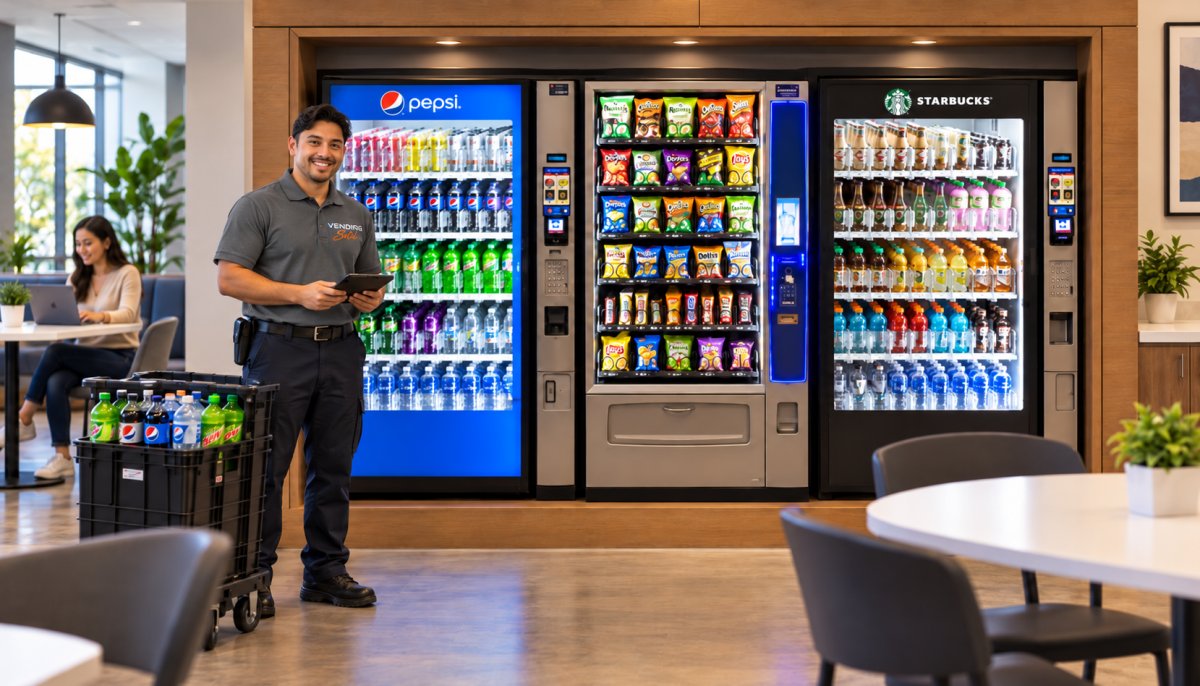
What if your break room could offer snacks and drinks without your team taking on the work of running a vending machine? No cost vending machine placement generally describes a managed arrangement in which an operator places and services a machine, with product sales supporting its operation. The phrase alone does not explain who pays for products, utilities, or other operating expenses, so it is important to understand what the service includes.
Before welcoming a machine into your facility, consider what placement covers, how ongoing service works, and whether the setup suits the people who use your space. A practical fit depends on factors such as user routines, access, available space, and the refreshments people want.
This guide explains how no-cost placement works, what can affect location suitability, and which service tasks may be included. You’ll also find practical ways to think through stocking, maintenance, product selection, and placement terms. Vending SoCal provides managed vending service, including professional installation, regular restocking, and maintenance for commercial facilities in Southern California.
Key Takeaways
- No cost vending machine placement describes a managed service model, but the phrase does not define every expense or responsibility.
- Understand how site planning, installation, stocking, and maintenance fit into the service before deciding what works for your facility.
- Choose snack, drink, or combo machines based on users’ routines, available space, and the refreshment needs of your location.
- Assess readiness by looking at who will use the machine, when they can access it, and where equipment could fit.
- A clear picture of your location and preferred machine category helps shape a practical managed vending setup.
What No-Cost Vending Machine Placement Means for a Business
A vending machine can make snacks and drinks more convenient for employees, residents, guests, or visitors. With no cost vending machine placement, the arrangement is centered on a managed service rather than a straightforward equipment purchase. An operator places a machine at a business and may manage ongoing tasks, while product sales support the operation. The phrase describes a placement model, not a complete breakdown of costs or responsibilities.
In particular, “no cost” does not automatically mean that products, utilities, installation, service, and every other operating expense are free. Understand which tasks the vending service handles and how products and other expenses are treated. That distinction helps you compare a managed service with buying or leasing equipment and operating a machine yourself.
Quotable definition: Vending machine placement is a managed service arrangement, not the same as buying or leasing equipment for a business to operate.
What does no-cost placement usually refer to?
In a managed placement, an operator brings equipment to a business location and handles agreed service tasks. Vending SoCal’s managed service includes professional installation, regular restocking, and maintenance. This differs from buying a machine, where the business acquires the equipment, or leasing, where it uses equipment under a separate rental arrangement.
“No-cost” by itself does not explain ownership, product purchasing, utilities, or the full scope of service. Look at each part of the arrangement rather than treating the phrase as a promise that every expense is covered. The Vending Machine overview offers general background on the equipment and how it serves customers.
Why location fit matters before placement
A machine is useful when it meets a real need without getting in the way. A hotel, office, apartment building, school, or industrial facility may have different users and daily routines. Staff working long shifts may value convenient access during breaks, while guests or visitors may look for refreshments in a shared area. These are planning examples, not automatic indicators of suitability.
Consider the practical details that shape whether a placement can work:
- Users: Who is likely to use the machine, and what refreshments suit their routines?
- Timing: When are employees, residents, guests, or visitors on site?
- Access: Can intended users reach the machine during the times they need it?
- Space: Is there a sensible location that accommodates equipment without disrupting movement or daily activities?
There is no universal headcount or traffic threshold that defines a good location. Suitability depends on the specific site, its users, and how people can access the machine. Matching those factors with a workable service arrangement makes placement more useful for both the business and the people it serves.
How Managed Vending Placement Works After Installation
Installation is the start of a managed vending arrangement, not the end of the work. A practical service begins with understanding how the facility is used, planning an appropriate setup, installing the equipment, and managing ongoing service. This approach reduces the need for facility staff to coordinate routine stocking and machine upkeep themselves.
From site needs to machine placement
The process starts with the facility and the people who use it. An office with set break periods has a different rhythm from a hotel with guests coming and going, or an industrial site where employees may work across shifts. Those patterns help determine where a machine can be accessible and useful without disrupting daily activity.
Next, consider intended users, available space, and practical access. Vending SoCal provides professional installation as part of its managed service. Planning ahead helps align the equipment and its location with how people move through the site. The goal is a setup that serves a clear purpose, rather than placing a machine in a spot simply because it is available.
A straightforward sequence keeps responsibilities clear:
- Understand the site: Describe how the facility operates and who is likely to use the machine.
- Plan the placement: Consider an accessible location that fits the space and daily flow.
- Install the equipment: Vending SoCal handles professional installation as part of its managed service.
- Manage ongoing service: Regular restocking and maintenance help keep the machine supplied and operating.
What ongoing vending management can include
Restocking is recurring work. The operator replenishes selected products so users can access refreshments without facility staff managing routine inventory. Product preferences and the needs of the location can inform what the machine carries. Facility staff can share useful information about users and their routines while the vending service handles its ongoing tasks.
Maintenance is another part of the service. Vending SoCal’s managed service includes maintenance, keeping core machine upkeep within the vending service rather than making it a facility task. It also includes professional installation and regular restocking, bringing these responsibilities together with one provider.
Equipment placement puts a machine in your facility; ongoing service keeps it stocked and maintained. That distinction matters: installation is only one part of managed vending. A business considering no cost vending machine placement should weigh both the initial setup and how ongoing service fits into everyday operations. For general background on food safety topics, the FDA website is a useful reference.
Choosing Snack, Drink, or Combo Machines for Your Location
Start with what people at your facility are most likely to want. A snack machine centers the offering on food, a drink machine prioritizes beverages, and a combo machine brings both categories into one placement. The best fit depends on user routines and available space, not simply on the type of business. An office, hotel, clinic, or industrial facility may each have different refreshment needs.
Use this quick comparison to focus the decision:
| Machine category | Suitable needs | Planning question |
|---|---|---|
| Snack | Locations where snacks are the main refreshment priority | Are users most likely to seek food between meals or during breaks? |
| Drink | Sites where convenient beverages are the primary need | Would drinks serve the daily routines of employees, guests, or visitors? |
| Combo | Facilities looking to address snack and drink needs in one placement | Is there suitable space, and do users want both categories? |
When a snack or drink machine may fit
A snack machine may be a practical choice if people regularly want food during a shift, workday, appointment, or stay. An office may prioritize snacks for breaks, while an industrial facility may consider the needs of employees who spend extended time on site. A drink machine may fit better when beverages are the central request, such as in a clinic waiting area or hotel shared space.
Think about who uses the facility, when they are there, and what refreshments would be useful. If preferences are mixed, identify the most consistent need instead of assuming one category will suit everyone.
When a combo machine may make sense
A combo machine can address demand for both snacks and drinks in one placement. It may suit a location with varied preferences or a facility looking for one shared refreshment point. Space still matters: consider whether the intended area can accommodate the equipment and remain convenient for users.
Before settling on a category, weigh these practical factors together:
- Routine: Identify when people are most likely to want snacks or drinks.
- Preference: Consider what employees, guests, residents, or visitors ask for or commonly bring themselves.
- Environment: Choose a category that suits the facility’s daily use and the people moving through it.
- Space: Think about the available placement area and how users will reach it.
Product selection can also reflect your facility’s priorities. If more health-conscious choices matter to your organization, review relevant CDC healthy eating resources as background. The machine category and the products it carries are related but separate decisions, both shaped by your users and setting.
Vending SoCal provides snack, drink, and combo vending machines as part of its managed service. Reviewing the available vending machine categories can help you identify what your location needs and narrow down a suitable direction for placement.
Is Your Southern California Business Ready for Vending Placement?
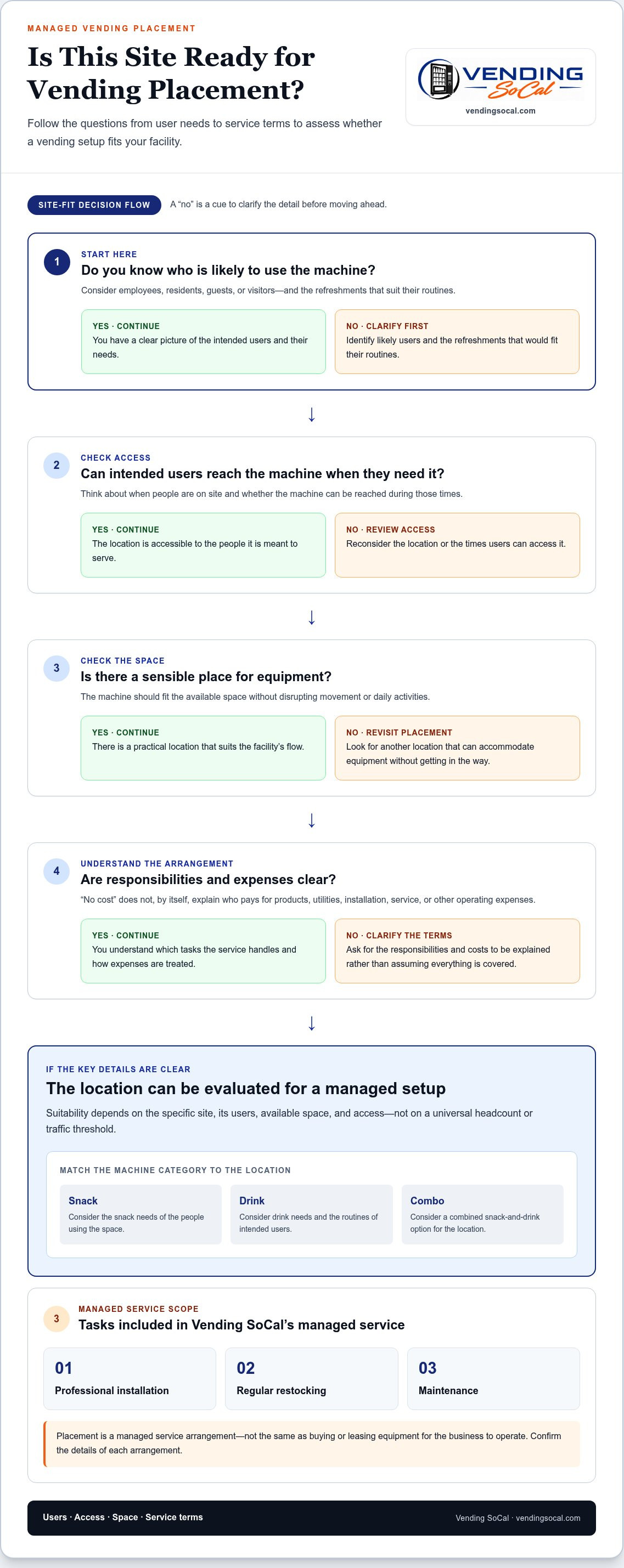
A useful vending setup starts with the realities of your facility, not a universal employee count or a one-size-fits-all rule. Before exploring placement, consider who would use the machine, when they are on site, and whether there is a convenient place for it. These details help show whether vending could meet a regular refreshment need and fit naturally into daily operations.
Site details that help shape a placement
Start with your users and their routines. Employees in an office may use shared spaces during breaks, while hotel guests, apartment residents, clinic visitors, or industrial teams may move through a property differently. Think about when people are present, which areas they can access, and where a machine would be easy to reach without interrupting normal activity.
Use this readiness checklist to organize the details:
- Users: Identify the employees, residents, guests, or visitors who could benefit from convenient refreshments.
- Timing: Consider when people are on site and when they might want snacks or drinks.
- Access: Look for a shared location intended users can reach during their time at the facility.
- Space: Identify a practical area for equipment that will not interfere with everyday movement or work.
- Need: Decide whether the main interest is snacks, drinks, or a combination of both.
Readiness summary: A location is worth assessing when its users have a clear refreshment need, can access a practical placement area, and would benefit from vending as part of their routine.
These factors matter more than applying a single headcount threshold. Hotel guest patterns, apartment shared areas, office schedules, and industrial operating rhythms can each shape a different setup. The specific site determines what will work in practice.
Southern California locations and facility types
Vending SoCal provides managed vending service for commercial facilities in Southern California, including Anaheim, Brea, Buena Park, Costa Mesa, Cypress, Fountain Valley, Fullerton, Garden Grove, Huntington Beach, Irvine, La Habra, La Palma, Newport Beach, Orange, Santa Ana, Tustin, Westminster, and Stanton. Local businesses can assess readiness by looking at the property itself: its users, access, available space, and the refreshment needs created by its daily schedule.
The facility type can help clarify what to consider. A hotel may focus on guest convenience in shared areas. An apartment property may consider how residents use common spaces. An office can think about employee routines, while an industrial facility may account for its work patterns and the places staff gather. These are planning considerations, not automatic qualification criteria. A suitable placement depends on how the details come together at the individual location.
If you can describe who would use the machine, where it could fit, and what refreshments would be useful, you have a practical starting point for no cost vending machine placement. Those details connect a real facility need with a managed vending setup, without relying on a generic headcount or assuming every site is the same.
Getting Started With Vending SoCal’s Managed Placement Service
A useful first step is to describe your facility as it operates day to day. You do not need a detailed equipment plan. A clear picture of the location, the people who use it, and the refreshments they would value gives Vending SoCal a practical starting point for discussing managed vending service.
What to include when describing your location
Share the facility type and its Southern California location, along with its usual operating pattern. Explain whether the site is an office, hotel, apartment community, industrial facility, or another commercial setting. Note when employees, residents, guests, or visitors are typically present, and identify shared areas where a machine could be convenient.
It also helps to describe the refreshment need you are trying to address. Is the priority snacks, drinks, or both? If you have a preferred placement area, mention it and explain how people move through the space. These details help shape a practical vending setup around your facility’s needs.
For example, a business in Orange County can explore how its routines and shared areas shape office vending service. The same location-focused planning can help hotels, apartment communities, and industrial facilities describe their needs clearly.
A simple starting checklist can keep the conversation focused:
- Facility: Identify the business or property type and its location.
- Users: Describe who may use the machine and when they are on site.
- Placement: Point out a possible shared area and any practical access considerations.
- Refreshments: Share whether snacks, drinks, or a combination would best serve users.
A managed service built around the facility
Once the location and user needs are understood, consider the machine category in context. A snack machine may suit a site where packaged food is the main request; a drink machine can prioritize beverages; and a combo machine can address both categories in one placement. Space and user preferences help shape the choice.
Vending SoCal’s managed service brings professional installation, regular restocking, and maintenance together under one provider. The service considers not only where a machine might go, but also how ongoing vending fits the facility. The setup can be shaped around the location and its needs rather than applying one arrangement to every business.
With your facility details and preferred machine category in hand, take a clear next step. Describe what your users need and where vending could fit, then discuss a managed arrangement for your Southern California location.
Turn Your Facility’s Needs Into a Clear Next Step
Frame vending around the experience you want to create at your location. Think about the need you want to address, whether that is making refreshments easier to access during a workday, a guest stay, or time spent on site. A focused goal makes it easier to discuss a setup that fits your facility instead of starting with equipment alone.
As you consider no cost vending machine placement, keep your priorities in view: who the service should help, which machine category seems most relevant, and what would make the placement convenient in your space. Those details create a useful starting point for a managed vending arrangement tailored to your business.
Your location has its own rhythms and needs. A practical conversation can help turn them into a vending plan that fits naturally.
Share your facility’s needs with Vending SoCal to discuss managed vending service for your location.
Frequently Asked Questions
Is no-cost vending machine placement really free?
“No-cost” is not a complete description of every expense connected with vending. The phrase generally describes how a machine is placed and managed, while product purchases and other operating expenses may be handled separately. Review what the managed service includes and how products and other costs are treated. Vending SoCal’s managed service includes professional installation, regular restocking, and maintenance.
Can any business qualify for a no-cost vending machine?
Placement depends on whether the facility can practically serve its users. Consider access, available space, operating patterns, and refreshment needs. For example, a visitor lobby may call for a different setup than a staff break area with restricted access. Hotels, apartments, offices, and industrial sites each have distinct routines, so there is no single headcount formula for assessing fit.
What does a vending machine operator handle after placement?
Vending SoCal’s commercial vending service includes professional installation, regular restocking, and maintenance. This keeps those core tasks within the vending service rather than requiring facility staff to manage them. Sharing information about the people who use the machine and their routines can help shape a useful setup.
Do businesses need to buy or lease a vending machine for managed placement?
No. Managed placement is a service model, while buying or leasing equipment are separate arrangements. Vending SoCal focuses on full-service machine management, not equipment sales or leasing. A business using the service receives vending management rather than purchasing or renting a machine.
Can a business choose the snacks and drinks in its vending machine?
Businesses can share product preferences so the assortment reflects the people and setting. Vending SoCal provides snack, drink, and combo vending services, giving facilities a starting point for planning. An office might prioritize convenient break-time options, while a hotel may consider what guests look for in shared spaces. Share users’ preferences when planning the service.
Does Vending SoCal provide vending service in Orange County?
Yes. Vending SoCal provides commercial vending service in Southern California, including Anaheim, Brea, Buena Park, Costa Mesa, Cypress, Fountain Valley, Fullerton, Garden Grove, Huntington Beach, Irvine, La Habra, La Palma, Newport Beach, Orange, Santa Ana, Tustin, Westminster, and Stanton. These local communities include commercial locations such as hotels, apartments, offices, and industrial facilities.
How do I request vending machine placement for my business?
Contact Vending SoCal with your facility type, city, operating pattern, likely users, and preferred snack, drink, or combo category. Mention a possible placement area and the refreshment need you want to address. These details make it easier to discuss managed vending for your business. Discuss vending placement for your business.
Frequently Asked Questions
In a managed placement, an operator brings equipment to a business location and handles agreed service tasks. Vending SoCal’s managed service includes professional installation, regular restocking, and maintenance. This differs from buying a machine, where the business acquires the equipment, or leasing, where it uses equipment under a separate rental arrangement. “No-cost” by itself does not explain ownership, product purchasing, utilities, or the full scope of service. Look at each part of the arrangement rather than treating the phrase as a promise that every expense is covered. The Vending Machine overview offers general background on the equipment and how it serves customers.
“No-cost” is not a complete description of every expense connected with vending. The phrase generally describes how a machine is placed and managed, while product purchases and other operating expenses may be handled separately. Review what the managed service includes and how products and other costs are treated. Vending SoCal’s managed service includes professional installation, regular restocking, and maintenance.
Placement depends on whether the facility can practically serve its users. Consider access, available space, operating patterns, and refreshment needs. For example, a visitor lobby may call for a different setup than a staff break area with restricted access. Hotels, apartments, offices, and industrial sites each have distinct routines, so there is no single headcount formula for assessing fit.
Vending SoCal’s commercial vending service includes professional installation, regular restocking, and maintenance. This keeps those core tasks within the vending service rather than requiring facility staff to manage them. Sharing information about the people who use the machine and their routines can help shape a useful setup.
No. Managed placement is a service model, while buying or leasing equipment are separate arrangements. Vending SoCal focuses on full-service machine management, not equipment sales or leasing. A business using the service receives vending management rather than purchasing or renting a machine.
Businesses can share product preferences so the assortment reflects the people and setting. Vending SoCal provides snack, drink, and combo vending services, giving facilities a starting point for planning. An office might prioritize convenient break-time options, while a hotel may consider what guests look for in shared spaces. Share users’ preferences when planning the service.
Yes. Vending SoCal provides commercial vending service in Southern California, including Anaheim, Brea, Buena Park, Costa Mesa, Cypress, Fountain Valley, Fullerton, Garden Grove, Huntington Beach, Irvine, La Habra, La Palma, Newport Beach, Orange, Santa Ana, Tustin, Westminster, and Stanton. These local communities include commercial locations such as hotels, apartments, offices, and industrial facilities.
Contact Vending SoCal with your facility type, city, operating pattern, likely users, and preferred snack, drink, or combo category. Mention a possible placement area and the refreshment need you want to address. These details make it easier to discuss managed vending for your business. Discuss vending placement for your business.