
Premium Colleges Vending Services in Orange County
September 23, 2026 · 13 min read
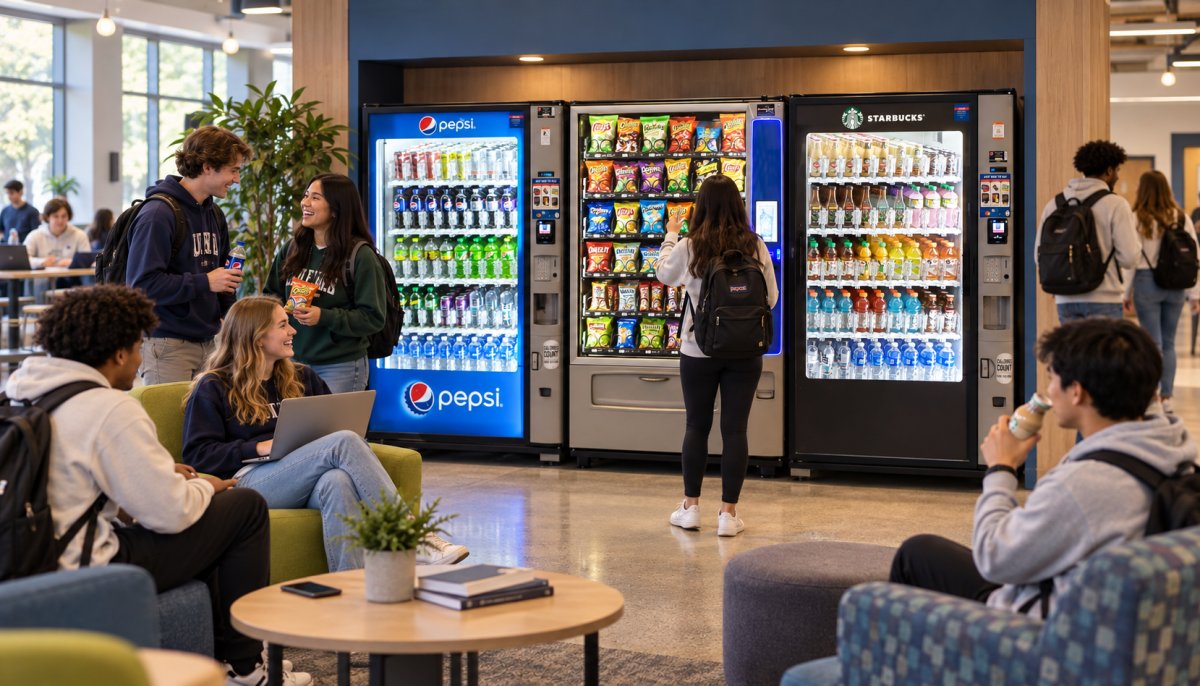
Between 75% and 85% of college students regularly rely on campus vending, yet facility teams often spend valuable hours fielding late-night complaints about jammed hardware, outdated card readers, and depleted shelves. If your in-house staff is bogged down by emergency repair calls, inventory purchasing, and routine restocking, you already know that keeping students nourished shouldn't drain internal campus resources. Upgrading your colleges vending services should solve logistical headaches, not multiply them.
Discover how turnkey campus vending services eliminate management burdens while delivering 24/7 student nourishment. Modern collegiate life moves fast, and students expect seamless tap-and-go mobile payments alongside balanced snack and beverage selections that align with campus wellness goals. You don't need to stretch your operating budget or sacrifice maintenance hours to meet those standards. This guide examines how zero-cost installation of modern snack, drink, and combo equipment, backed by dependable local route drivers, provides an effortless refreshment program for campuses across Irvine and Fullerton.
Key Takeaways
- Learn how partnering with dedicated colleges vending services eliminates capital expenses while taking maintenance, repairs, and inventory completely off your facilities team's plate.
- Explore modern snack, drink, and combo equipment features, including automated product drop sensors, energy-efficient cooling, and seamless mobile pay options.
- Discover strategic placement methods that optimize daily student foot traffic across residence hall lounges, study spaces, and transit corridors.
- Follow a clear framework for auditing campus needs and selecting a dependable Southern California route operator to manage ongoing restocking and sanitation.
Why Modern Colleges Require Full-Service Campus Vending Solutions
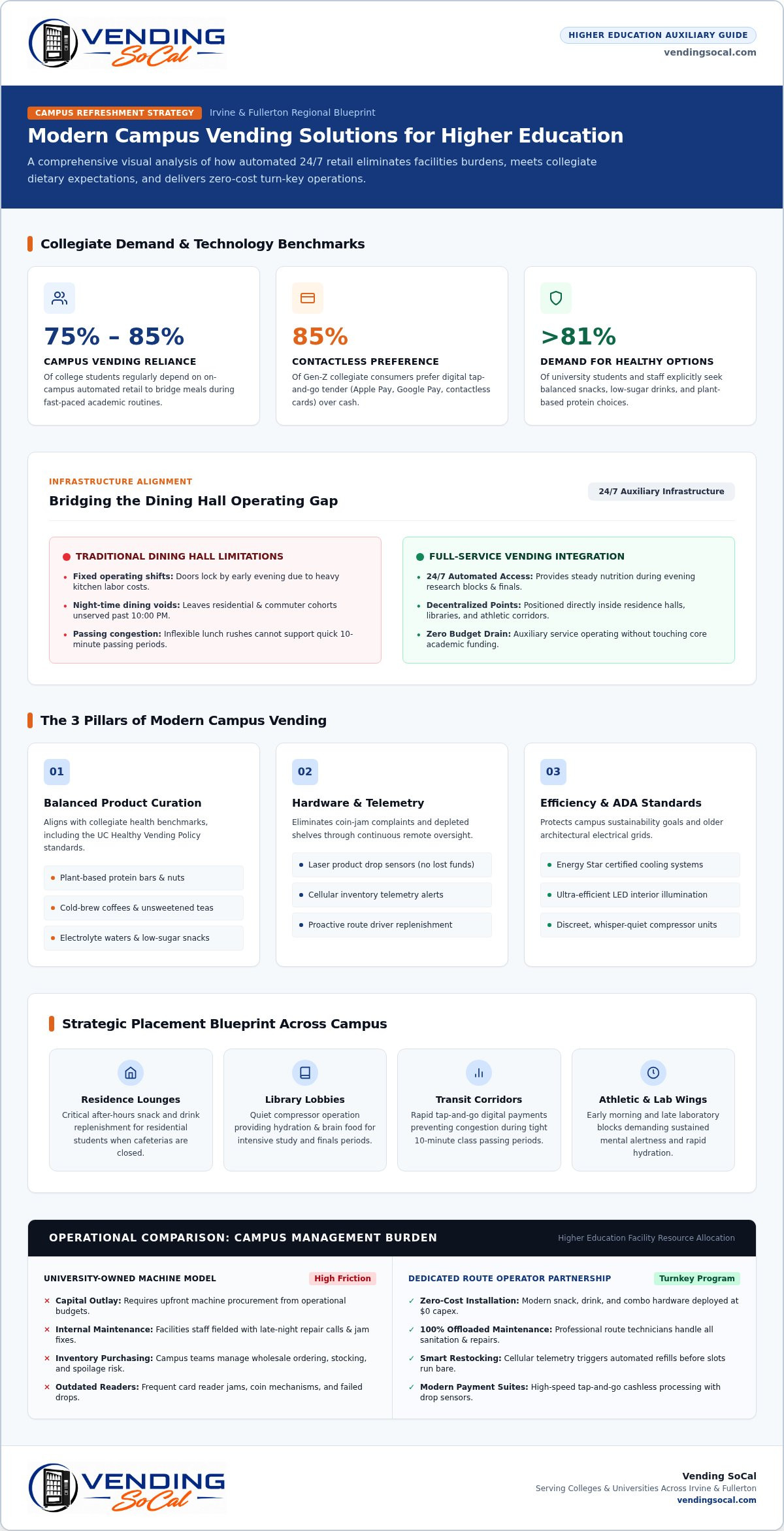
Higher education environments operate on fluid, decentralized schedules. Between evening research blocks, early morning athletic practices, and back-to-back commuter schedules, campus activity rarely stops. Traditional campus dining halls cannot easily match this 24-hour cadence due to high staffing costs and fixed kitchen shifts. Investing in dedicated colleges vending services bridges this infrastructure gap by placing automated retail directly where students congregate. Rather than functioning simply as snack dispensers, modern automated equipment acts as an essential auxiliary service. Campuses throughout Orange County gain reliable refreshment options without drawing from core academic budgets or burdening campus maintenance personnel.
The modern vending machine has transformed from an isolated mechanical box into a high-capacity convenience hub. Partnering with a dedicated route operator ensures that universities get upgraded snack, drink, and combo units without equipment procurement headaches.
Bridging the Campus Dining Hall Operating Gap
Dining halls cater effectively to lunch rushes, but their doors usually lock by early evening. That schedule leaves residential students and commuter cohorts stranded when hunger strikes at 10:00 PM. Automated vending fills this critical dining void during late-night study sessions and intensive finals weeks. Placing dependable machines inside library lobbies, residential common rooms, and athletic corridors ensures students stay focused and nourished at any hour.
Meeting Gen-Z Expectations with Contactless Technology
Today's collegiate population rarely carries physical cash or loose coins. In fact, industry payment surveys indicate that 85% of Gen-Z consumers prefer contactless digital payments over traditional tender. Modern campus units must meet these daily expectations. Contemporary hardware integrates tap-to-pay readers supporting Apple Pay, Google Pay, and contactless bank cards. These rapid digital transactions eliminate card jams, prevent line congestion between quick ten-minute passing periods, and ensure students grab their refreshments without missing a beat.
Essential Features of Successful Higher Education Vending Programs
A dependable campus refreshment program requires far more than dropping off standalone boxes in a hallway. Top-tier colleges vending services combine responsive hardware, data-driven stocking, and products that fit collegiate lifestyle habits. When selecting automated units for high-density academic zones, three essential operational pillars dictate overall performance.
High-Demand Product Selection and Balanced Options
Students want a balance between quick study snacks and sustained mental focus. Over 81% of university students and staff express clear demand for healthier choices in automated campus retail. Aligning inventory with benchmarks like the University of California Healthy Vending Policy ensures that selections feature plant-based protein bars, nuts, and low-sugar alternatives alongside familiar comfort snacks. Hydration matters just as much. Stocking cold-brew coffees, electrolyte waters, and unsweetened teas keeps students alert throughout long laboratory blocks. Administrators can easily tailor their campus lineups by reviewing our refreshment product catalog.
Reliable Machine Hardware and Modern Telemetry
Nothing sparks student frustration faster than a mechanical jam that swallows funds without dispensing food. Contemporary hardware eliminates this pain point using internal laser drop sensors. If an item fails to drop into the collection bin, the machine rotates an alternate coil or cancels the charge instantly. Smart cellular telemetry continuously feeds real-time sales data to local route drivers. Instead of relying on busy facilities staff to report low inventory, technicians receive automated restocking alerts before slots ever run bare. Review available commercial configurations through our vending machine gallery.
Energy Efficiency and ADA Accessibility Standards
Colleges in Irvine and Fullerton often have to balance historic architectural infrastructure with strict sustainability targets. Modern snack, drink, and combo units utilize Energy Star certified cooling systems and efficient LED illumination, preventing unwanted electrical spikes across older campus grids. Quiet compressor designs also ensure equipment runs discreetly near quiet library annexes and lecture spaces. Universal ADA compliance remains standard across all equipment, featuring low-profile digital interfaces and accessible dispensing doors. If your department is ready to upgrade outdated campus units with zero equipment purchase costs, reach out to our local team to review your building layout.
Full-Service Campus Vending vs. University-Owned Machine Operation
Campus administrators often face a core operational decision: should the university buy and manage its own equipment, or partner with a full-service route operator? Purchasing units directly might seem like an easy way to retain full control over retail revenue. In practice, self-operating an unattended refreshment network quickly turns into an administrative drain. Partnering with professional colleges vending services shifts every operational hassle, from machine delivery to mechanical troubleshooting, away from university payroll.
The True Costs of Self-Operating Vending Machines
Direct ownership introduces immediate capital hurdles and complex logistics. When a college purchases its own units, departments must divert funds away from student programs to cover upfront equipment costs. In-house custodial and maintenance personnel then end up spending critical hours diagnosing bill validators, unjamming spirals, and managing merchant accounts. Inventory management creates another headache. Academic calendars fluctuate drastically between midterms, spring breaks, and summer terms. When student traffic suddenly drops, university-purchased stock easily expires on the shelves, creating preventable financial loss.
The Turnkey Advantage of Fully Managed Placement
A fully managed model completely redefines this equation. Instead of campus staff handling logistics, a dedicated local provider manages the entire lifecycle at zero operational cost to the institution:
- Professional Installation: Qualified route teams deliver, position, and securely anchor modern snack, drink, and combo units in pre-approved zones.
- Proactive Restocking: Dedicated route drivers handle regular inventory rotation and sanitation, keeping machines clean and appealing.
- Hands-Off Maintenance: When technical glitches occur, local technicians handle repairs quickly without involving your campus physical plant crew.
Studies evaluating student vending machine trends confirm that reliability and item variety directly influence whether students utilize automated dining. When machines stand empty or out of order, student trust erodes. Outlining your campus strategy through an outsourced vendor ensures consistent upkeep across every hall. For broader regional context on automated food service in education, explore how our team coordinates school vending machine services in Orange County.
Strategic Placement Blueprint for College and University Campuses
Machine placement directly dictates student engagement and program convenience. Sticking a unit in a hidden basement corner leads to stagnant inventory and frustrated students walking past bare walls. When deploying colleges vending services across sprawling campuses in Irvine and Fullerton, auxiliary planners must map natural footpaths. Evaluating student movement between housing, study hubs, and recreation facilities unlocks high utility while preserving clear pathways.
Residence Halls, Dorms, and Student Community Lounges
Dormitory ground floors, communal study lounges, and laundry rooms generate steady late-night foot traffic. Installing modern combo vending machines in these residential spaces provides immediate access to quick bites, discouraging students from driving off-campus during late hours. Compact combo units are especially effective here, combining refrigerated cold drinks and pantry snacks in a single footprint without crowding shared living areas.
Academic Libraries, Study Hubs, and Computer Labs
Main campus libraries require thoughtful placement strategies to respect quiet floor rules. The best approach positions beverage and snack equipment near secondary foyer entrances, enclosed break alcoves, or computer lab corridors. This design isolates compressor hum and transaction chatter from silent study floors. Graduate students and study groups putting in overnight hours gain effortless refreshment access just steps from their desks.
Fieldhouses, Gyms, and Commuter Student Parking Structures
Athletic facilities and parking transit hubs serve distinct campus populations with unique physical routines:
- Campus Recreation Centers: Student athletes and gym members look for quick protein, electrolyte waters, and chilled recovery drinks right outside locker rooms and weight floors.
- Commuter Parking Structures: Commuter students balancing jobs and classes often lack time to visit central dining halls. Placing equipment on ground-level transit plazas lets them grab cold hydration and snacks between commutes.
- Sheltered Walkways: Covered exterior alcoves extend automated convenience across wide campus quads without exposing hardware to outdoor elements.
Planning proper site layout ensures seamless operations across your entire educational institution. Learn more about regional route coverage by visiting our Orange County service area.
How to Choose the Best Vending Service Partner in Southern California
Selecting an automated retail provider requires a clear, methodical evaluation. With educational spaces facing fluctuating student volumes and strict wellness expectations, partnering with the right colleges vending services makes the difference between an effortless campus amenity and continuous administrative headaches. University auxiliary directors can streamline this decision by following a structured, five-step assessment:
- Audit Campus Foot Traffic: Identify underserved facilities, such as commuter lounges, arts complexes, and night laboratory wings.
- Require Contactless Hardware: Mandate modern units equipped with tap-to-pay mobile wallet readers and guaranteed drop detection.
- Prioritize Route Proximity: Partner with an operator stationed locally to guarantee rapid response times for refilling and repairs.
- Establish Dynamic Menus: Ensure product assortments reflect modern student dietary demands and regional campus nutritional guidelines.
- Insist on Zero-Cost Placement: Confirm a fully managed service contract covering all hardware delivery, installation, and ongoing maintenance without capital fees.
Prioritizing Local Operators Over National Giant Conglomerates
National vending chains often treat local higher education accounts as minor dots on a regional map. When equipment malfunctions on a Friday afternoon, their ticketing systems may leave machines out of order for days. Partnering with a dedicated Orange County operator changes that dynamic. Local route drivers know community traffic patterns, maintain regular restocking schedules, and take personal pride in keeping university facilities running smoothly. You can verify nearby route coverage by reviewing our dedicated Southern California service area.
Ensuring Flexible Menus and Seasonal Academic Adjustments
Colleges experience dramatic shifts between packed fall semesters, quiet intersessions, and low-density summer programs. An inflexible vendor runs the risk of stocking items that linger past their expiration dates. Responsive operators use real-time digital sales analytics to adjust replenishment frequency automatically, scaling up restocks ahead of midterm weeks and dialing back volume during winter recesses. If you're comparing institutional contracting standards across auxiliary programs, consult our comprehensive professional vending services buying guide.
Getting Started with Turnkey Campus Vending Placement
Initiating service involves minimal administrative effort. A quick on-site assessment verifies dedicated wall outlets, floor measurements, and ADA clearance points. Once layout details are finalized, your provider handles equipment positioning, electrical connections, and full product staging. Your institution gains upgraded refreshment technology for residential students and commuting staff, while campus facility teams stay completely focused on primary educational priorities.
Elevate Your Campus Refreshment Program Without the Overhead
Delivering around-the-clock nourishment shouldn't create extra work for campus staff or pull funding from core departmental budgets. Modern colleges vending services solve this challenge by pairing energy-efficient hardware with the seamless, tap-and-go digital payment options students use every day. Direct machine ownership creates unnecessary repair headaches and inventory risk, but turnkey vendor management keeps shelves full and equipment running smoothly. Backed by over a decade of dedicated route management across Southern California, Vending SoCal provides complete placement with zero capital expense or leasing fees. We handle initial delivery, automated inventory tracking, regular restocking, and hands-on maintenance so your administration doesn't have to lift a finger.
Upgrade your campus with free full-service vending from Vending SoCal Give your residential students, commuters, and faculty the dependable dining support they deserve while keeping facilities teams focused on core campus priorities. Creating an effortless automated refreshment program tailored to your Irvine or Fullerton campus has never been simpler.
Frequently Asked Questions
How much does it cost for a college to install vending machines on campus?
There is zero operational cost or capital expense required from the college. With turnkey colleges vending services from Vending SoCal, delivery, installation, initial product staging, and routine maintenance are provided completely free of charge. Your university facility never pays machine purchase prices or ongoing leasing fees, allowing auxiliary departments to preserve operating funds for student academic programs.
Can modern campus vending machines integrate student ID cards or mobile pay?
Yes, modern machines integrate contactless card readers that support tap-to-pay mobile wallets like Apple Pay and Google Pay alongside standard credit and debit cards. Many campus card processing networks can also be configured depending on local university technology standards. This tap-and-go speed keeps transaction lines moving quickly between class periods without requiring students to carry coins or paper bills.
Who handles machine repairs and restocking when products sell out?
Your dedicated local route operator handles every aspect of routine restocking, cleaning, and mechanical repairs. Real-time cellular telemetry alerts our Southern California drivers when inventory drops below preset levels, triggering scheduled refilling visits before slots run empty. If a dispenser or validator ever malfunctions, local technicians respond directly to resolve the issue without involving your campus physical plant crew.
What snack and beverage brands can be stocked in university machines?
Colleges can customize selections from a broad catalog of name-brand favorites and health-conscious alternatives. Options range from traditional chips and sodas to high-protein snacks, nuts, keto-friendly bars, sparkling waters, and cold-brew coffees. Assortments are easily curated to comply with California campus wellness policies while providing satisfying options for residential students studying through late-night hours.
How much physical space and electrical supply does a campus machine need?
A standard snack, drink, or combo vending unit occupies roughly three to four feet of wall width and about three feet of depth. Each unit operates efficiently using a single standard, dedicated 115-volt three-prong wall outlet. Modern Energy Star certified components draw minimal power, ensuring that placement inside older campus buildings in Irvine or Fullerton won't overload existing electrical circuits.
What happens to campus vending services during summer or winter breaks?
Our colleges vending services adjust automatically to match university academic calendars. Using remote inventory monitoring, route managers track seasonal shifts in foot traffic across dorms and lecture halls. Inventory volume and restocking visits are proactively dialed back during quiet break periods to ensure stock stays fresh, then scaled up right before students return for busy fall and spring terms.
Frequently Asked Questions
There is zero operational cost or capital expense required from the college. With turnkey colleges vending services from Vending SoCal, delivery, installation, initial product staging, and routine maintenance are provided completely free of charge. Your university facility never pays machine purchase prices or ongoing leasing fees, allowing auxiliary departments to preserve operating funds for student academic programs.
Yes, modern machines integrate contactless card readers that support tap-to-pay mobile wallets like Apple Pay and Google Pay alongside standard credit and debit cards. Many campus card processing networks can also be configured depending on local university technology standards. This tap-and-go speed keeps transaction lines moving quickly between class periods without requiring students to carry coins or paper bills.
Your dedicated local route operator handles every aspect of routine restocking, cleaning, and mechanical repairs. Real-time cellular telemetry alerts our Southern California drivers when inventory drops below preset levels, triggering scheduled refilling visits before slots run empty. If a dispenser or validator ever malfunctions, local technicians respond directly to resolve the issue without involving your campus physical plant crew.
Colleges can customize selections from a broad catalog of name-brand favorites and health-conscious alternatives. Options range from traditional chips and sodas to high-protein snacks, nuts, keto-friendly bars, sparkling waters, and cold-brew coffees. Assortments are easily curated to comply with California campus wellness policies while providing satisfying options for residential students studying through late-night hours.
A standard snack, drink, or combo vending unit occupies roughly three to four feet of wall width and about three feet of depth. Each unit operates efficiently using a single standard, dedicated 115-volt three-prong wall outlet. Modern Energy Star certified components draw minimal power, ensuring that placement inside older campus buildings in Irvine or Fullerton won't overload existing electrical circuits.
Our colleges vending services adjust automatically to match university academic calendars. Using remote inventory monitoring, route managers track seasonal shifts in foot traffic across dorms and lecture halls. Inventory volume and restocking visits are proactively dialed back during quiet break periods to ensure stock stays fresh, then scaled up right before students return for busy fall and spring terms.