Apartment Complex Vending Machine Service in Irvine
October 19, 2026 · 16 min read
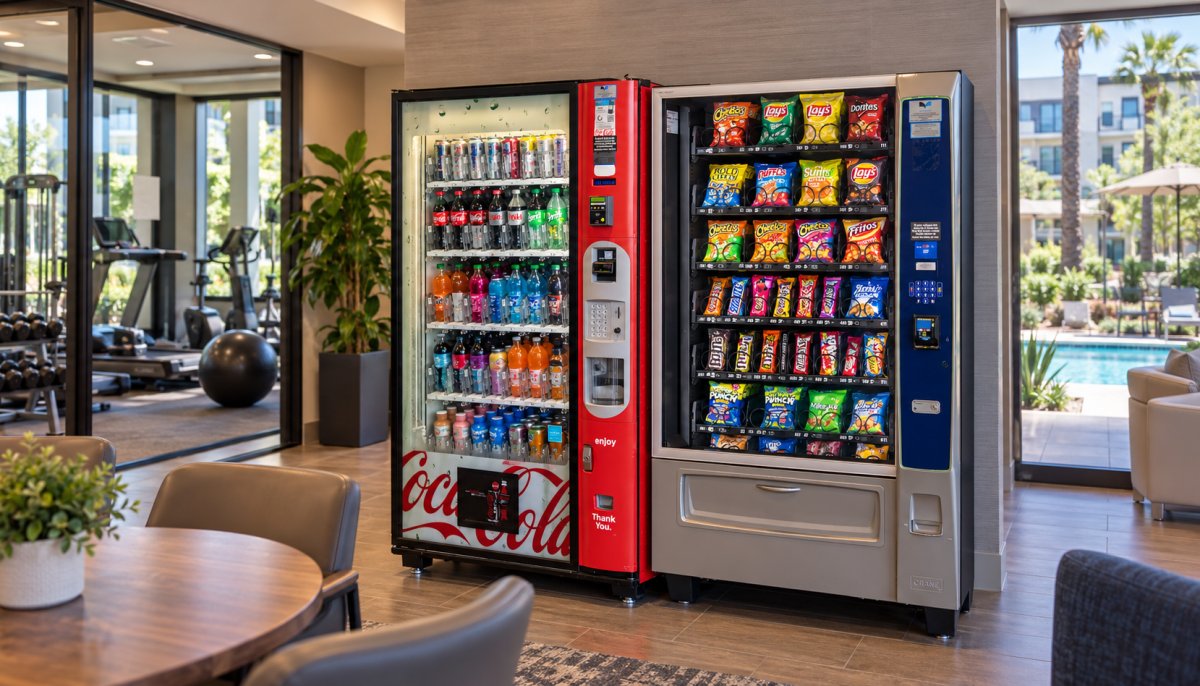
What if an on-site vending machine made everyday convenience easier without giving your team another job to manage? A well-matched apartment complex vending machine service gives residents convenient access to snacks and drinks while the service provider handles routine machine operations.
It’s reasonable to wonder whether residents will use the machines, where they’ll fit, and who will handle restocking or repairs. Those details matter. The right setup should suit your community’s routines and make responsibilities clear, so property staff aren’t left fielding vending issues.
In this guide, you’ll learn what managed apartment vending includes, how to assess resident needs, and how to choose practical locations and product categories. Vending SoCal serves apartment communities in Irvine with professional installation, regular restocking, and maintenance for snack, drink, and combo vending machines. We’ll also cover what to plan before installation so you can add a convenient amenity with less day-to-day work for your team.
Key Takeaways
- An apartment complex vending machine service can include installation, regular restocking, and maintenance, keeping routine machine tasks off property staff.
- Use resident routines and building access to identify practical locations, such as laundry rooms or shared common areas.
- Choose snack, drink, or combo machines based on resident needs and the space available.
- Before installation, document placement preferences, access arrangements, service responsibilities, and property contacts.
- Set clear expectations for service coordination and communication before installation.
What apartment complex vending machine service includes in Southern California
An apartment vending amenity works best when residents gain convenient access to snacks or drinks without property staff taking on routine machine operations. An apartment complex vending machine service is provider-managed, rather than a plan for the property to purchase or lease equipment and operate it independently. The provider installs and maintains the machines and replenishes products, while property staff coordinate site details that make service practical.
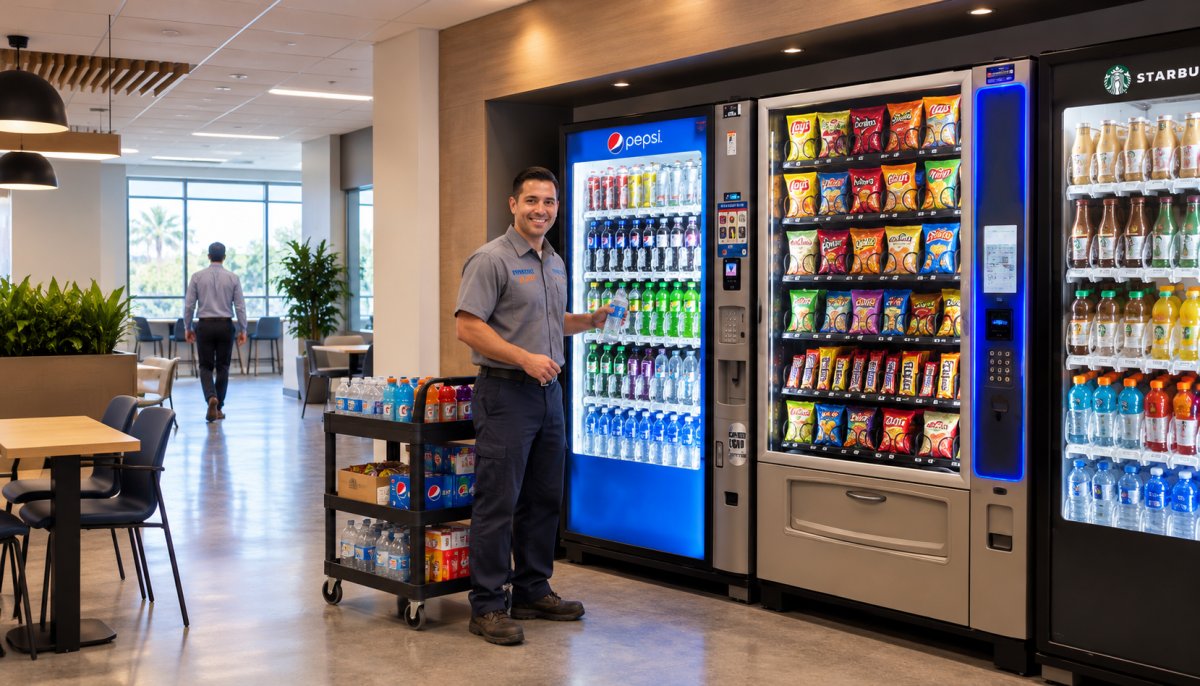
Vending SoCal’s apartment service includes professional installation, regular restocking, and machine maintenance. The machine category and placement should suit residents’ routines, the available space, and building access. A machine near a shared amenity may be more useful than one in an area residents rarely visit.
What does a full-service apartment vending provider handle?
Installation, replenishment, and maintenance are core parts of managed service. Before setup, clarify how the service team and property staff will coordinate access, who the property contact is, and how to report a machine issue. Agree on where to direct questions and how updates will be shared. Clear communication helps keep vending concerns from landing with staff who don’t manage the machines.
Keep responsibilities distinct. Vending SoCal handles the vending equipment and its routine service. The property team coordinates site access, identifies placement preferences, and shares relevant building procedures. Documenting these arrangements gives everyone a practical reference without making property staff responsible for stocking products or repairing machines.
Which vending machine categories may fit an apartment community?
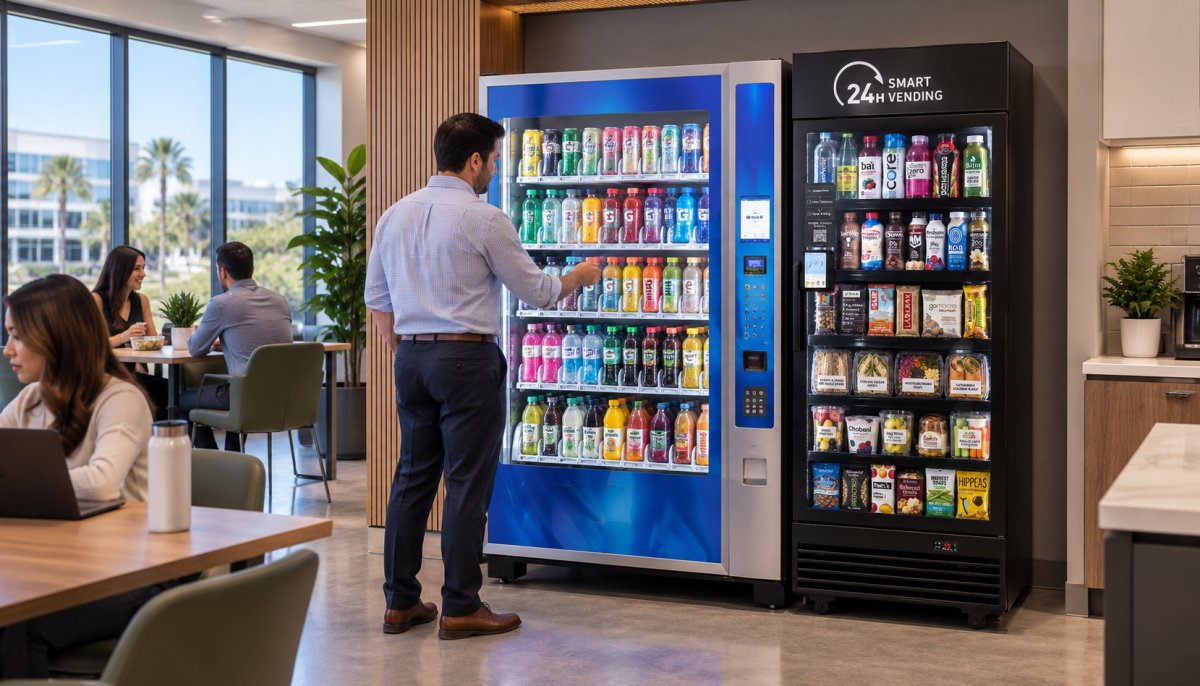
Each category serves a different everyday need. A snack machine offers quick bites between errands or while residents use shared facilities. A drink machine focuses on beverages for residents on the go. A combo machine brings snacks and drinks together in one unit, which may suit a property with limited space or placement options. These are category-level choices, not promises about specific models or features.
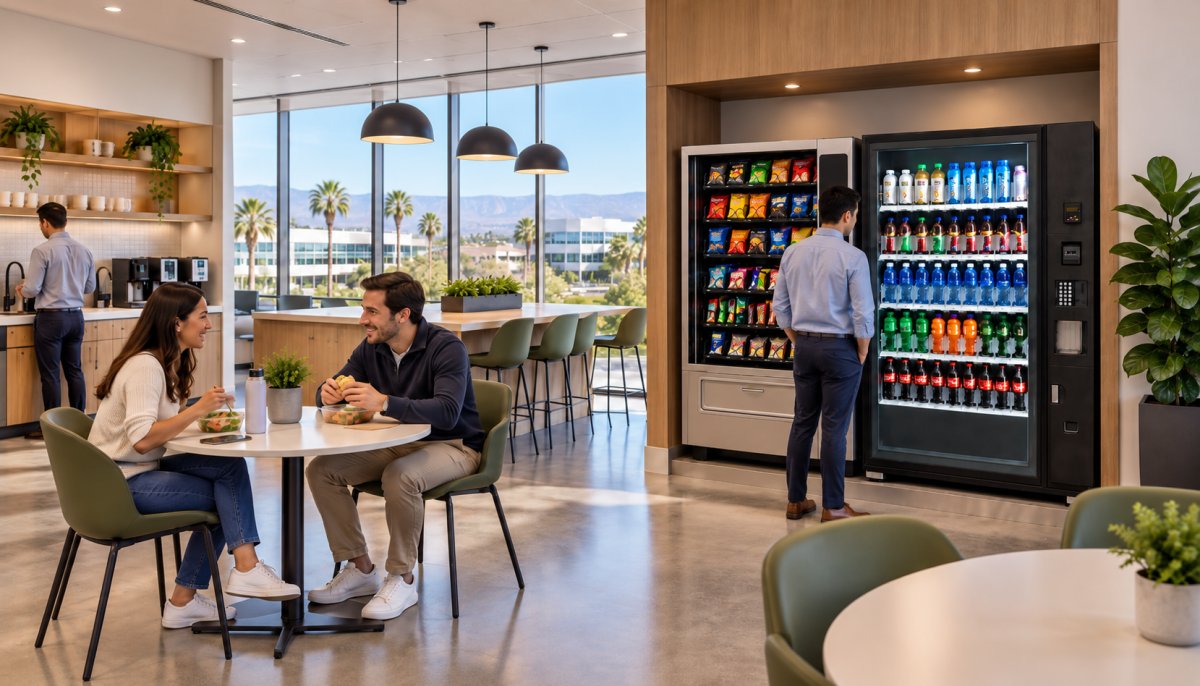
Start with resident routines, not assumed sales volume. Consider when people pass through shared spaces, what they might want nearby, and whether the location is accessible during their usual activities. A laundry area may suit a quick snack or drink; a common room may serve residents gathering or waiting. The best fit depends on how people use the property and the space available for the machine and service access.
A vending machine can dispense different kinds of products, but choosing a category is only one part of planning a useful amenity. For a closer look at the local offering, explore apartment vending service in Orange County. Match the machine type to resident needs, then align its placement and service coordination with the property’s day-to-day operations.
How to assess resident demand and choose vending locations
A useful location starts with how residents already move through the property. Rather than relying on a fixed population threshold or assuming a machine will be used, look for everyday routines that bring people past a shared space. Laundry visits, time spent in a lounge, and trips through a lobby can all suggest potential use. These observations help you assess whether an apartment complex vending machine service fits the community.
Placement should work for the property, not just be visible. Consider whether residents can reach the proposed spot comfortably and whether the machine would interfere with shared activities, cleaning, or the flow of people through the area. A convenient amenity should feel integrated into the space, not in the way.
Which apartment amenities and shared spaces are worth assessing?
Walk the property with resident routines in mind. A laundry area may see people waiting, while a lounge may draw residents who want a snack or drink nearby. A lobby can be convenient if residents naturally pass through it, but visibility alone doesn’t make it the right choice. Ask staff which common areas see regular activity and note any access or cleanliness considerations.
- Laundry areas: Consider whether residents spend time there and whether a machine would leave the shared space usable.
- Lobbies: Check whether residents pass through naturally and whether placement would disrupt movement.
- Lounges and other shared areas: Look at how residents use the space and whether vending would complement its purpose.
Make a short list of candidate locations, then compare them for resident access, visibility, and practical service coordination. A spot residents can reach during normal routines is more promising than one that’s convenient only for installation.
How can a property manager estimate vending needs?
Start with information the property already has. Review resident comments, amenity requests, and patterns of shared-space use. If residents often ask for convenient refreshments or spend time in a particular amenity, those details can guide the discussion. Consider the community’s mix of routines and preferences, but don’t assume that every resident wants the same products.
Use those observations to describe likely needs, such as snacks for quick breaks, drinks for residents on the go, or a combination. If product choices raise labeling questions, the FDA vending machine labeling requirements page is a reference for that topic. Treat demand as useful planning information, not a guarantee of sales. Share resident feedback and site details with Vending SoCal to help shape a practical placement and product discussion.
Before settling on a location, bring together candidate spaces, resident feedback, and relevant access details. A clear picture of the property makes the placement discussion more specific. To discuss your property’s vending needs, share your site details with our team.
How to compare apartment vending machine service providers
A useful comparison focuses on what the property will actually receive, not promotional claims or assumptions about how vending service usually works. For an apartment complex vending machine service, compare written terms for the property, proposed machine categories, service responsibilities, and communication process. Prices, commissions, contract terms, and eligibility vary by provider, so treat them as specific proposal terms rather than market standards.
Create a simple comparison sheet with a column for each provider and rows for the items that matter to your team. Record only terms stated in writing. If an item is unclear, flag it for discussion instead of filling the gap with an assumption.
- Service scope: Who handles installation, restocking, and maintenance?
- Communication: Who is the property’s contact, and how are questions or machine issues reported?
- Access and coordination: What site access is needed, and how will visits be coordinated with property operations?
- Routine expectations: What does the written proposal say about servicing and keeping the property informed?
- Coverage: Is the provider’s service area a fit for the property, and what scope is proposed for the site?
What questions should you ask before choosing a provider?
Ask for a clear division of responsibilities. The written plan should name who installs and maintains the equipment, who replenishes products, and how property staff can report a concern. Clarify the communication channel, the contact for routine coordination, and what happens after an issue is reported. These details help prevent residents’ requests from becoming an informal task for onsite staff.
Discuss building access and placement as part of the same conversation. For example, if the proposed location is inside a shared amenity, outline how the service team will reach it and which property contact can coordinate site arrangements. Vending SoCal serves apartment communities throughout its Southern California service area, including Orange County.
How do machine types and products affect resident fit?
Compare snack, drink, and combo categories against the needs residents have shared. A snack-focused setup may address requests for quick bites, while a drink machine centers on beverages. A combo category brings both into the same placement discussion. Don’t judge a proposal by the number of products alone; consider whether the selection reflects resident feedback and the purpose of the location. Vending SoCal offers snack, drink, and combo vending machine categories.
Ask how product selections can be reviewed over time and how resident comments can inform future choices. For general background on operational considerations, the Association of Food and Drug Officials provides information about vending laws and regulations. Keep the decision grounded in the written scope, site needs, and terms for your property. To discuss apartment vending for an Irvine community, share your property details with Vending SoCal.
What to plan before installing apartment vending in Orange County
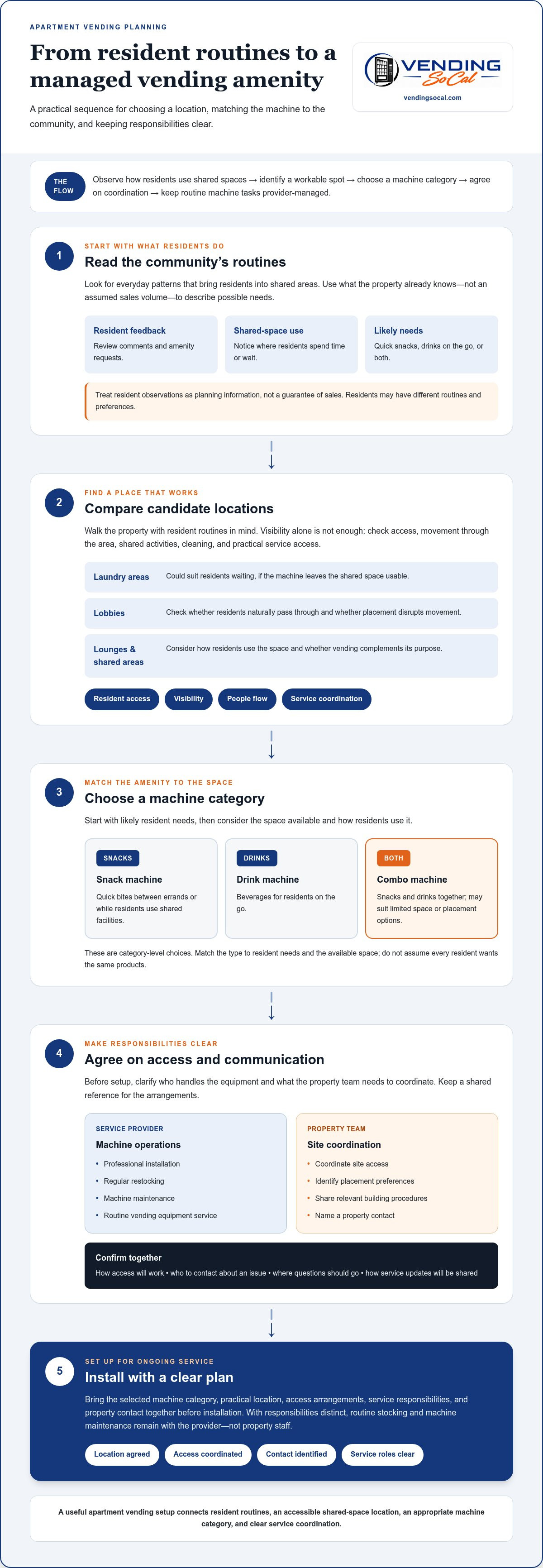
A smooth installation starts with shared expectations. Before an apartment complex vending machine service begins, the property team and service provider need a practical picture of resident needs, the site, access, and who will coordinate routine service. Planning these details early helps prevent avoidable confusion and keeps installation aligned with the way the community operates.
Use this sequence to organize the planning conversation:
- Define resident needs. Gather amenity requests and note which snack or drink categories may suit residents’ routines.
- Review the site. Identify possible locations and note access conditions, shared-space use, and any placement concerns.
- Confirm the service scope. Document the machine category, installation responsibilities, restocking and maintenance expectations, and communication process.
- Coordinate installation. Agree on access arrangements, the property contact, and any site preparation before scheduling the work.
Vending SoCal serves apartment communities in Southern California, including Orange County. The company provides professional installation, regular restocking, and machine maintenance. Use the Vending SoCal service areas page to see the local communities served and plan the site details with the provider.
What should the property team prepare for a site review?
Bring a short list of candidate locations and identify who can coordinate property access. Share relevant building access limitations, operating hours, and patterns of resident use, such as which amenities are active at different points in the day. This context helps the service team assess how a machine could fit the site. Note any additional property details that may affect placement or access.
Be specific about each location. Note whether the space serves another purpose, whether residents need to pass through it, and any concerns about keeping shared areas clean and clear. Photos or a site walk-through can help explain the space. The goal is to make the placement discussion grounded in the property rather than guesswork.
How should installation and ongoing service expectations be agreed?
Put the agreed details in writing before installation. Clarify what professional installation covers, how access will be coordinated, and whether the property needs to prepare the chosen area. Record who handles restocking and maintenance, how staff can submit a request, and where resident feedback should go. Clear roles make it easier for property staff to direct questions without taking on routine machine operations.
Keep one current reference for the property team. Include the approved location, access instructions, primary property contact, service communication channel, and any agreed process for sharing resident comments. If the contact changes, update the record and notify the service team. This handoff helps preserve continuity through staff transitions and keeps operational expectations easy to find.
Before moving ahead, review the written plan against the community’s needs and site conditions. Make sure the placement, access arrangements, installation scope, and ongoing responsibilities are clear to everyone involved. A clear plan gives residents a more convenient amenity and helps the property team keep its role focused on coordination.
Choosing apartment complex vending machine service in Irvine and nearby cities
A good fit comes down to four things: resident needs, a practical location, clearly defined service responsibilities, and service suited to the property. Vending SoCal provides managed apartment vending with snack, drink, and combo machine categories. The right setup depends on the community and site, so make the plan around residents’ routines and the property’s layout.
How can Irvine and Orange County properties confirm service coverage?
Vending SoCal serves Irvine, Anaheim, Santa Ana, and other nearby communities. The local service area includes Anaheim, Brea, Buena Park, Costa Mesa, Cypress, Fountain Valley, Fullerton, Garden Grove, Huntington Beach, Irvine, La Habra, La Palma, Newport Beach, Orange, Santa Ana, Tustin, Westminster, and Stanton. Share the property location and details about the site to make the service conversation specific to the community.
Before deciding on a setup, consider what residents are likely to use and what the property can accommodate. A machine in an accessible shared area may suit one community, while another property may need a different placement. Review the proposed scope in writing, including installation, restocking, maintenance, site access, and the property’s coordination role. Clear terms help staff understand what the provider handles and where property support is needed.
What information should you include in a service inquiry?
A focused inquiry gives the service team useful context from the start. Include the property location, candidate machine locations, relevant access requirements, and a brief description of how residents use those shared spaces. Mention whether residents have requested snacks, drinks, or both, and note any preferences the property team has heard. These details make the discussion specific without assuming demand or promising a particular setup.
It also helps to outline what you want clarified:
- Site fit: Which proposed locations and access arrangements should be reviewed?
- Machine category: Would a snack, drink, or combo machine best match resident needs and available space?
- Service scope: What installation, restocking, and maintenance responsibilities are proposed?
- Coordination: Who should the property team contact about access, service questions, or resident feedback?
- Next steps: What information or site review will help define the arrangement?
With those points in hand, property teams can evaluate an apartment complex vending machine service based on its fit for the actual community, rather than broad claims or assumed standards. If you’re planning vending for an Irvine or Orange County property, discuss apartment vending service with Vending SoCal and share the details needed to start the conversation.
Make the Next Step a Property-Specific Plan
A vending amenity works best when it reflects how residents use the community, not just where a machine can fit. Treat the first plan as a starting point: gather resident input, agree on a suitable space, and set a clear way to share feedback after service begins. That gives the property team and service provider a practical basis for keeping the offering relevant as residents’ needs become clearer.
If an apartment complex vending machine service feels like a good fit, focus on the details that make the idea workable for your property. A conversation about resident needs, the site, and service coordination can turn the idea into a plan your team understands.
With a thoughtful plan and clear coordination, your community can take a confident step toward a more convenient resident experience.
Frequently Asked Questions
What does apartment complex vending machine service include?
An apartment complex vending machine service can include installation, product replenishment, and machine maintenance. The arrangement should spell out how staff coordinate access, report issues, and share resident feedback. For example, a property manager can identify one contact for site coordination while directing machine concerns through the agreed service channel. This keeps expectations clear without making vending tasks an informal part of staff’s daily workload.
Can an apartment complex get snack and drink vending machines?
Yes. Apartment communities can choose snack machines, drink machines, or a combo machine that offers both categories. The choice can reflect resident requests and how people use the proposed space. For instance, a property might prioritize drinks near a frequently used shared amenity, while another may prefer snacks or a mix. Make product selection part of the service discussion instead of assuming what residents want.
Where should a vending machine be placed in an apartment complex?
Choose a shared location residents can reach naturally, such as a laundry area, lobby, or lounge, if the space can accommodate the machine without disrupting its use. Consider who can access the area, how residents move through it, and whether staff can coordinate service visits. A prominent spot may not be practical if it narrows a walkway or interferes with another amenity.
Who restocks and maintains apartment vending machines?
In a managed apartment vending arrangement, the service provider handles routine replenishment and machine maintenance. Property staff support the process by coordinating building access and directing questions to the agreed contact. Before service begins, clarify how staff should report an issue, what information to include, and how resident comments will be passed along. A simple process helps ensure each request reaches the right person.
How do I choose an apartment vending service provider?
Compare written proposals for the responsibilities and communication process each one describes. Check who handles installation, restocking, and maintenance, how access is arranged, and how the property can report a concern. Also consider whether the suggested machine category and product selection respond to resident feedback. Treat costs, commissions, contract terms, and eligibility as specific proposal terms, not standard expectations for every provider.
Does Vending SoCal provide apartment vending service in Irvine?
Yes. Vending SoCal provides apartment vending service in Irvine and nearby communities. Its local service area includes Anaheim, Brea, Buena Park, Costa Mesa, Cypress, Fountain Valley, Fullerton, Garden Grove, Huntington Beach, La Habra, La Palma, Newport Beach, Orange, Santa Ana, Tustin, Westminster, and Stanton. Share your property details to discuss the site and service setup.
Does Vending SoCal sell or lease vending machines to apartment complexes?
No. Vending SoCal provides managed apartment vending service rather than selling or leasing machines. The service model is for properties that want a provider to manage machine operations instead of assigning those tasks to onsite staff. Property teams can discuss the community’s needs, candidate locations, and access arrangements when planning a service setup. This helps clarify how the service fits the property’s operations before installation.
Frequently Asked Questions
Installation, replenishment, and maintenance are core parts of managed service. Before setup, clarify how the service team and property staff will coordinate access, who the property contact is, and how to report a machine issue. Agree on where to direct questions and how updates will be shared. Clear communication helps keep vending concerns from landing with staff who don’t manage the machines. Keep responsibilities distinct. Vending SoCal handles the vending equipment and its routine service. The property team coordinates site access, identifies placement preferences, and shares relevant building procedures. Documenting these arrangements gives everyone a practical reference without making property staff responsible for stocking products or repairing machines.
Each category serves a different everyday need. A snack machine offers quick bites between errands or while residents use shared facilities. A drink machine focuses on beverages for residents on the go. A combo machine brings snacks and drinks together in one unit, which may suit a property with limited space or placement options. These are category-level choices, not promises about specific models or features. Start with resident routines, not assumed sales volume. Consider when people pass through shared spaces, what they might want nearby, and whether the location is accessible during their usual activities. A laundry area may suit a quick snack or drink; a common room may serve residents gathering or waiting. The best fit depends on how people use the property and the space available for the machine and service access. A vending machine can dispense different kinds of products, but choosing a category is only one part of planning a useful amenity. For a closer look at the local offering, explore apartment vending service in Orange County. Match the machine type to resident needs, then align its placement and service coordination with the property’s day-to-day operations. A useful location starts with how residents already move through the property. Rather than relying on a fixed population threshold or assuming a machine will be used, look for everyday routines that bring people past a shared space. Laundry visits, time spent in a lounge, and trips through a lobby can all suggest potential use. These observations help you assess whether an apartment complex vending machine service fits the community. Placement should work for the property, not just be visible. Consider whether residents can reach the proposed spot comfortably and whether the machine would interfere with shared activities, cleaning, or the flow of people through the area. A convenient amenity should feel integrated into the space, not in the way.
Walk the property with resident routines in mind. A laundry area may see people waiting, while a lounge may draw residents who want a snack or drink nearby. A lobby can be convenient if residents naturally pass through it, but visibility alone doesn’t make it the right choice. Ask staff which common areas see regular activity and note any access or cleanliness considerations. Make a short list of candidate locations, then compare them for resident access, visibility, and practical service coordination. A spot residents can reach during normal routines is more promising than one that’s convenient only for installation.
Start with information the property already has. Review resident comments, amenity requests, and patterns of shared-space use. If residents often ask for convenient refreshments or spend time in a particular amenity, those details can guide the discussion. Consider the community’s mix of routines and preferences, but don’t assume that every resident wants the same products. Use those observations to describe likely needs, such as snacks for quick breaks, drinks for residents on the go, or a combination. If product choices raise labeling questions, the FDA vending machine labeling requirements page is a reference for that topic. Treat demand as useful planning information, not a guarantee of sales. Share resident feedback and site details with Vending SoCal to help shape a practical placement and product discussion. Before settling on a location, bring together candidate spaces, resident feedback, and relevant access details. A clear picture of the property makes the placement discussion more specific. To discuss your property’s vending needs, share your site details with our team. A useful comparison focuses on what the property will actually receive, not promotional claims or assumptions about how vending service usually works. For an apartment complex vending machine service, compare written terms for the property, proposed machine categories, service responsibilities, and communication process. Prices, commissions, contract terms, and eligibility vary by provider, so treat them as specific proposal terms rather than market standards. Create a simple comparison sheet with a column for each provider and rows for the items that matter to your team. Record only terms stated in writing. If an item is unclear, flag it for discussion instead of filling the gap with an assumption.
Ask for a clear division of responsibilities. The written plan should name who installs and maintains the equipment, who replenishes products, and how property staff can report a concern. Clarify the communication channel, the contact for routine coordination, and what happens after an issue is reported. These details help prevent residents’ requests from becoming an informal task for onsite staff. Discuss building access and placement as part of the same conversation. For example, if the proposed location is inside a shared amenity, outline how the service team will reach it and which property contact can coordinate site arrangements. Vending SoCal serves apartment communities throughout its Southern California service area, including Orange County.
Compare snack, drink, and combo categories against the needs residents have shared. A snack-focused setup may address requests for quick bites, while a drink machine centers on beverages. A combo category brings both into the same placement discussion. Don’t judge a proposal by the number of products alone; consider whether the selection reflects resident feedback and the purpose of the location. Vending SoCal offers snack, drink, and combo vending machine categories. Ask how product selections can be reviewed over time and how resident comments can inform future choices. For general background on operational considerations, the Association of Food and Drug Officials provides information about vending laws and regulations. Keep the decision grounded in the written scope, site needs, and terms for your property. To discuss apartment vending for an Irvine community, share your property details with Vending SoCal. A smooth installation starts with shared expectations. Before an apartment complex vending machine service begins, the property team and service provider need a practical picture of resident needs, the site, access, and who will coordinate routine service. Planning these details early helps prevent avoidable confusion and keeps installation aligned with the way the community operates. Use this sequence to organize the planning conversation: Vending SoCal serves apartment communities in Southern California, including Orange County. The company provides professional installation, regular restocking, and machine maintenance. Use the Vending SoCal service areas page to see the local communities served and plan the site details with the provider.
Bring a short list of candidate locations and identify who can coordinate property access. Share relevant building access limitations, operating hours, and patterns of resident use, such as which amenities are active at different points in the day. This context helps the service team assess how a machine could fit the site. Note any additional property details that may affect placement or access. Be specific about each location. Note whether the space serves another purpose, whether residents need to pass through it, and any concerns about keeping shared areas clean and clear. Photos or a site walk-through can help explain the space. The goal is to make the placement discussion grounded in the property rather than guesswork.
Put the agreed details in writing before installation. Clarify what professional installation covers, how access will be coordinated, and whether the property needs to prepare the chosen area. Record who handles restocking and maintenance, how staff can submit a request, and where resident feedback should go. Clear roles make it easier for property staff to direct questions without taking on routine machine operations. Keep one current reference for the property team. Include the approved location, access instructions, primary property contact, service communication channel, and any agreed process for sharing resident comments. If the contact changes, update the record and notify the service team. This handoff helps preserve continuity through staff transitions and keeps operational expectations easy to find. Before moving ahead, review the written plan against the community’s needs and site conditions. Make sure the placement, access arrangements, installation scope, and ongoing responsibilities are clear to everyone involved. A clear plan gives residents a more convenient amenity and helps the property team keep its role focused on coordination. A good fit comes down to four things: resident needs, a practical location, clearly defined service responsibilities, and service suited to the property. Vending SoCal provides managed apartment vending with snack, drink, and combo machine categories. The right setup depends on the community and site, so make the plan around residents’ routines and the property’s layout.
Vending SoCal serves Irvine, Anaheim, Santa Ana, and other nearby communities. The local service area includes Anaheim, Brea, Buena Park, Costa Mesa, Cypress, Fountain Valley, Fullerton, Garden Grove, Huntington Beach, Irvine, La Habra, La Palma, Newport Beach, Orange, Santa Ana, Tustin, Westminster, and Stanton. Share the property location and details about the site to make the service conversation specific to the community. Before deciding on a setup, consider what residents are likely to use and what the property can accommodate. A machine in an accessible shared area may suit one community, while another property may need a different placement. Review the proposed scope in writing, including installation, restocking, maintenance, site access, and the property’s coordination role. Clear terms help staff understand what the provider handles and where property support is needed.
A focused inquiry gives the service team useful context from the start. Include the property location, candidate machine locations, relevant access requirements, and a brief description of how residents use those shared spaces. Mention whether residents have requested snacks, drinks, or both, and note any preferences the property team has heard. These details make the discussion specific without assuming demand or promising a particular setup. It also helps to outline what you want clarified: With those points in hand, property teams can evaluate an apartment complex vending machine service based on its fit for the actual community, rather than broad claims or assumed standards. If you’re planning vending for an Irvine or Orange County property, discuss apartment vending service with Vending SoCal and share the details needed to start the conversation. A vending amenity works best when it reflects how residents use the community, not just where a machine can fit. Treat the first plan as a starting point: gather resident input, agree on a suitable space, and set a clear way to share feedback after service begins. That gives the property team and service provider a practical basis for keeping the offering relevant as residents’ needs become clearer. If an apartment complex vending machine service feels like a good fit, focus on the details that make the idea workable for your property. A conversation about resident needs, the site, and service coordination can turn the idea into a plan your team understands. With a thoughtful plan and clear coordination, your community can take a confident step toward a more convenient resident experience.
An apartment complex vending machine service can include installation, product replenishment, and machine maintenance. The arrangement should spell out how staff coordinate access, report issues, and share resident feedback. For example, a property manager can identify one contact for site coordination while directing machine concerns through the agreed service channel. This keeps expectations clear without making vending tasks an informal part of staff’s daily workload.
Yes. Apartment communities can choose snack machines, drink machines, or a combo machine that offers both categories. The choice can reflect resident requests and how people use the proposed space. For instance, a property might prioritize drinks near a frequently used shared amenity, while another may prefer snacks or a mix. Make product selection part of the service discussion instead of assuming what residents want.
Choose a shared location residents can reach naturally, such as a laundry area, lobby, or lounge, if the space can accommodate the machine without disrupting its use. Consider who can access the area, how residents move through it, and whether staff can coordinate service visits. A prominent spot may not be practical if it narrows a walkway or interferes with another amenity.
In a managed apartment vending arrangement, the service provider handles routine replenishment and machine maintenance. Property staff support the process by coordinating building access and directing questions to the agreed contact. Before service begins, clarify how staff should report an issue, what information to include, and how resident comments will be passed along. A simple process helps ensure each request reaches the right person.
Compare written proposals for the responsibilities and communication process each one describes. Check who handles installation, restocking, and maintenance, how access is arranged, and how the property can report a concern. Also consider whether the suggested machine category and product selection respond to resident feedback. Treat costs, commissions, contract terms, and eligibility as specific proposal terms, not standard expectations for every provider.
Yes. Vending SoCal provides apartment vending service in Irvine and nearby communities. Its local service area includes Anaheim, Brea, Buena Park, Costa Mesa, Cypress, Fountain Valley, Fullerton, Garden Grove, Huntington Beach, La Habra, La Palma, Newport Beach, Orange, Santa Ana, Tustin, Westminster, and Stanton. Share your property details to discuss the site and service setup.
No. Vending SoCal provides managed apartment vending service rather than selling or leasing machines. The service model is for properties that want a provider to manage machine operations instead of assigning those tasks to onsite staff. Property teams can discuss the community’s needs, candidate locations, and access arrangements when planning a service setup. This helps clarify how the service fits the property’s operations before installation.