Evening Class Vending for Trade Schools in Orange County
November 5, 2026 · 5 min read
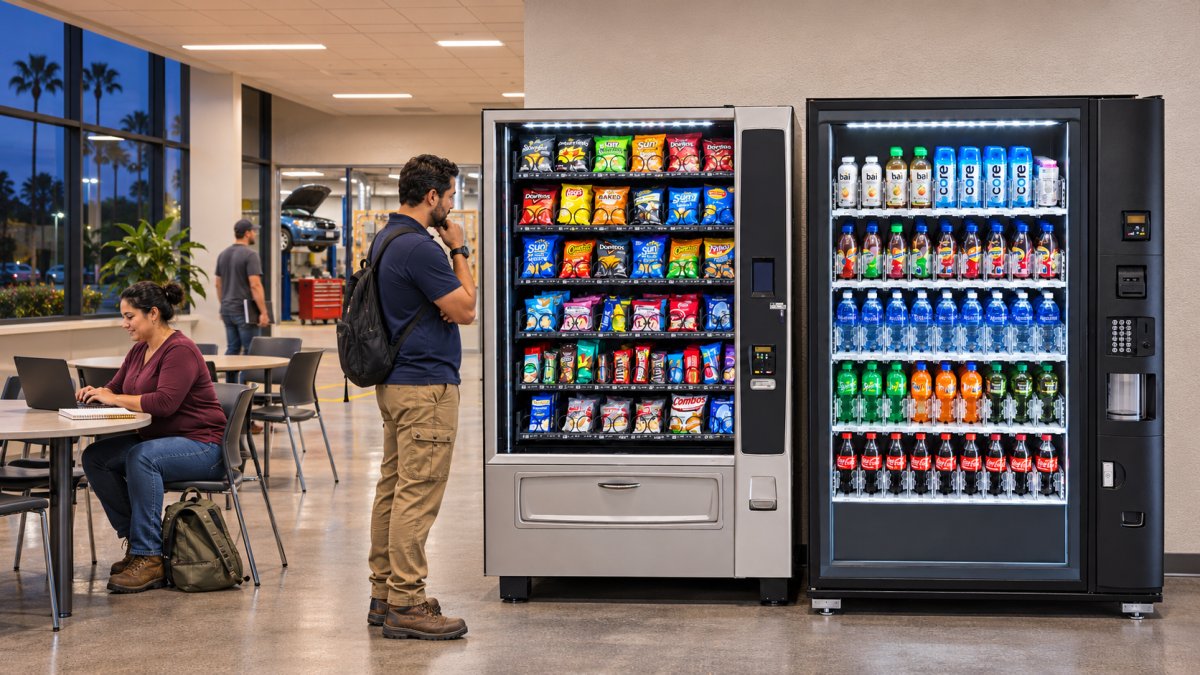
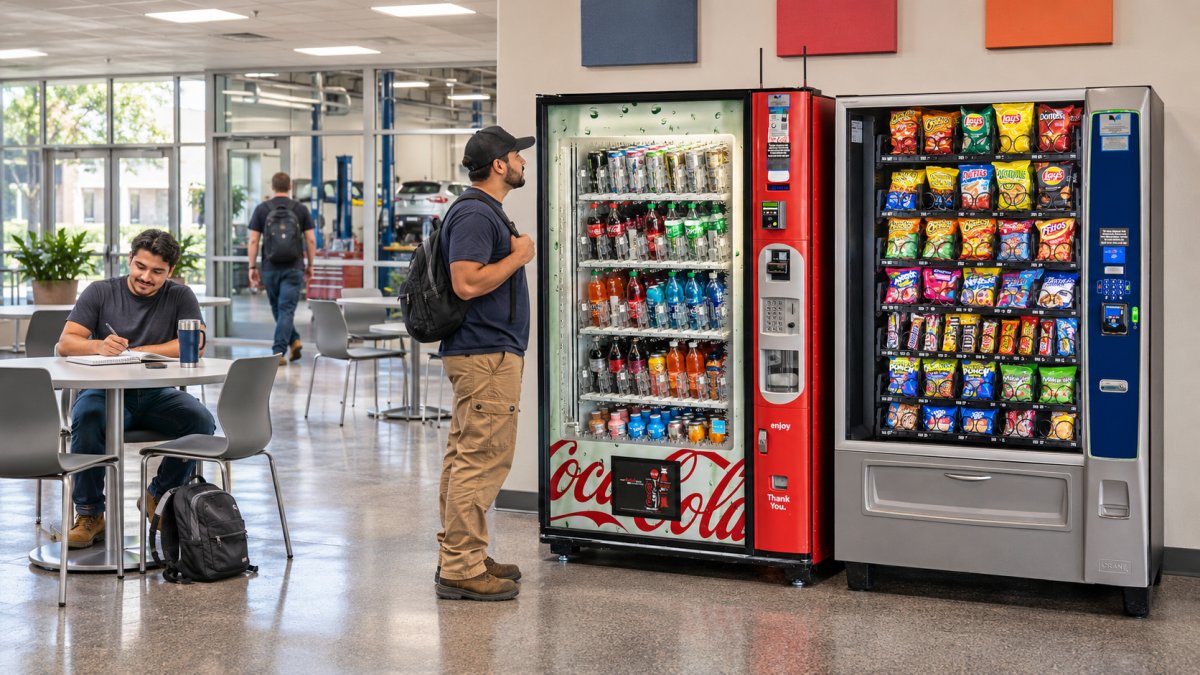
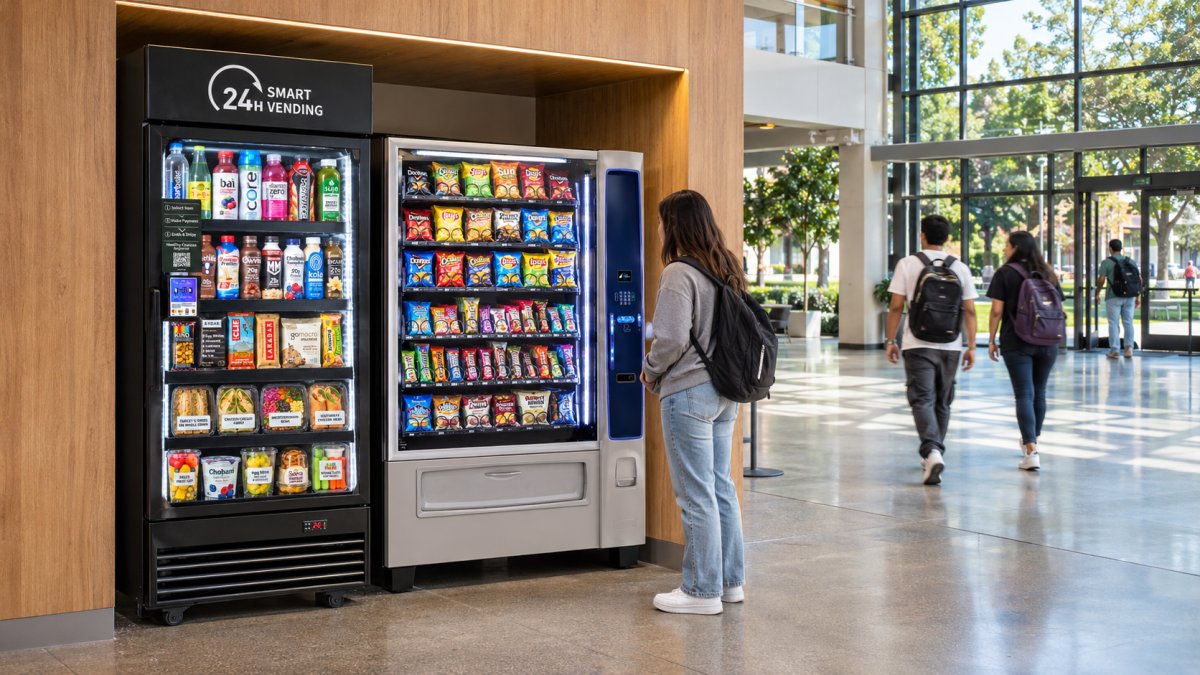
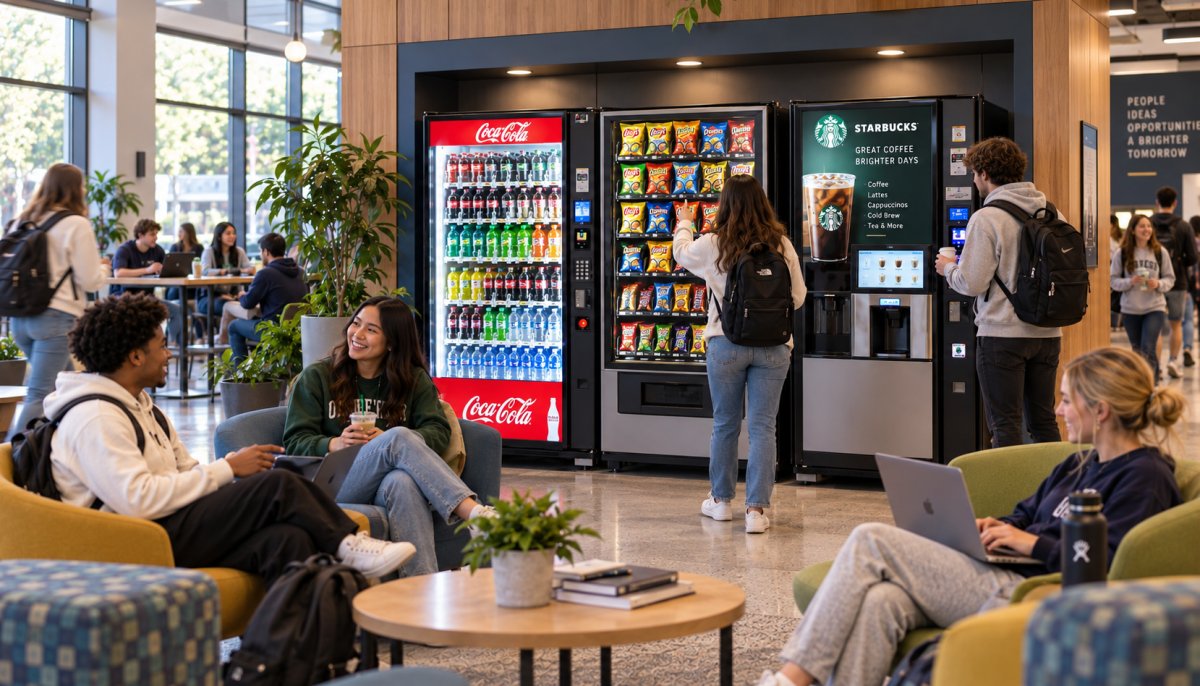
Adults who arrive for evening classes straight from work often have no time to leave for food, and nearby options may keep shorter hours at night. Vending machines for evening classes put snacks and drinks inside the building, so students can refuel on a short break and get back to class.
Key Takeaways
- On-site refreshments give working adults a quick option during evening sessions.
- Place machines near evening classrooms, workshops, and student break areas.
- Choose packaged drinks and snacks that suit adult students coming from a full workday.
- Full-service vending removes stocking, repairs, and cash handling from your staff.
Why On-Site Refreshments Matter for Evening Students
Evening vocational programs often serve working adults, career changers, apprentices, and students balancing training with jobs or other responsibilities. Many have little time to drive out for food before the session starts. Some nearby restaurants and cafeterias close early or run reduced hours, which narrows the choices further.
A machine in the building gives students a quick option on a ten-minute break. For hands-on programs, it also means fewer students leaving the building during lab or shop time. Instructors can keep the schedule moving, and students stay on site.
It also helps students who skipped dinner to make the commute. A drink and a snack taken between sessions can make the second half of a long evening easier to get through.
Snack and Beverage Access During Evening Training
Hands-on training is physical. Students in automotive, cosmetology, or medical programs may stand for hours, so cold drinks matter as much as snacks. A mix of both covers the two most common needs: something to drink and something quick to eat.
Access depends on building hours. Machines are available whenever students can enter the area where they are installed, and they work as long as the machine is operating normally. Vending is a convenient option, not a staffed dining service.
Because students often have only a short break, grab-and-go items work best. Items that need no preparation let students eat, drink, and return to the workshop or classroom on time.
Placement Near Evening Classrooms and Workshops
For evening use, the best spot is the one students pass on their break. Look at these areas first:
- A hallway or lobby close to the classrooms that run at night
- A student break area outside the workshop or lab
- A shared space near the entrance, where students arrive from work
Each location needs a safe indoor spot, a standard power outlet, and room for students to use the machine and for a technician to restock it. Keep it clear of doorways and equipment paths. Vending SoCal reviews placement, power access, class schedules, and traffic before recommending a setup. You can see the machine types on the Vending SoCal machines page.
If evening programs run in different buildings, a machine near the busiest classroom wing usually serves the most students.
Snack and Drink Selections for Adult Students
Adult students tend to want drinks that hydrate or energize and snacks that are easy to eat on a short break. Examples of items that can be stocked include:
- Drinks: bottled water, iced tea, cold brew coffee, sports drinks, hydration drinks, and low-carb energy drinks
- Snacks: granola bars, protein bars, nuts, crackers, and other packaged snacks
Availability varies by machine and supplier. The mix can be customized to your students and adjusted over time based on what they actually buy.
Payment options depend on the installed machine. Many machines accept cash, credit and debit cards, Apple Pay, and Google Pay. Students pay per item at the machine.
Administrative Benefits of Full-Service Vending
Keeping staffed food service open into the evening may not be practical for every training center. Full-service vending offers another way to provide packaged snacks and drinks without requiring campus employees to operate or maintain the machines. For qualifying commercial campuses, Vending SoCal provides the equipment, installation, stocking, maintenance, and repairs at no upfront cost. Students pay for their own products unless the school arranges a subsidy.
The school provides the space, electricity, and access for service. Your administrators do not refill machines, buy inventory, or collect money. Maintenance follows building access and machine status.
That leaves your team free to focus on instruction and student support, while one local contact handles product changes and service questions as student preferences shift.
The trade school vending services page explains how this works for vocational colleges, career colleges, and adult education centers in Orange County.
Request an Evening-Class Vending Evaluation
If your campus runs evening programs with steady attendance, an evaluation is a simple first step. Share your location, programs, and typical evening attendance, and Vending SoCal will review the space and recommend a setup. Administrators can request an evening-class vending service evaluation to find out whether the campus qualifies.
Frequently Asked Questions
Can students reach the machines during evening hours?
Yes, as long as they can enter the area where the machine is placed. Access follows your building hours, so choose a spot that stays open during class.
What payment methods do the machines accept?
Many machines accept cash, credit cards, debit cards, Apple Pay, and Google Pay. Exact options depend on the machine installed.
Who handles stocking and maintenance?
Vending SoCal handles restocking, product changes, maintenance, and repairs. Restocking frequency depends on how much students buy, and your staff does not manage inventory.
Frequently Asked Questions
Yes, as long as they can enter the area where the machine is placed. Access follows your building hours, so choose a spot that stays open during class.
Many machines accept cash, credit cards, debit cards, Apple Pay, and Google Pay. Exact options depend on the machine installed.
Vending SoCal handles restocking, product changes, maintenance, and repairs. Restocking frequency depends on how much students buy, and your staff does not manage inventory.