How Often Should Warehouse Vending Machines Be Restocked?
November 2, 2026 · 6 min read
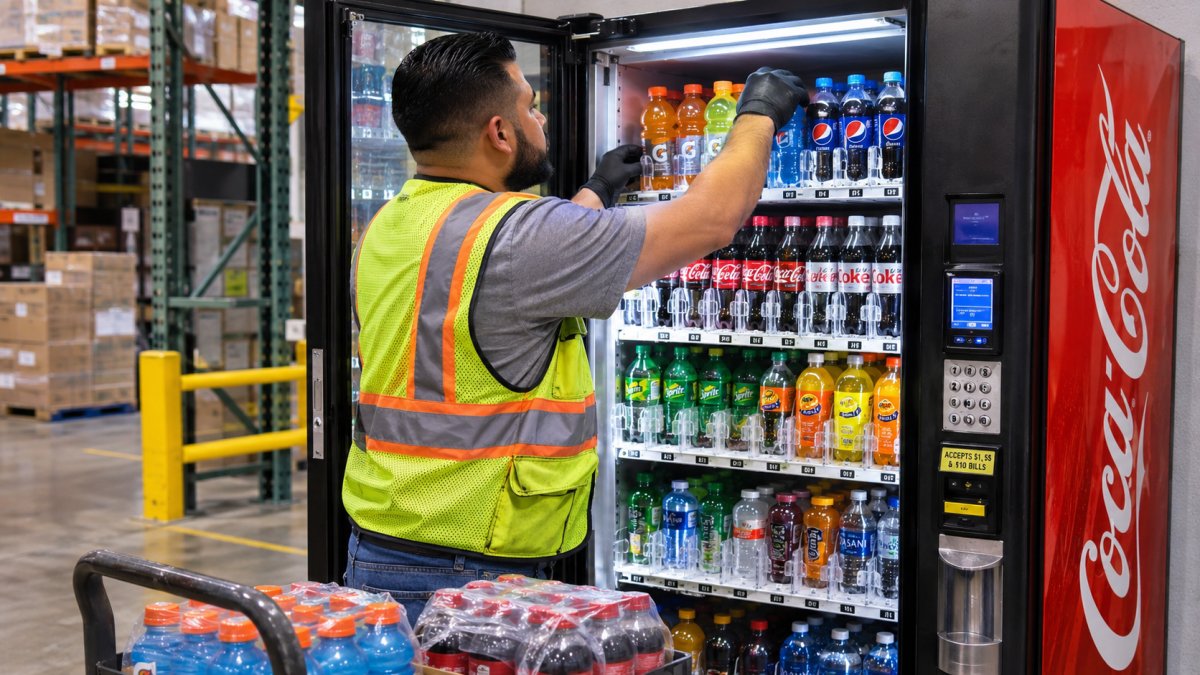
The right restocking frequency for a warehouse vending machine depends on demand, machine capacity, shift patterns, foot traffic, and service logistics. No universal daily, weekly, or monthly schedule fits every site. A sound warehouse vending machine restocking schedule starts with how your employees actually buy, then gets adjusted as headcount and shifts change. Vending SoCal manages replenishment, inventory rotation, and maintenance for qualifying full-service accounts.
Key Takeaways
- Restocking frequency comes from demand and shift patterns, not a fixed calendar.
- Machines in the same building can need different plans.
- A machine that looks full may still be out of the items employees want.
- Under a qualifying full-service arrangement, the provider handles restocking, rotation, and maintenance.
What Determines How Frequently Warehouse Vending Machines Need Restocking?
Several factors work together. No single number sets the schedule.
- Headcount and shifts: More employees on site, and more shifts sharing a machine, mean faster depletion.
- Purchasing volume and product velocity: Fast sellers such as bottled water or energy drinks empty first, while slower items can sit for weeks.
- Machine capacity and selection count: The number of selections and the quantity stored behind each selection both affect product availability. Popular items may sell out even when other selections remain well stocked.
- Snack versus beverage demand: Physical work tends to push drink demand, so beverage machines often need attention differently than snack machines.
- Breakroom accessibility: Machines in high-traffic breakrooms may require more frequent replenishment than those in less frequently used areas.
- Seasonal production and overtime: Peak shipping periods and extra shifts raise demand.
- Shelf life and storage: Items with shorter shelf lives should not be overstocked in slow areas.
Machines within the same facility may need different plans. A busy dock breakroom and a quiet office-area combo machine should not share one routine. Each usage area is evaluated on its own, based on how many people use it, when they use it, and which products they choose most often.
Why Multiple Shifts Make Restocking More Important
When day, evening, and overnight crews share the same machines, stock drains across the full 24 hours. A machine filled in the morning can leave late shifts with limited choices. If popular selections sell out earlier in the day, employees working later shifts may have fewer choices available.
For that reason, service providers plan around combined demand across all shifts, not just the daytime rush. Employee feedback from evening and night crews helps show which products run short and when.
Planning focuses on replenishment logistics: how much of each product to load, and when visits fit the facility's access needs. Your site contact can share shift schedules and peak break times so visits and stock levels line up with real use, including the hours when fewer people are on site.
How Professional Vending Companies Monitor Inventory and Prevent Stockouts
Providers combine several sources of information:
- Sales history showing which products move fastest
- Inspections and manual inventory checks during route visits
- Feedback from employees and managers
- Telemetry or remote monitoring on machines that support it
Not every machine has real-time monitoring or automated low-stock alerts. Where remote data is unavailable, visit checks and sales records carry more weight.
Product-level availability matters more than overall fullness. A machine can look stocked while the top-selling drink and two favorite snacks are gone. Employees then see a full machine with nothing they want to buy.
Sales data guides adjustments. Popular items can get more space, and slow sellers can be reduced or replaced. Over time, the selection and quantities in each machine come to reflect what your workforce buys. Employees can also ask for specific products, and requests are considered based on feasibility.
Signs Your Warehouse Needs a Different Restocking Plan
Watch for these operational indicators:
- Popular items sell out repeatedly
- Night-shift employees report empty or limited machines
- Slots stay empty between visits
- Slow-moving products take up space better used for fast sellers
- Headcount or shift schedules have changed
- One breakroom is busy while another sits quiet
- Seasonal volume or overtime has shifted demand
More frequent visits are not the only answer. Depending on the cause, remedies include changing the product selection, giving best sellers more facings, adjusting machine capacity, adding a machine in a busy area, or changing visit frequency. If one item keeps selling out while the rest stay stocked, a product-mix change is often more effective than extra trips. If every selection runs low, frequency or capacity likely needs attention.
Who Is Responsible for Restocking Warehouse Vending Machines?
In a qualifying full-service arrangement, Vending SoCal provides the equipment, installation, restocking, product rotation, and maintenance at no upfront cost. Your warehouse team does not buy inventory, collect money, or refill machines.
The facility's role is simple. It provides floor space, power, and reasonable service access. It also tells the provider about schedule changes, new shifts, or product preferences, so the plan stays current. Naming one site contact for these updates keeps communication clear.
Employees pay for the products they purchase unless a separately agreed subsidy exists. Free vending service does not mean free snacks and drinks. Your company is not billed for restocking, and no one on your team needs to track inventory or reorder products.
Getting Started With Vending SoCal
Vending SoCal, a locally based Orange County provider with over 10 years of industry experience, serves qualifying warehouses, distribution centers, and manufacturing sites through its Industrial Vending Service. You can review the snack, drink, and combo options on the machines page.
To evaluate your site, have this information ready:
- Facility location
- Daily employee count
- Shift schedules
- Breakroom layout and available space
- Product preferences
With these details, the team can recommend a setup and a restocking approach suited to your site. Contact Vending SoCal to request a vending service evaluation for your warehouse.
Frequently Asked Questions
How often should warehouse vending machines be restocked?
It depends on demand, shifts, capacity, and traffic. Busier machines are restocked more often than quiet ones. Each machine's plan is adjusted based on sales, stock checks, and employee feedback.
What happens when popular vending products repeatedly sell out?
The provider reviews sales data and employee feedback, then adjusts. That can mean more space for the item, a larger quantity per visit, a different product mix, or a change in visit timing.
Who pays for restocking under a full-service vending agreement?
For qualifying locations, restocking is part of the service at no upfront cost to the host. Employees pay for the items they buy.
Frequently Asked Questions
It depends on demand, shifts, capacity, and traffic. Busier machines are restocked more often than quiet ones. Each machine's plan is adjusted based on sales, stock checks, and employee feedback.
The provider reviews sales data and employee feedback, then adjusts. That can mean more space for the item, a larger quantity per visit, a different product mix, or a change in visit timing.
For qualifying locations, restocking is part of the service at no upfront cost to the host. Employees pay for the items they buy.