Vending Machines for Medical Offices and Outpatient Clinics in Orange County
November 25, 2026 · 9 min read
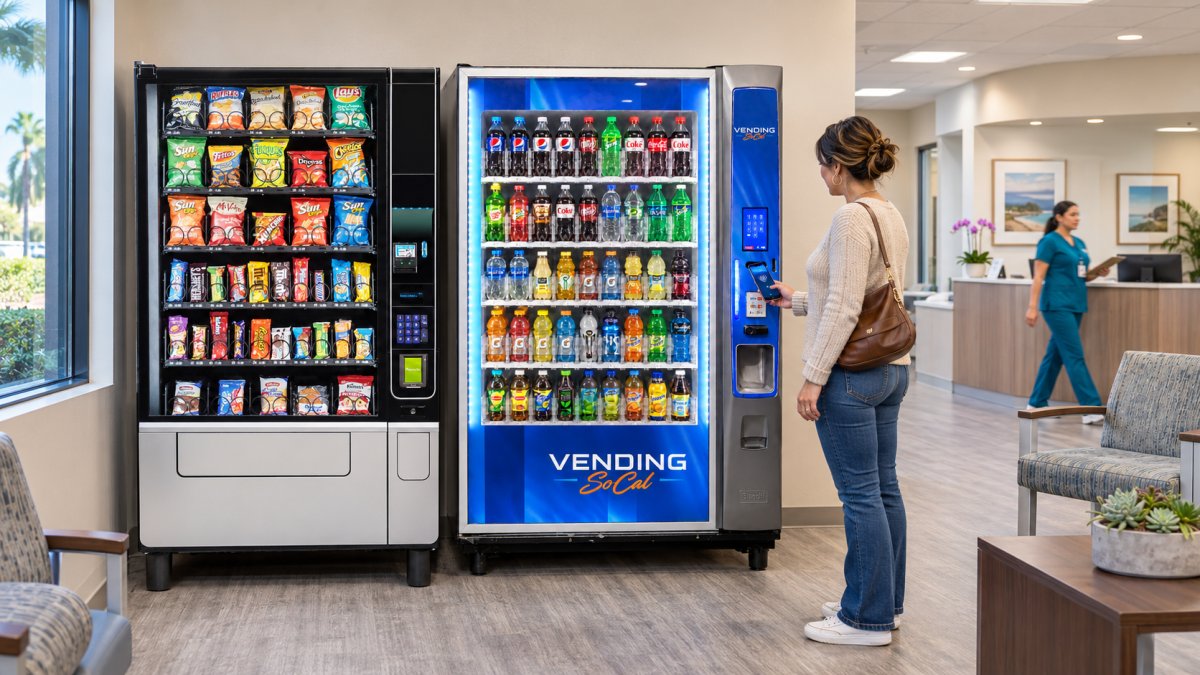
Vending machines for medical offices give staff and visitors quick access to packaged snacks and cold drinks without leaving the building. For outpatient clinics, the best setup depends on traffic, size, operating hours, and layout. Vending SoCal provides full-service snack and beverage vending for qualified Orange County locations, and it is separate from patient meals, clinical nutrition, or medical dispensing.
Key Takeaways
- Standard vending covers retail snacks and drinks for staff and visitors only.
- Traffic, hours, and layout decide whether a combo unit or separate machines fit.
- Qualified locations receive equipment, installation, stocking, maintenance, and repairs without upfront or recurring service fees.
- Every location is evaluated individually, and the facility must approve placement.
Vending Machines for Medical Offices and Outpatient Clinics
This guide is for practice managers, clinic administrators, and facility managers at primary care and family practices, specialty practices, urgent care centers, outpatient surgery centers, diagnostic imaging centers, and multi-provider clinics. It covers equipment, placement, products, service details, and how to request an evaluation. Hospitals have different traffic and approval needs, so they have their own page: hospital vending service in Orange County.
Why Medical Offices Offer Snack and Beverage Vending
Clinical days leave little time for a meal run. A medical assistant between appointments or a family waiting for a procedure may only want a drink or a packaged snack. A machine on site keeps that purchase within a few steps.
Employee-paid vending provides convenient refreshments without an employer-funded product budget. It is optional, and some practices discuss a subsidy arrangement during the evaluation.
Retail vending is not patient nutrition. It does not replace prescribed diets, meal service, or medical dispensing, and its products are not medical or therapeutic recommendations.
Choosing Vending Machines for Different Medical Facilities
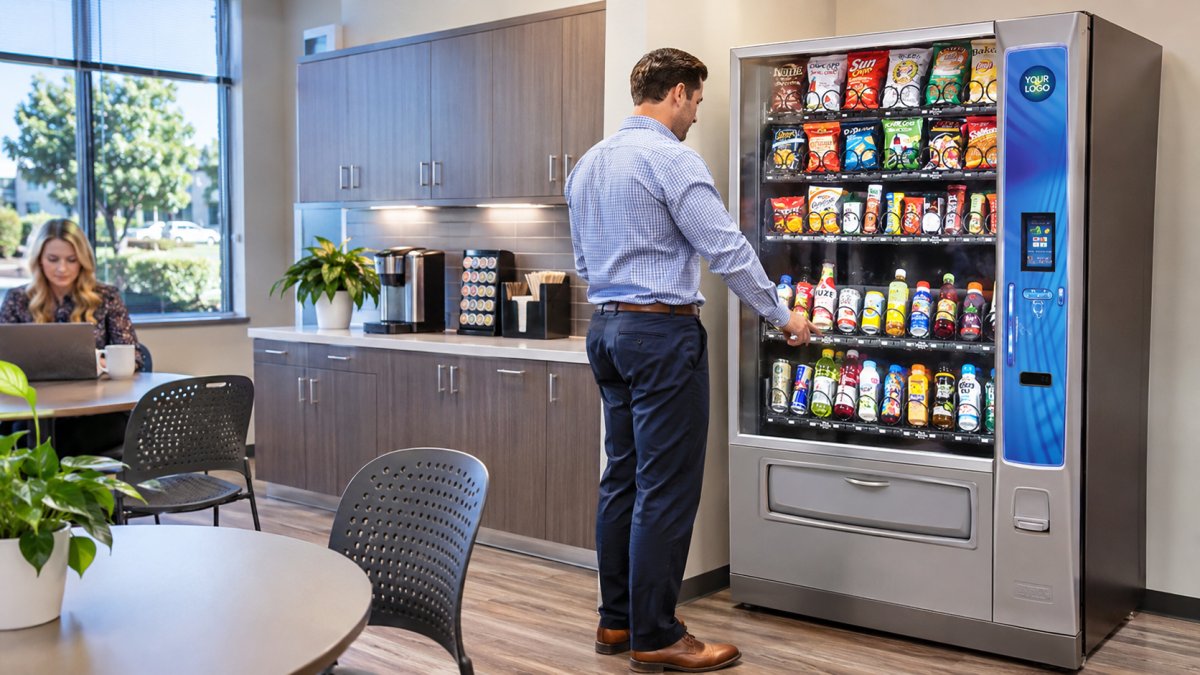
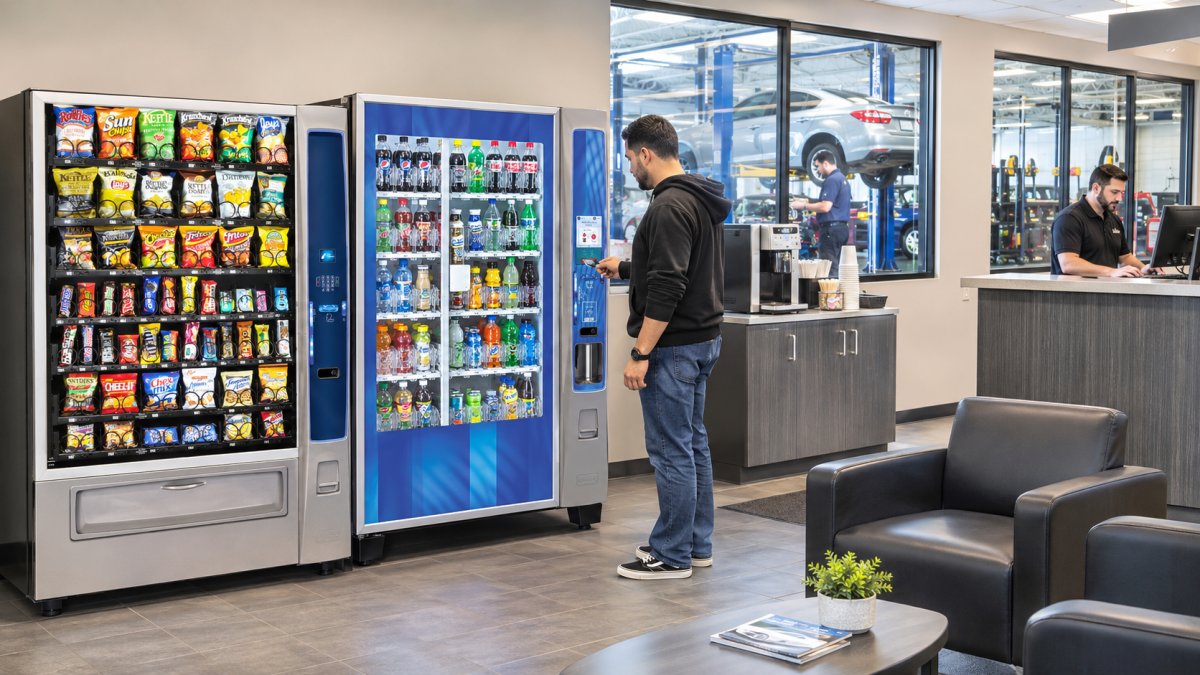
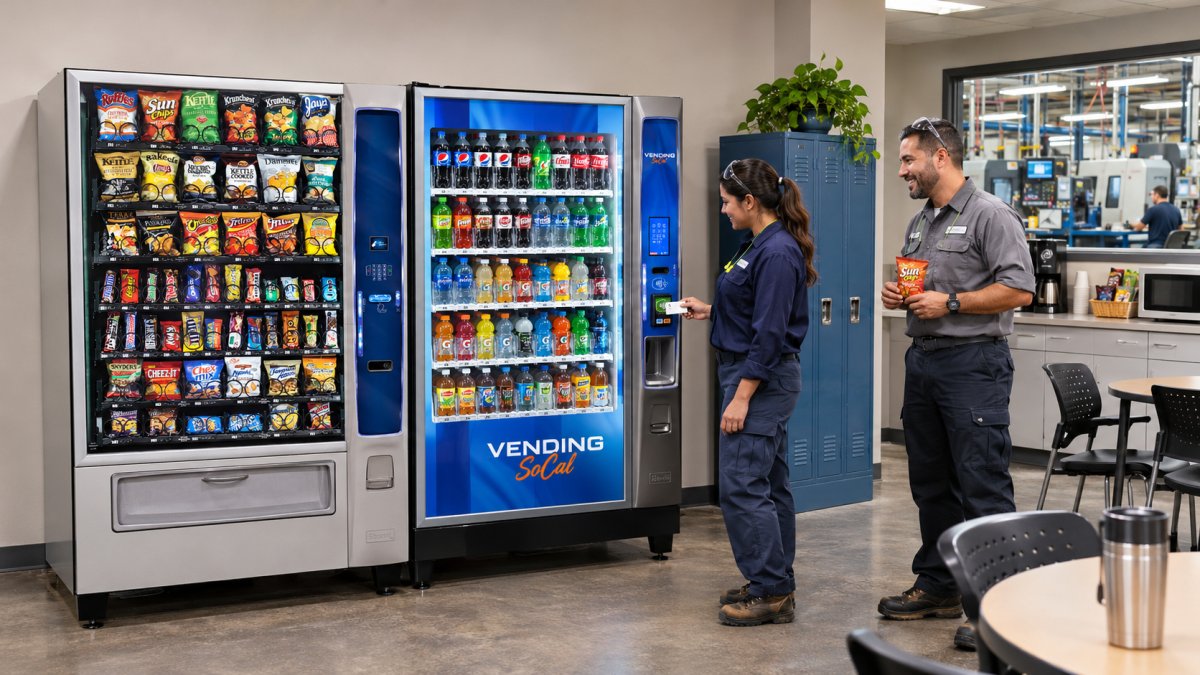
Vending SoCal offers snack, drink, and combo machines, plus smart coolers where suitable. You can compare them on the vending machines page.
- Snack machines: a wide mix of packaged items that can be adjusted to what people buy. Many modern units use drop sensor technology to help confirm a product dropped.
- Glass-front drink machines: cold beverages in clear view and strong capacity for busy sites.
- Combo machines: snacks and drinks in one unit, a good fit where space or traffic does not call for two machines.
- Smart coolers: a self-serve market feel for modern, higher-end break rooms. They usually take card and tap-to-pay and typically do not accept cash.
Many machines accept cash, credit cards, debit cards, Apple Pay, Google Pay, and tap-to-pay. Payment options depend on the machine and setup used at your location.
| Facility Type | Potential Vending Setup | Important Considerations |
|---|---|---|
| Small medical practices | A combination machine may suit a smaller practice, or another configuration may be recommended | The recommended setup depends on actual employee and visitor demand, available space, and service suitability |
| Larger multi-provider clinics | Separate snack and drink machines, or a staff unit plus a visitor unit | Several departments and shifts; keep visitor areas clear of lines |
| Urgent care centers | Snack and drink machines or a combo unit, depending on volume | Extended hours and steady waiting-room traffic; access follows facility rules |
| Outpatient surgery centers | Staff-area machine; visitor machine only in an approved waiting area | Restricted zones stay restricted; coordinate with infection-control policies |
| Diagnostic imaging centers | Combo machine in a staff area or approved waiting room | Keep machines away from equipment rooms and patient flow |
Best Locations for Vending Machines in Medical Offices
Good spots include employee breakrooms, designated staff lunch areas, approved visitor waiting areas, and shared areas in larger facilities. Standard equipment belongs in approved indoor spaces. For more on how placement affects use, see this guide to placing vending machines in your workplace.
Check these points before choosing a spot:
- Circulation: keep pedestrian paths open, including for wheelchairs and gurneys. Review accessibility clearances with your facility team, since floor space alone does not make an installation compliant.
- Power: a standard electrical outlet must be nearby.
- Ventilation: leave room around the machine so it can run properly.
- Service access: restocking staff need a clear route and space to open the machine.
- Exits and emergency gear: keep corridors, exits, and emergency equipment unblocked.
- Clinical areas: do not place machines in treatment or exam rooms.
Standard vending machines are not intended for sterile clinical environments. Placement follows your infection-control policies, and the workplace owner or authorized facility manager approves the location before installation.
Recommended Snacks and Drinks for Staff and Visitors
These are examples, not a fixed menu. Selections depend on demand, machine compatibility, and product availability.
Drinks: bottled water, sparkling water, iced tea, zero-sugar options, sports drinks, and energy drinks.
Snacks: granola bars, protein bars, nuts and trail mix, whole-grain crackers, popcorn, chips, and cookies.
Staff often want something filling for a short break or a long shift. Visitors usually want a drink and a light snack while they wait. A mix with better-for-you options alongside familiar favorites suits both groups. Our guide to healthy vending for workplaces covers that balance.
Vending items are convenient retail choices. They are not medically approved and are not suited to specific clinical diets.
Staff Breakroom Vending vs. Patient Waiting Area Vending
The two spaces have different users, so they can have different machines and products.
Staff breakroom
Staff use is tied to breaks and shifts. A breakroom machine is usually in a controlled, staff-only space. Products can reflect early starts, long days, and what the team asks for. A combo unit often works for a smaller team.
Patient waiting area
A waiting area serves patients and companions on unpredictable schedules. Cold drinks and simple packaged snacks tend to matter most. The machine must sit beside the main route, not in it, and fit your security and access policies. Patients should follow any fasting, dietary, or other food and beverage restrictions provided by their healthcare team; retail vending is not a substitute for clinical nutrition guidance. Many practices place only a staff machine when waiting space is tight.
Restocking, Maintenance, and Facility Coordination
Under a full-service arrangement, Vending SoCal handles stocking, product rotation, maintenance, and repairs. Your staff do not refill machines, buy inventory, or collect payments. Restocking depends on actual demand, traffic, shifts, machine capacity, and service logistics, so no universal schedule applies.
Share your access rules, cleaning protocols, and restricted areas so service visits fit your workflow. Hosts should report machine problems, access-rule changes, and planned building changes that could affect service.
Machine availability depends on facility access, not overnight technician visits.
How Much Does Medical Office Vending Service Cost?
For qualified locations, vending equipment, delivery, installation, stocking, maintenance, and repairs come without upfront or recurring service fees. Vending SoCal retains ownership of the equipment under the service arrangement. Your facility supplies the agreed space, electricity, and access.
Staff and visitors pay per item unless the clinic chooses a subsidy. Vending SoCal manages retail product pricing, subject to any agreed pricing or subsidy arrangements. Service is not free snacks, and no commission is promised.
What Makes a Medical Office Eligible for Vending Service?
Qualification depends on:
- steady daily traffic from staff and visitors,
- safe indoor space for the machine,
- a standard electrical outlet,
- room for users and for restocking,
- regular expected use, and
- a location within the service area.
Facility type, shifts, and service-route fit also count. Smaller practices are welcome to request an evaluation, and no single employee count decides the outcome. For a general look at the process, read what makes an office eligible for vending service.
How Vending SoCal Serves Orange County Medical Offices
Vending SoCal serves Orange County and nearby South LA service areas. The team reviews your space and traffic, recommends a machine type, and builds a product mix around your staff and visitors.
Each location is reviewed individually. Approval and delivery dates are not guaranteed in advance. For an administrative suite attached to your practice, the office vending service may also apply.
Frequently Asked Questions
Can a small medical office qualify for vending machines?
Yes, small offices can request an evaluation. Qualification depends on daily traffic, space, power, access, and service-route fit, not one headcount.
What type of vending machine is best for an outpatient clinic?
It depends on space and traffic. A combo machine suits a smaller practice. A busy clinic may prefer separate snack and drink machines.
Where should vending machines be placed in a medical office?
Staff breakrooms and approved waiting areas work best. Keep clear of treatment rooms, exits, emergency equipment, and walking paths.
Can clinics offer healthy snack and beverage options?
Yes. Options like bottled water, sparkling water, nuts, and whole-grain crackers can sit beside familiar favorites. They are retail items, not clinical diet advice.
Can vending machines serve both staff and visitors?
Yes. One machine can serve both, or staff and visitor areas can have separate machines and product mixes, subject to facility approval.
Who restocks and repairs medical office vending machines?
Vending SoCal handles stocking, maintenance, and repairs for qualified locations. Your staff report problems and access changes.
How much does vending service cost a medical office?
Qualified locations receive equipment, delivery, installation, stocking, maintenance, and repairs without upfront or recurring service fees. Individuals pay for the products they buy.
Can an urgent care center have vending machines available during extended hours?
Machines can be accessible during extended hours where the facility permits. That does not mean technicians visit overnight.
Request Vending Service for Your Medical Office
When you are ready, contact Vending SoCal to request an evaluation. Please include your Orange County city, facility type, approximate employee count, estimated daily visitor traffic, hours of operation, and available space. Evaluations are conducted individually, and approval and delivery dates are not guaranteed.
Frequently Asked Questions
Yes, small offices can request an evaluation. Qualification depends on daily traffic, space, power, access, and service-route fit, not one headcount.
It depends on space and traffic. A combo machine suits a smaller practice. A busy clinic may prefer separate snack and drink machines.
Staff breakrooms and approved waiting areas work best. Keep clear of treatment rooms, exits, emergency equipment, and walking paths.
Yes. Options like bottled water, sparkling water, nuts, and whole-grain crackers can sit beside familiar favorites. They are retail items, not clinical diet advice.
Yes. One machine can serve both, or staff and visitor areas can have separate machines and product mixes, subject to facility approval.
Vending SoCal handles stocking, maintenance, and repairs for qualified locations. Your staff report problems and access changes.
Qualified locations receive equipment, delivery, installation, stocking, maintenance, and repairs without upfront or recurring service fees. Individuals pay for the products they buy.
Machines can be accessible during extended hours where the facility permits. That does not mean technicians visit overnight.