Where Should You Place Vending Machines in Your Workplace?
November 19, 2026 · 9 min read
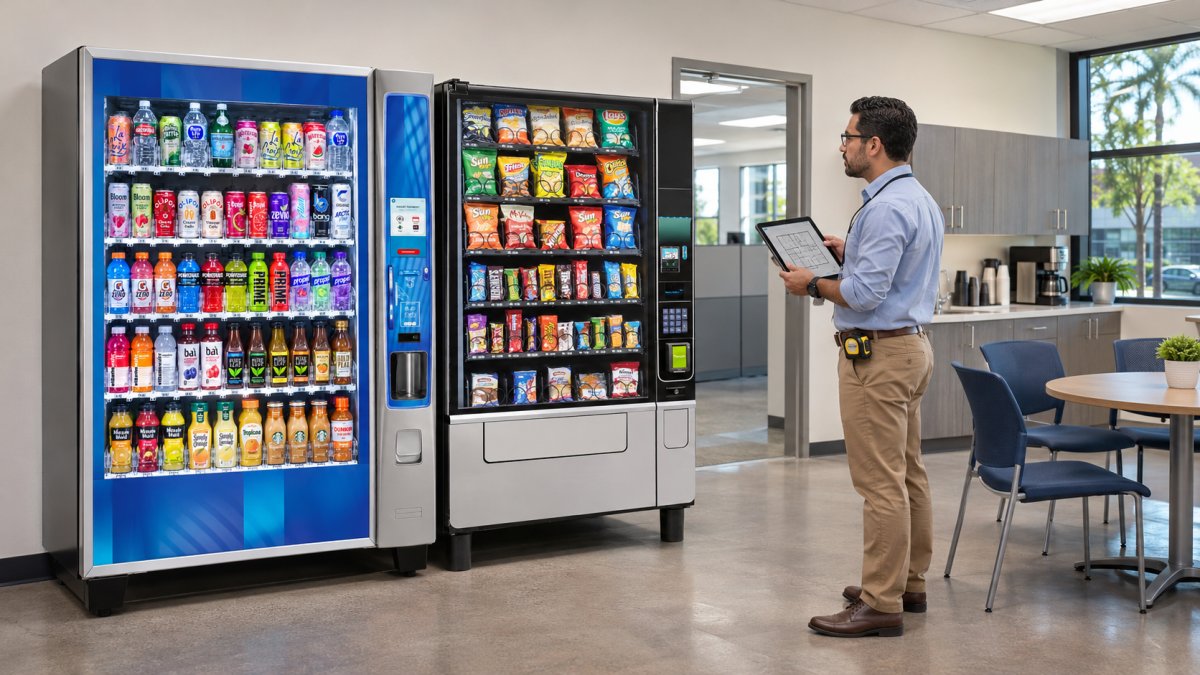
The best places to put vending machines at work are usually employee breakrooms, shared kitchens, staff lounges, and suitable common areas. These are spaces where people already pause, so a machine fits into the routine. Final placement depends on purchasing demand, safety, accessibility, available space, and servicing requirements.
A machine can be easy to see and still be in the wrong spot. Choosing where to place vending machines at work means finding a location employees can reach during a break and where the machine will not disrupt foot traffic. This article covers the main location types, a comparison table, a placement checklist, and how approval and relocation work. It also shows how to request vending machines for your workplace.
Key Takeaways
- Breakrooms, shared kitchens, and staff lounges usually give the most repeat use.
- Warehouse and manufacturing sites need machines near break areas, not across active work zones.
- The workplace owner or an authorized facility manager approves the location before installation.
- Vending SoCal provides installation, stocking, and maintenance without upfront or recurring service fees for qualifying locations.
Best places to put vending machines at work
The strongest locations share a few traits. Employees stop there on purpose, they stay long enough to browse and buy, and the space has room for both users and service staff. A busy corridor can look attractive, but people rushing past are less likely to stop than employees sitting in a break area.
A provider looks at when employees are present, how routines change across shifts, and where people gather. Repeat use matters more than headcount alone. A staff lounge used every day by several departments will often outperform a highly visible spot that people only walk through.
Think about the machine's neighbors as well. If a nearby cafe or store already serves staff, a machine in a spot with fewer alternatives may see more use. Visibility still helps, as long as it does not come at the cost of clear walkways.
Employee breakrooms and shared kitchens
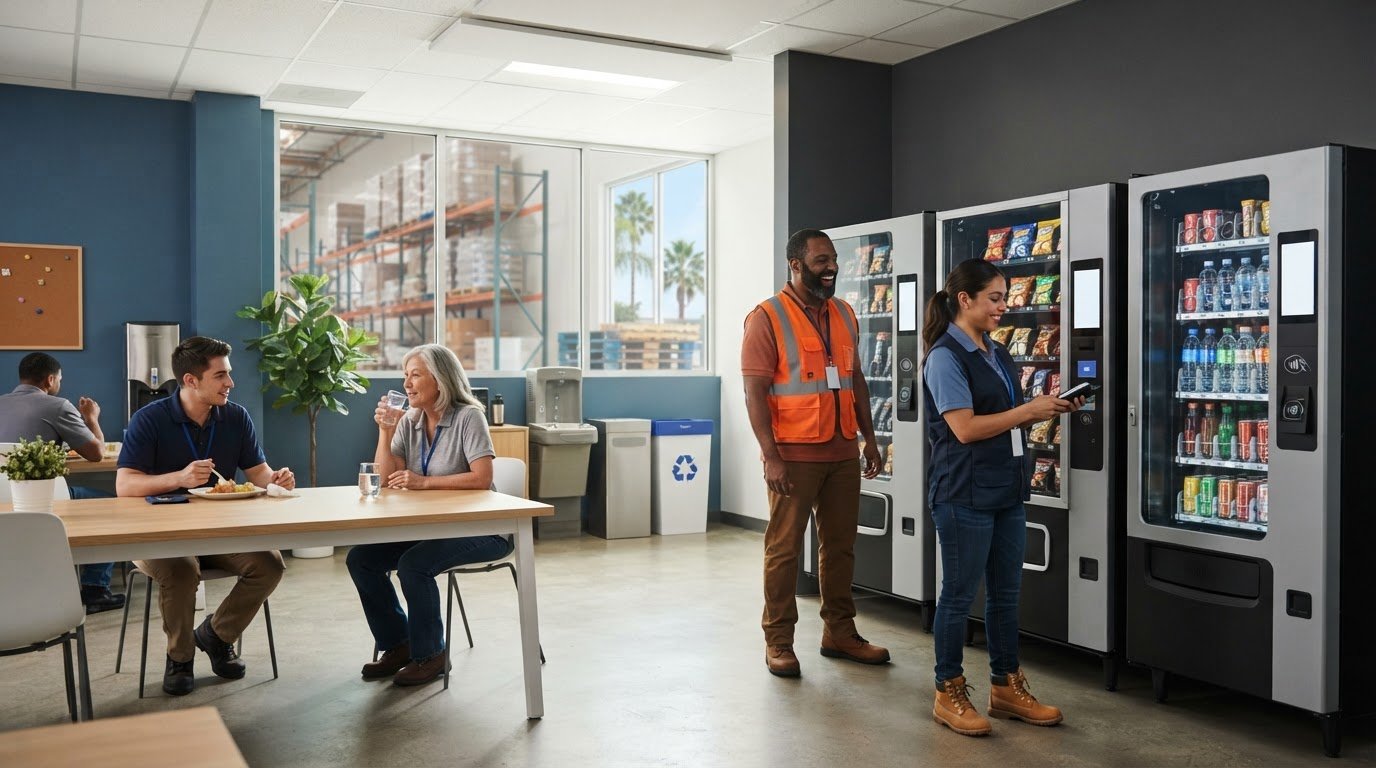
Breakrooms and shared kitchens connect the machine to a regular pause in the workday. Employees are already there for lunch, coffee, or a short rest, so buying a drink or snack takes no extra trip. These spaces are also usually staff-only, which keeps the machine in a more controlled setting.
The main limit is reach. If a company spans several floors or buildings, employees far from the breakroom may not walk over for a quick purchase. In that case a second shared space may serve those teams better.
Keep the machine out of food prep zones and away from seating that would be crowded by a line of users. Leave room to open the machine door for service and keep the outlet close by.
Office lobbies and common areas
A lobby or elevator landing gives a machine high visibility. It can serve employees moving between departments and, in some buildings, visitors. The tradeoff is that many people pass through without stopping, and a machine placed in the main path can create a bottleneck.
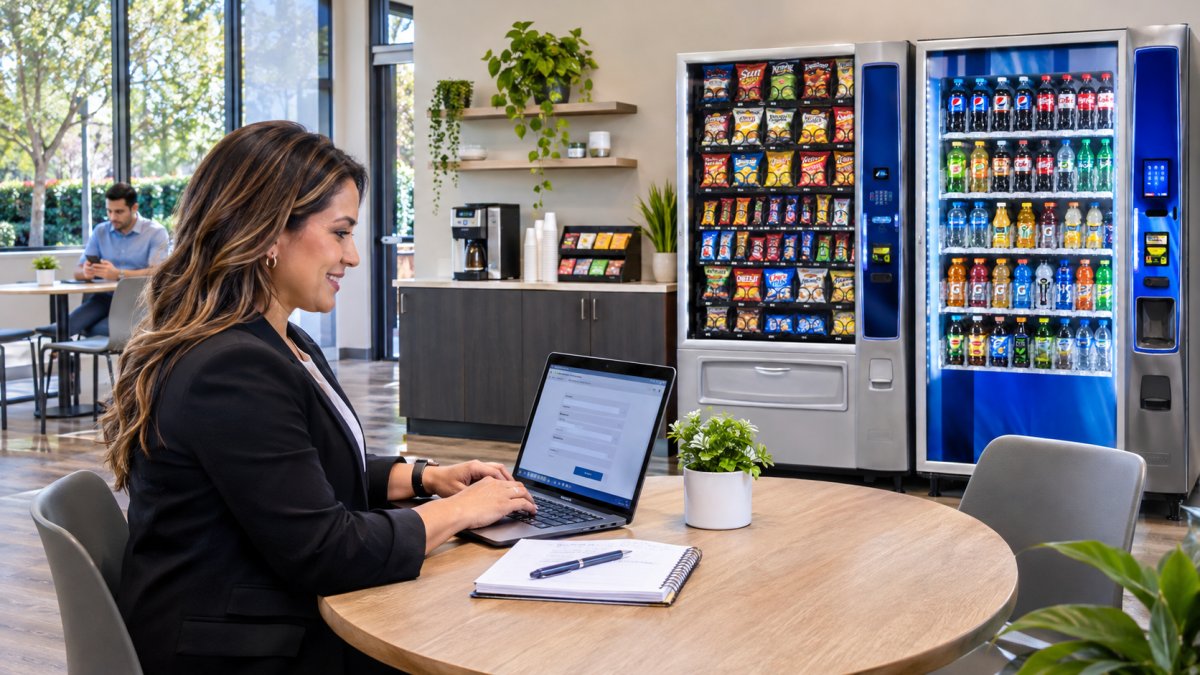
Common areas such as a shared lounge, a coworking space, or an office park atrium can work well when people wait or meet there. Place the machine beside the main route, not in it. A manager may also prefer a staff-only area over a lobby open to visitors, even when both have traffic.
For office sites, our office vending service in Orange County covers breakrooms, shared kitchens, and common areas.
Warehouse and manufacturing break areas
Factories and warehouses need placements that support short breaks without pulling employees across active work areas. A break room or canteen near the usual pause point works best for production workers who have little time to leave the site.
In a large warehouse with separate zones or floors, a single central machine may leave distant teams with too little time to reach it. Assess where each team actually takes breaks and consider placement that limits unnecessary walking.
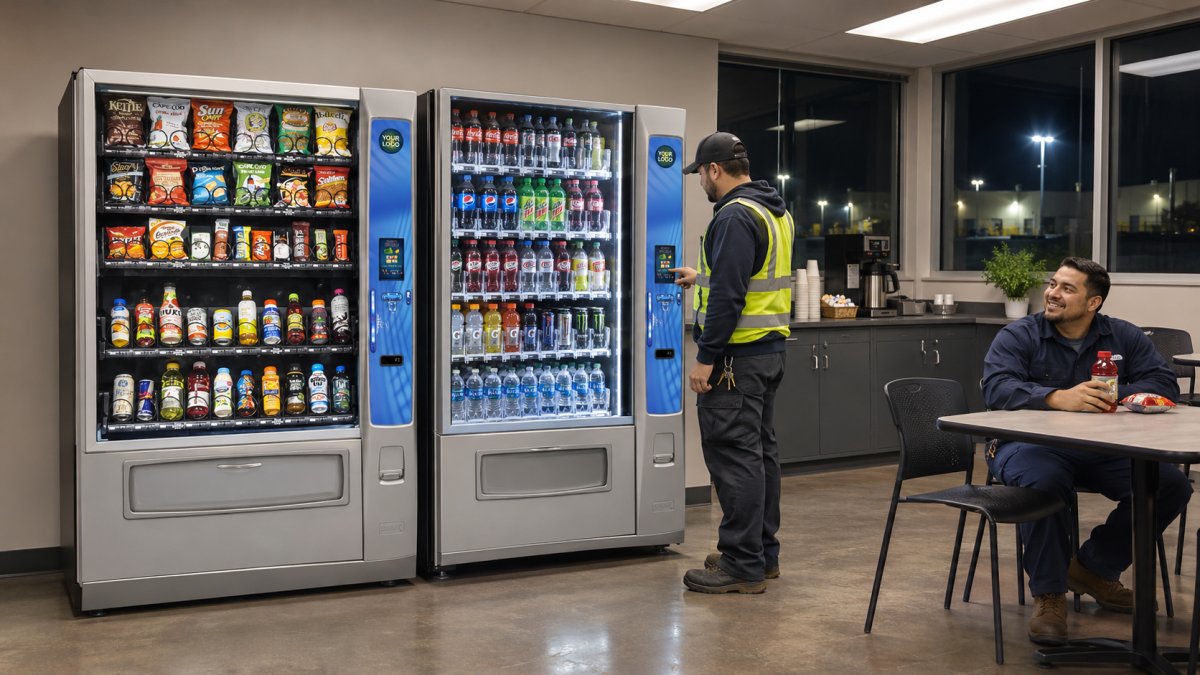
Shifts matter here too. A night shift worker may want coffee and a filling snack at 3 AM, so the location should be reachable by every shift, not only the day crew. Keep forklift routes and loading areas clear, and make sure service staff can reach the machine without interrupting operations.
Vending SoCal's Industrial Vending Service supports snacks and drinks in warehouses, manufacturing settings, and other operational workplaces.
Comparing workplace vending machine locations
| Location | Advantages | Potential Drawbacks |
|---|---|---|
| Breakrooms | Tied to regular breaks; staff-only; easy to service | Distant teams may not reach it; can crowd seating |
| Shared kitchens | Natural stop for coffee and lunch; steady repeat use | Limited floor space; must stay clear of prep areas |
| Lobbies | High visibility; serves people moving between departments | Many pass without stopping; risk of blocking the path; visitor access |
| Staff lounges | Employees linger; controlled access; good for repeat use | Only suits people who use the lounge |
| Warehouse break areas | Close to workers on short breaks; works across shifts | Needs a safe spot away from work zones; large sites may need more than one location |
Use the table as a starting point. A breakroom is the right fit when most staff gather there. A lobby makes sense when it is a true gathering point. A warehouse break area is the better choice whenever travel time on a short break is a concern.
Workplace vending placement checklist
Walk the candidate spot with this list before you request an evaluation:
- Employee traffic: Do people pass or gather here every workday?
- Breaks: Is it close to where employees take breaks?
- Shift access: Can early, late, and overnight shifts reach it?
- Electrical outlets: Is a standard outlet close by?
- Floor space: Is there room for the machine, users, and service access?
- Ventilation: Is the area indoors with room around the machine for airflow?
- Safety: Are exits, doors, and work zones kept clear?
- Accessible walkways: Can people with mobility needs pass and use the machine comfortably?
- Connectivity: Is there a signal for the payment reader, where the machine uses one?
- Security: Is the spot visible to staff rather than isolated?
- Restocking access: Can service staff reach it without disrupting work?
Keep exits, doors, and accessible walkways clear of the machine and the people using it, and check your building's own rules while you plan.
Who approves vending machine placement?
The workplace owner or an authorized facility manager approves the vending location before installation. A provider can suggest practical options, but the person responsible for the premises decides whether the machine fits the facility. In leased buildings, check your lease or building rules early.
Consider security, noise, and maintenance access as part of that decision. A visible staff area is often better than an isolated corner, and a quieter spot helps avoid disturbing nearby work.
After installation, product choices can be adjusted based on sales patterns and employee feedback. Employee input helps, and this employee vending preference survey shows one way to collect it. Space planning is covered in this guide to workplace vending space planning.
Can machines be relocated?
Sometimes. Departments move, shared spaces change, and a first location may not perform as hoped. If that happens, the spot can be reassessed so employees can still reach the machine and service access stays practical.
Whether a move is possible, and on what terms, depends on the site and the service agreement, so raise any likely layout changes during the initial evaluation.
How Vending SoCal helps
Vending SoCal helps workplace managers assess candidate locations based on employee routines, available space, facility access, and daily operations. The aim is a convenient stop that fits the workday, not simply the most visible corner.
For qualifying locations, Vending SoCal provides installation, stocking, and maintenance without upfront or recurring service fees. Equipment, delivery, setup, and repairs are included. Employees pay for the products they choose unless the business arranges a subsidy, and a subsidy is something to discuss in your initial evaluation.
Qualification is reviewed for each site based on purchasing demand, facility suitability, available space, electricity, access, and route feasibility. Many modern snack and combo machines include drop-sensor technology, and many machines accept cash, credit cards, debit cards, Apple Pay, Google Pay, and tap-to-pay. Payment options depend on the machine and setup used at the location.
Request a Workplace Vending Placement Evaluation
If you have a breakroom, lounge, or warehouse break area in mind, request a workplace vending placement evaluation and tell us your workplace city, estimated daily attendance, operating hours, and intended machine location.
Frequently Asked Questions
Where is the best place to put a vending machine in an office?
A breakroom, shared kitchen, or staff lounge is usually best because employees already stop there. A common area can also work when people gather or wait nearby.
Is a breakroom better than an office lobby?
Often, yes, for repeat use by employees. A lobby offers more visibility and can suit visitors, but many people pass through without stopping.
Can vending machines be installed in hallways?
Sometimes, if the machine does not block movement, exits, or accessible walkways. Many sites find a nearby alcove or common area works better than a narrow corridor.
What space and electrical needs should I plan for?
Plan for a safe indoor spot with a standard electrical outlet and room for users and service access. Actual machine sizes vary by model, so the provider confirms fit during the evaluation.
Who approves installation?
The workplace owner or an authorized facility manager approves the location before installation. Building management may need to agree as well.
Can a machine be moved later?
A move may be possible, depending on the site and the service agreement. Discuss expected layout changes early.
Frequently Asked Questions
A breakroom, shared kitchen, or staff lounge is usually best because employees already stop there. A common area can also work when people gather or wait nearby.
Often, yes, for repeat use by employees. A lobby offers more visibility and can suit visitors, but many people pass through without stopping.
Sometimes, if the machine does not block movement, exits, or accessible walkways. Many sites find a nearby alcove or common area works better than a narrow corridor.
Plan for a safe indoor spot with a standard electrical outlet and room for users and service access. Actual machine sizes vary by model, so the provider confirms fit during the evaluation.
The workplace owner or an authorized facility manager approves the location before installation. Building management may need to agree as well.
A move may be possible, depending on the site and the service agreement. Discuss expected layout changes early.