Distribution Center Break Room Vending: Setup, Costs & Service
October 30, 2026 · 6 min read
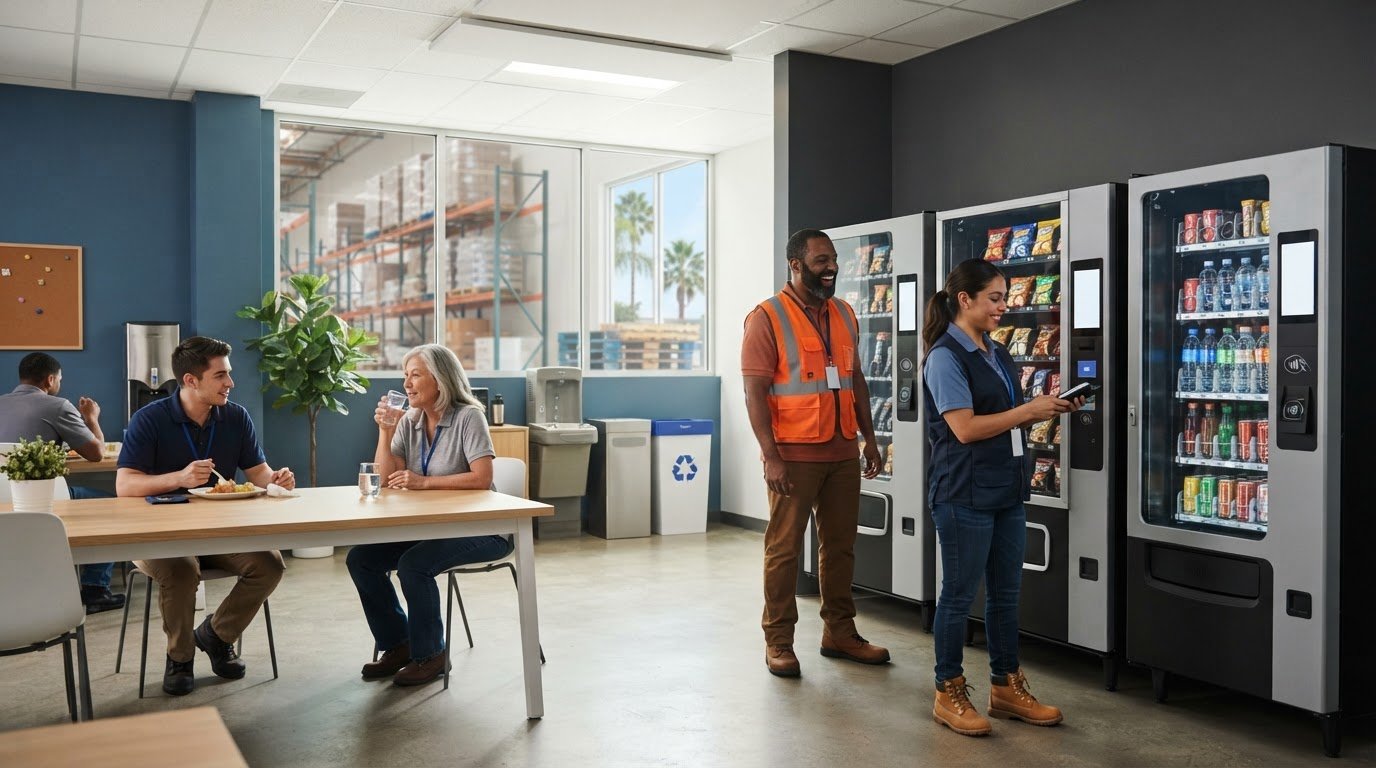
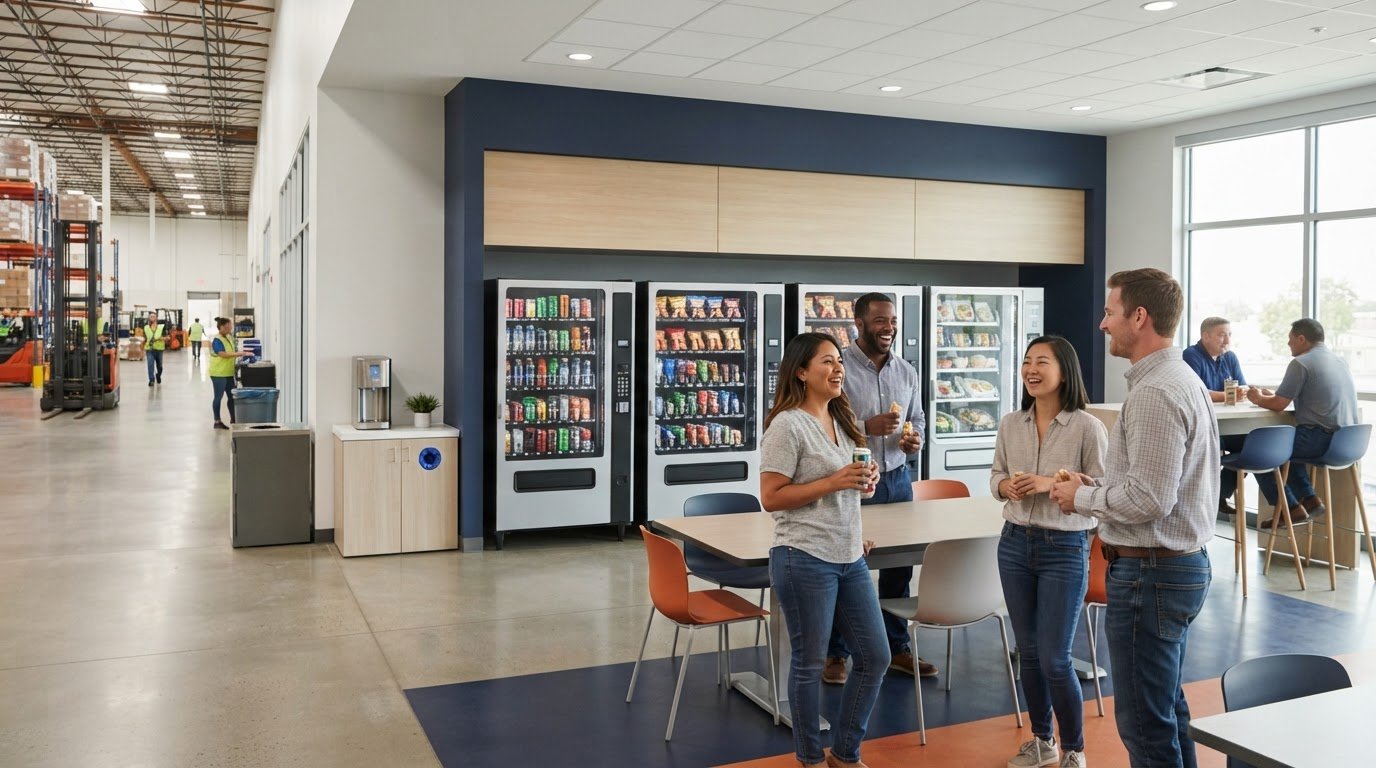
Distribution center employees get short breaks, work physical shifts, and often can't leave the property. Onsite snacks and cold drinks let them refuel in minutes, and overnight crews especially benefit when nothing nearby is open. Vending machines for distribution center break rooms give workers that access without adding work for your team. This guide covers costs, equipment, placement, products, and what full service includes.
Key Takeaways
- Qualifying locations get equipment, installation, stocking, and maintenance at no upfront cost.
- Employees pay for what they buy unless you set up a subsidy.
- Match machine type to break-room space and shift traffic.
- Place machines where every shift can reach them safely.
- You provide space, power, and access; the provider handles the rest.
What Does Distribution Center Vending Cost?
For qualifying commercial locations, Vending SoCal provides the equipment, delivery, installation, stocking, and maintenance at no upfront charge. You don't buy a machine, stock products, collect money, or handle repairs.
"Free vending service" does not mean free snacks. Employees pay for the items they choose, unless you arrange a subsidized program for your team.
As the host, you provide a safe indoor space, a standard power outlet, and reasonable access for service visits.
Qualification depends on your employee traffic, product demand, and site feasibility, including space, power, and route fit. Each facility is evaluated individually, and not every location will qualify. Larger sites with several shifts and limited nearby food options are often strong candidates. For more on how no-cost placement works, read this overview of no-cost placement.
Choosing the Right Vending Equipment
The right machine depends on your space and traffic. You can see the full lineup on the Our Machines page.
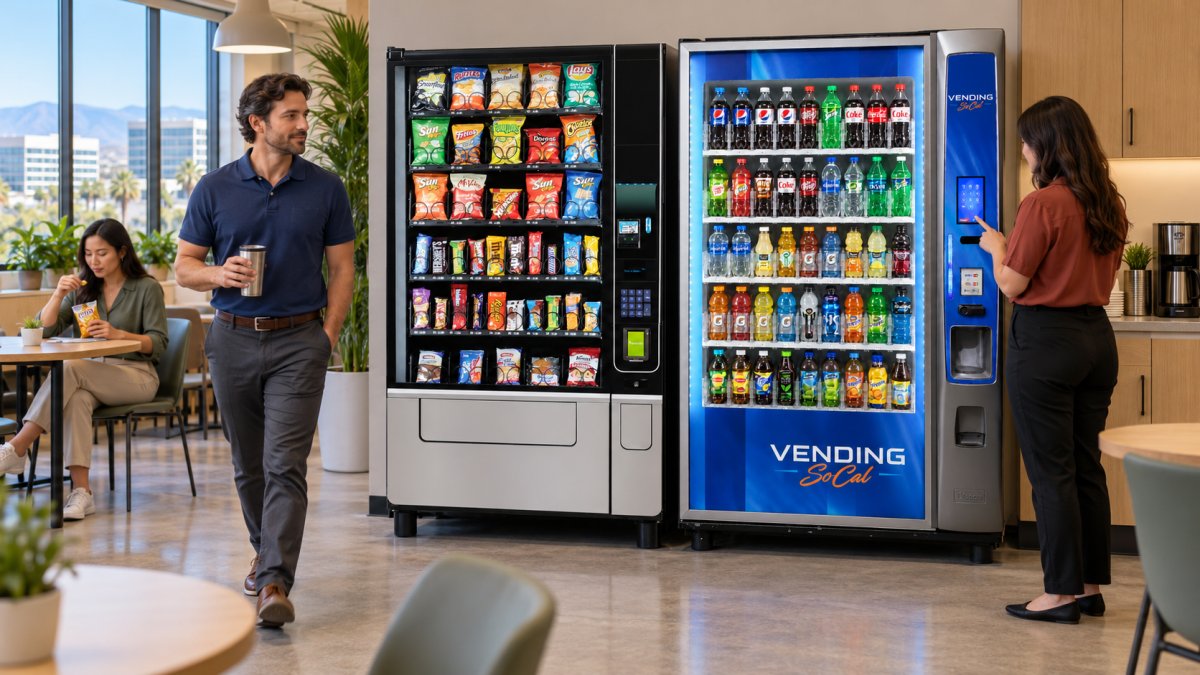
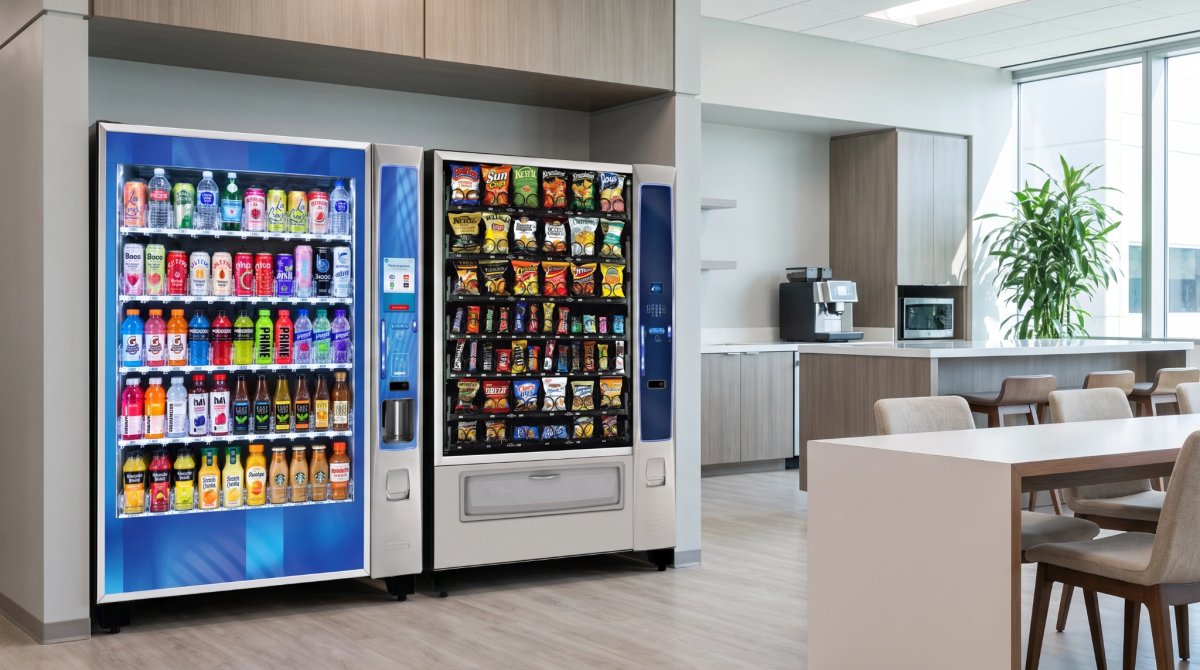
- Snack machines: Good for quick bites during breaks. They work best beside a drink machine in a main break area.
- Drink machines: Glass-front machines show cold beverages clearly, which suits physical work where hydration matters.
- Combo machines: Snacks and drinks in one unit. They fit smaller break rooms, satellite areas, or driver waiting areas without room for two machines.
- Smart coolers: An option for locations where the product mix, available space, payment methods, and expected usage support this type of equipment. Available payment methods depend on the cooler's configuration.
A large main break room often does well with separate snack and drink machines, so two people can buy at once and each choice stays stocked. A smaller secondary area may only need one combo unit, which uses less floor space and still gives workers both food and drinks. If you need to work out how many machines your headcount supports, see our guide on vending machine capacity by daily traffic.
Planning Breakroom Placement and Shift Access
Start with how people actually move through your building. The best spot is safe, visible, indoors or covered, and close to where workers already go.
Common placements at warehouses and distribution centers include:
- Employee break rooms and lunchrooms
- Near time clocks and employee entrances
- Near locker rooms
- Loading dock or production floor break areas
- Driver waiting areas and training rooms
Walk the route from work areas to the proposed spot. A path through a loading zone or restricted area can make a nearby machine hard to use. Keep clear space in front for safe use and restocking, and keep machines out of forklift lanes and emergency exits. A quick walk with your safety lead before installation helps confirm the spot works for everyone.
Shifts matter just as much. If your break room is locked after the day team leaves, evening and overnight crews can't use it. Compare break schedules with room access, and if teams work in separate buildings or areas, evaluate each usage area on its own. Our heavy-duty vending guide for distribution hubs covers these schedules in more detail.
Snacks, Drinks, and Cashless Payments
Product mix is customizable by location. Popular choices for warehouse crews include:
- Drinks: bottled water, sports drinks, energy drinks, soda, zero-sugar soda, iced tea, and protein drinks
- Snacks: chips, candy, nuts, trail mix, granola bars, protein bars, crackers, and healthier packaged snacks
Ask a few employees from each shift what they'd buy. Overnight workers often want different items than the day crew, such as energy drinks or a protein bar to get through the back half of a shift. Custom requests are considered and added when feasible, and selections get adjusted based on what employees actually buy, so the mix keeps improving over time.
Payment options depend on the installed machine. Most accept cash, credit and debit cards, Apple Pay, Google Pay, and tap-to-pay, which helps employees who rarely carry bills.
Delivery sensors on some machines can detect unsuccessful vends. Depending on the machine and payment configuration, a failed transaction may result in an automatic refund or cancellation of the payment authorization.
What Full-Service Vending Includes
Under a qualifying full-service arrangement, Vending SoCal handles:
- Site evaluation and machine recommendations
- Equipment delivery and installation
- Stocking and product rotation
- Maintenance and repairs
- Ongoing selection changes based on demand and feedback
Restocking frequency follows traffic and demand, so busier sites may be visited more often. Because product rotation is part of the service, your team does not need to track what is running low or what is selling slowly. That keeps machines full and fresh without adding a task for supervisors or office staff.
Your responsibilities as host are simpler: provide a safe indoor location, a standard outlet, and service access, including a point of contact and entry instructions for stocking visits. You don't replenish products or maintain equipment.
Before signing anything, clarify the written terms, including service responsibilities, cancellation, and removal. Vending SoCal also carries business insurance, and you can request a certificate of insurance to compare coverage with your site's requirements.
Getting Started With Vending SoCal
A location evaluation is the first step. Share your address, approximate daily traffic, number of shifts, break-room layout, and the products your team wants. Vending SoCal reviews your traffic, service area, and vending needs, then recommends a setup that fits your space and schedules.
Vending SoCal is a locally based Orange County provider with over 10 years of industry experience. Learn more about its industrial vending service, or contact Vending SoCal to request a location evaluation for your distribution center.
Frequently Asked Questions
Is there a cost to install vending machines at a distribution center?
For qualifying locations, there is no upfront cost for the machine, delivery, setup, stocking, or service. Employees pay for the items they buy.
How do I know if my facility qualifies?
Steady daily traffic, a safe indoor spot, power access, and demand for snacks and drinks are the main factors. Each site is reviewed individually, so send your details for an evaluation.
Can vending serve evening and overnight shifts?
Yes, when machines sit in areas those crews can reach during their breaks. Check room access hours and routes for every shift.
What does the provider handle?
Delivery, installation, stocking, product rotation, maintenance, and selection adjustments. You provide space, power, and access.
Frequently Asked Questions
For qualifying locations, there is no upfront cost for the machine, delivery, setup, stocking, or service. Employees pay for the items they buy.
Steady daily traffic, a safe indoor spot, power access, and demand for snacks and drinks are the main factors. Each site is reviewed individually, so send your details for an evaluation.
Yes, when machines sit in areas those crews can reach during their breaks. Check room access hours and routes for every shift.
Delivery, installation, stocking, product rotation, maintenance, and selection adjustments. You provide space, power, and access.