Vending Machine Capacity for Large Workplaces by Daily Traffic
October 29, 2026 · 8 min read
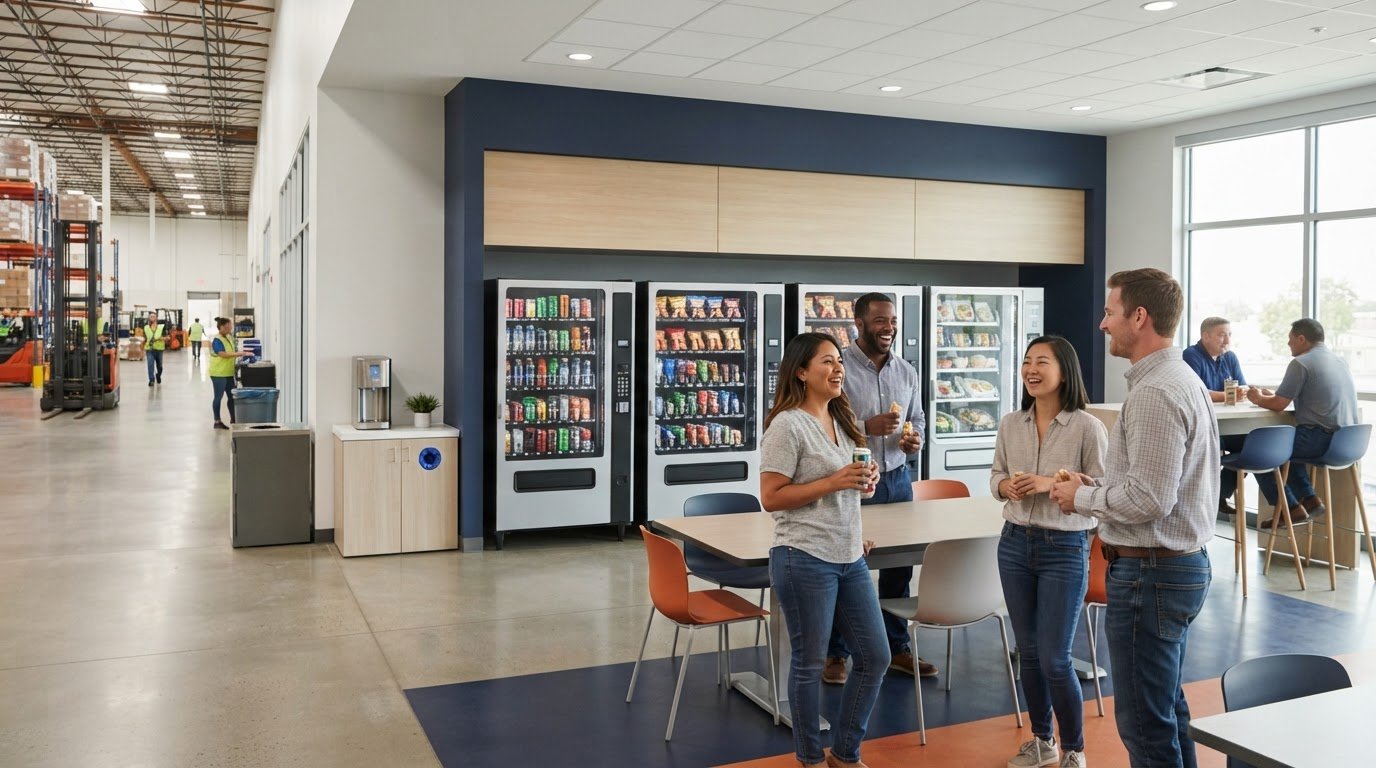
Daily employee traffic, not total headcount, sets vending machine capacity for large workplaces. A site with 300 employees spread across three shifts and four breakrooms needs a different plan than one with a single shared lunch hour. Map who actually walks past each breakroom, when they take breaks, and what they buy, then match equipment to those patterns.
Key Takeaways
- Plan from daily traffic at each breakroom, not from the building's total headcount.
- Break-time peaks and shift overlap decide whether a machine keeps up.
- Selections are the number of different products; storage is how many items physically fit.
- Beverages often drive demand in warehouses and manufacturing plants.
- Restocking frequency and product mix change effective capacity as much as machine size.
Why daily employee traffic matters more than total headcount
Headcount counts everyone on the payroll. Vending demand comes from the people who are on site, on break, and close enough to reach a machine. Remote days, split shifts, off-site crews, and distant work areas all shrink the number of real users.
Consider three illustrative sites with roughly 150, 300, and 500 employees. The 150-person plant on a single shift may send everyone to one breakroom at the same time. The 300-person distribution center may run three overlapping shifts with a quiet midday and a rush at each changeover. The 500-person campus may have several buildings, each with its own breakroom and its own rhythm. Headcount alone does not tell you what equipment any of them needs, and it should not be used as a purchasing formula.
Instead, walk the site. Note which breakrooms are used, how far each is from work stations, and whether employees can leave their area during a shift. A machine in a corridor nobody uses will not earn its space, while a breakroom at the end of a long production line may be the busiest spot in the building.
How shift schedules and break-time peaks affect vending demand
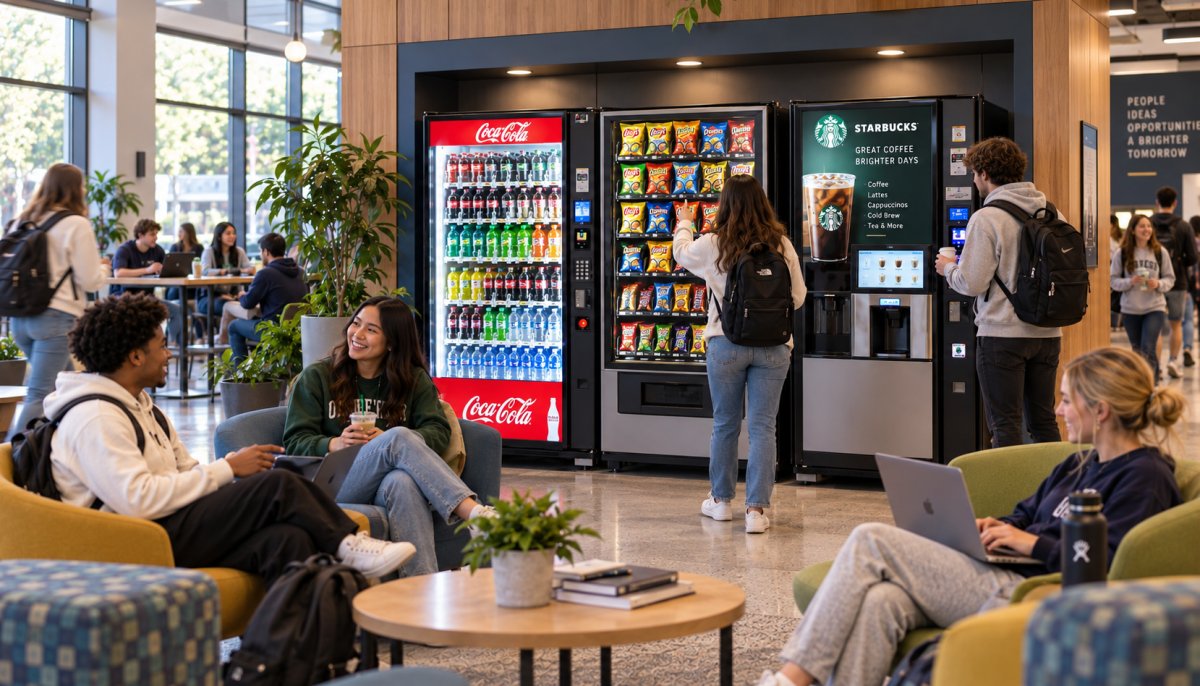
Demand arrives in waves. When 80 people take a break at 10:00 and the machine is next to the time clock, most purchases happen in about fifteen minutes. A machine that looks fine at noon can still leave a line and empty selections at that peak.
Gather this information before requesting service:
- Shift start and end times, including overlaps.
- Scheduled break and lunch windows for each department.
- Which breakrooms each group uses.
- Whether evening or overnight crews have the same access as day staff.
Staggered breaks spread purchases and reduce pressure on one machine. Shared breaks concentrate it. Overnight shifts often have fewer nearby food options, so they may rely on vending more heavily than day staff who can leave the building.
When one combo machine may be sufficient
A combo machine holds snacks and drinks in one footprint. It suits a single breakroom with moderate, spread-out traffic, limited floor space, and a small range of products. A 150-person facility with one shift and staggered breaks may fit this description, though the real answer depends on observed use.
The limitation is shared storage. Every shelf given to drinks is a shelf not given to snacks. If drinks sell out before the next service while snacks sit untouched, the combo layout is working against you. Combo units also serve one person at a time, so a concentrated break rush can still create a line.
When separate snack and beverage machines make more sense
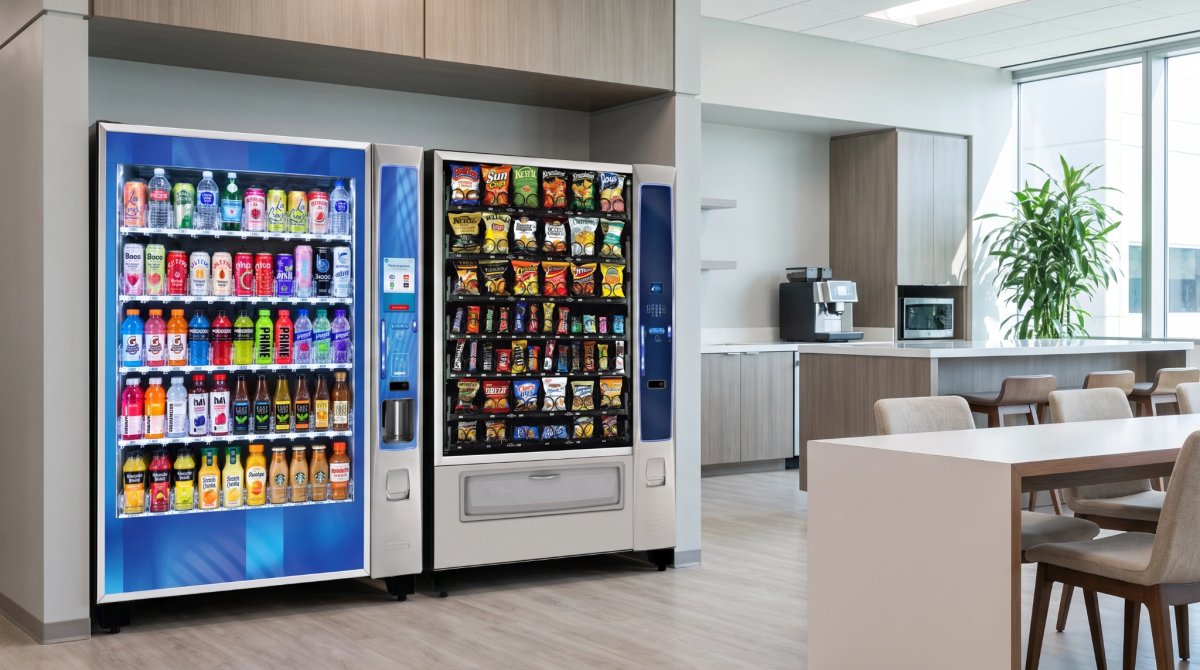
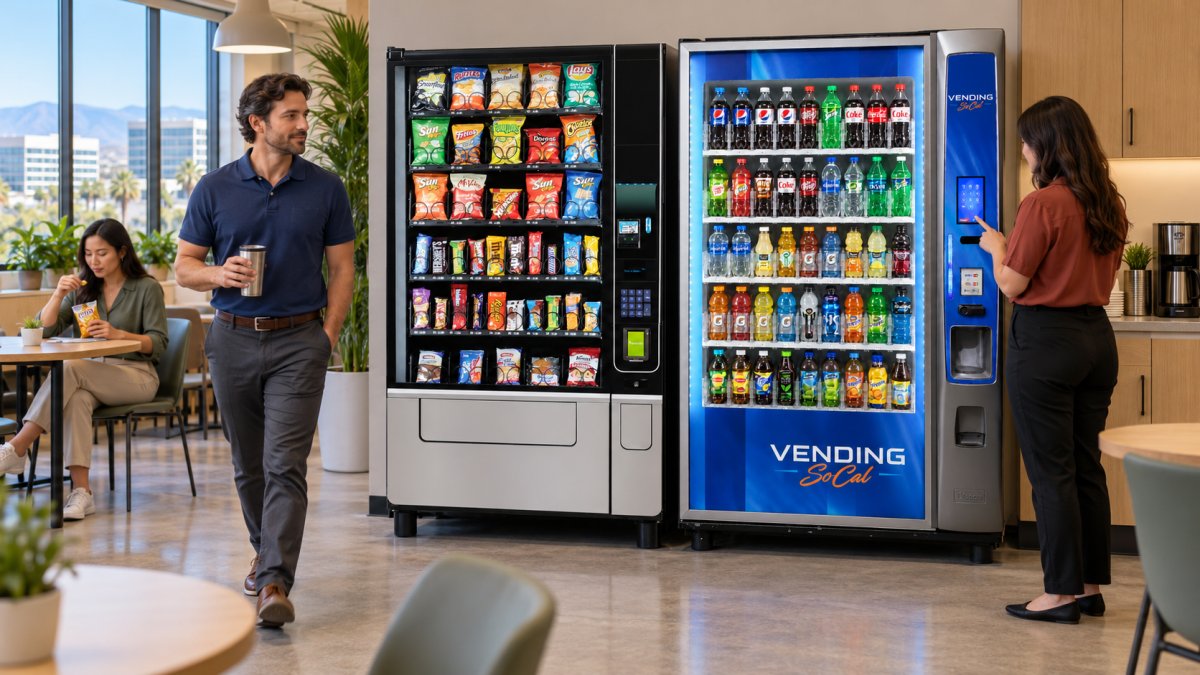
Separate machines give each category its own storage and let two people buy at once. They fit breakrooms with a shared break window, heavy drink demand, or a wide product range. A dedicated drink machine can be stocked with more bottles and cans than the drink side of a combo.
The tradeoff is floor space and an additional electrical outlet. Each machine needs safe indoor placement, clearance for users, and room for restocking. Review the options on the Our Machines page to see the snack, drink, and combo formats available.
| Setup | Best fit | Main limitation |
|---|---|---|
| One combo machine | Single breakroom, moderate and spread-out traffic | Snacks and drinks share storage |
| Separate snack and drink machines | Shared breaks, heavy drink demand, wider variety | More floor space and power outlets |
| Machines in several locations | Multiple breakrooms or distant work areas | Each location needs enough demand and service access |
How to determine whether additional machines or multiple locations are needed
Facilities with multiple breakrooms may benefit from separate vending locations when each area has sufficient employee traffic and purchasing demand. Employees will not walk across a plant or warehouse to buy a drink on a short break. One central machine may leave far departments underserved while the central one is overrun.
Look for these signs:
- Popular selections are empty before the next service visit.
- Lines form during every break window.
- Employees in one area report that the machine is too far away.
- One category sells out while the other stays full.
If drinks run out but snacks remain, add beverage capacity rather than another combo. If lines are the problem, consider a second unit nearby. If one department has no access, add a location there. Adding equipment to a low-use corridor only splits sales without solving a shortage.
Also check service access. Machines need a clear route for restocking, away from forklift lanes and loading paths. Our guide on vending services for warehouses covers more on this.
Why beverage demand matters in warehouses and manufacturing
Physical work, warm production areas, and long shifts push people toward drinks. Bottled water, sports drinks, and hydration options often move faster than snacks. In these settings, beverage capacity is frequently the first thing to run short.
Container size matters. Wide bottles take more space than slim cans, so a machine holds fewer of them per selection. Ask how many bottles and cans the layout holds for your preferred mix, not just how many selections it offers. Vending SoCal stocks drinks such as bottled water, soda, zero-sugar soda, sparkling water, iced tea, energy drinks, sports drinks, and juice, and the mix can be customized per location.
Payment options vary by machine and include cash, credit and debit cards, Apple Pay, Google Pay, and tap-to-pay.
How restocking frequency and product selection affect effective capacity
Two numbers describe a machine. Selections are the different products offered. Storage is the total number of items physically held. A machine with 30 selections can still run dry if each holds only a few units of the popular items.
Effective capacity is what is actually available when employees want it. More frequent restocking can improve product availability between shifts without increasing the machine's physical storage capacity. A better product mix raises it too, because space goes to what sells instead of slow items. Review empty selections and leftover stock after each visit, then shift space toward the fast movers.
High-traffic sites may be restocked more often, but the right schedule comes from observed use, not employee count alone. No schedule should be assumed in advance.
A vending capacity planning checklist for facilities managers
- List every breakroom and note how many people use each on a typical day.
- Record shift times, overlaps, and break windows.
- Note whether overnight or evening crews have vending access.
- Identify drink versus snack preferences, including container types.
- Measure available floor space and confirm a standard outlet.
- Check the route for delivery carts and service staff.
- Decide whether one combo, separate machines, or several locations fit each area.
- Plan to review sales and empty selections after the first weeks and adjust.
Bring these notes to the conversation. They let a provider recommend a setup based on your facility rather than a rule of thumb. Our setup checklist offers a similar walkthrough for offices.
How Vending SoCal helps qualifying large workplaces plan their setup
Vending SoCal is a locally based Orange County vending service provider with over 10 years of industry experience. Through its Industrial Vending Service, it places and manages snack, drink, and combo machines at warehouses, manufacturing plants, and distribution facilities. Installation, equipment, stocking, and maintenance come at no upfront cost for qualifying commercial locations.
Qualification depends on steady daily traffic, safe indoor space, a standard electrical outlet, and room for users and service. Placement and product selection are based on your actual breakroom traffic and shifts.
Ready to plan your setup? Contact Vending SoCal to request a vending capacity assessment for your facility.
Frequently Asked Questions
How do I know if my vending capacity is enough?
Check for empty popular selections before the next restock, lines during breaks, and products that sit unsold. Frequent sellouts point to a capacity or restocking gap; leftovers point to a product-mix issue.
How does breakroom traffic affect the number of machines?
Count the people who actually use each breakroom and when. Busy breakrooms with shared break windows may need separate snack and drink machines, while a quiet one may be served by one combo. Separate breakrooms usually need their own locations.
How should multiple shifts be handled?
Plan around each shift's breaks and overlaps. Make sure evening and overnight crews have access and that stock is replenished before a later shift begins, so a machine emptied by one crew is not left bare for the next.
Frequently Asked Questions
Check for empty popular selections before the next restock, lines during breaks, and products that sit unsold. Frequent sellouts point to a capacity or restocking gap; leftovers point to a product-mix issue.
Count the people who actually use each breakroom and when. Busy breakrooms with shared break windows may need separate snack and drink machines, while a quiet one may be served by one combo. Separate breakrooms usually need their own locations.
Plan around each shift's breaks and overlaps. Make sure evening and overnight crews have access and that stock is replenished before a later shift begins, so a machine emptied by one crew is not left bare for the next.