Corporate Vending Solutions in Orange County
October 20, 2026 · 15 min read
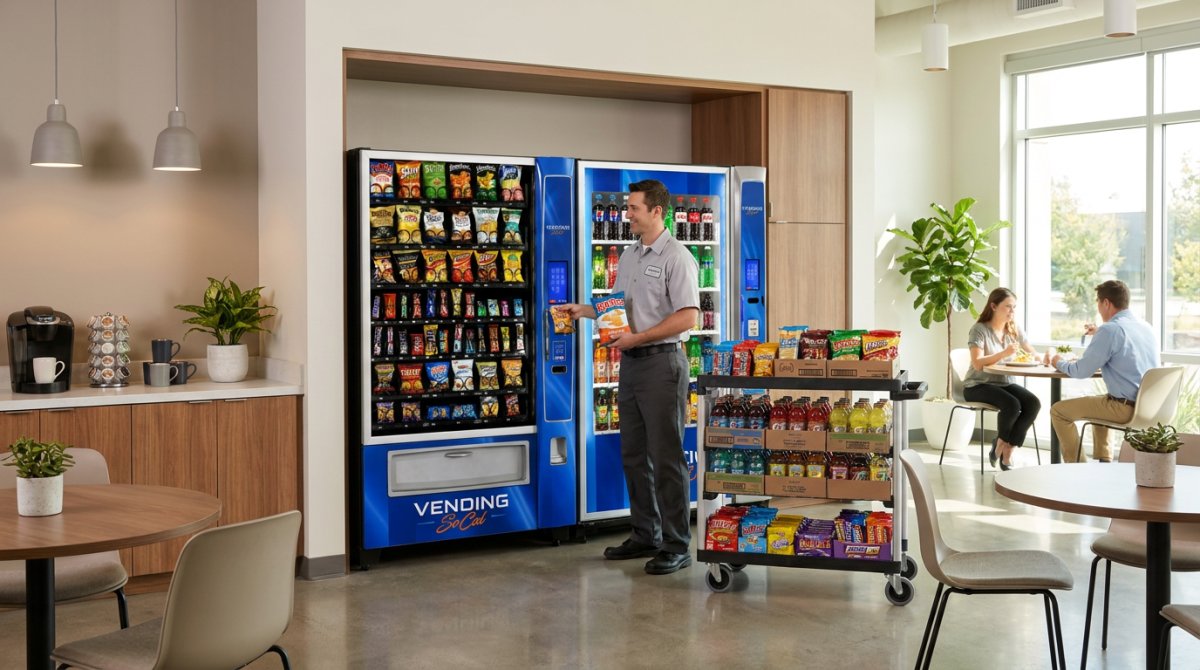
A workplace vending setup should make the day easier, not add another task for facilities staff. Corporate vending solutions in Orange County can be tailored to the people and routines at each location, with snack, drink, or combo machines, cashless payments, and remote monitoring. Workplaces can also get free installation, stocking, and maintenance.
It’s reasonable to want convenient options for employees without taking on the work of keeping machines stocked or operational. The right setup starts with the workplace’s needs, including product preferences, machine placement, and ongoing service.
This guide explains what tailored vending can include, how cashless payments and remote monitoring fit into daily operations, and what to consider when planning a workplace setup. You’ll also learn how installation, stocking, and maintenance can be handled as part of a hands-off service.
Key Takeaways
- Choose cashless payment options that make purchases convenient for employees and simplify daily use.
- Plan machine placement around the workplace layout and the flow of employees throughout the day.
- Build a product mix around employee preferences, including interest in healthier choices.
- Compare vending, micro markets, and smart fridges by considering the space, shopping experience, and level of management each requires.
- Match the vending setup to the environment, whether it’s an office, warehouse, apartment community, gym, or care facility.
Cashless payments and remote monitoring
Payment options affect convenience, while machine activity can help inform service decisions. Compare the payment methods and support your workplace actually needs.
Contactless and Cash Payment Methods
Contactless payments let customers pay without inserting cash, for example by tapping a card or using a mobile device at a reader. Cash can still be useful for employees who prefer coins or bills. Compare payment options with how people at your workplace typically buy snacks and drinks. A breakroom used by both visitors and staff, for instance, may benefit from more than one way to pay.
Cashless and Mobile Payments
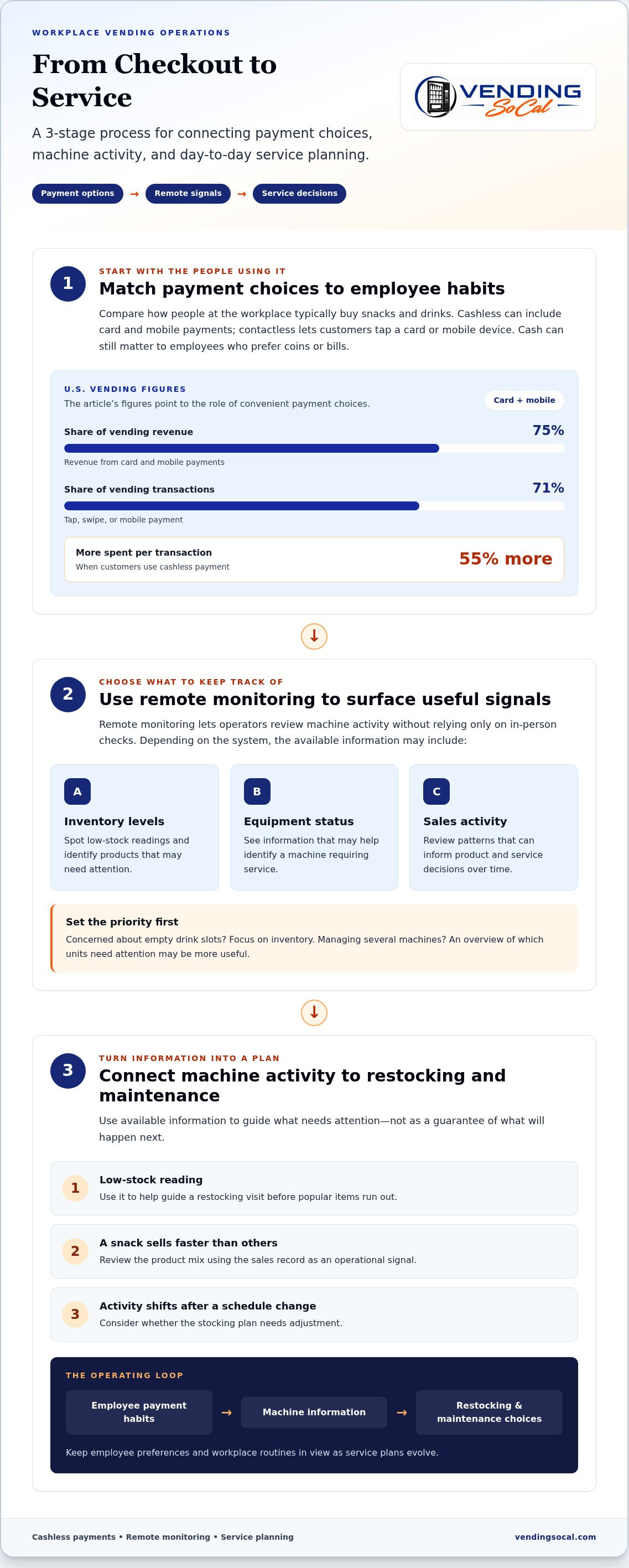
Cashless payments include card transactions and mobile payments. In the United States, 75% of vending revenue comes from card and mobile payments. Tap, swipe, or mobile payment accounts for 71% of vending transactions. Customers spend 55% more per transaction when using cashless payment. These figures point to the value of offering convenient payment choices, while each workplace can consider its own employees’ purchasing habits.
Remote monitoring allows operators to review machine activity without relying only on in-person checks. Depending on the system, information may include sales, inventory levels, or equipment status. That data can help identify products that need attention or a machine that requires service. A low-stock reading, for example, can help guide a restocking visit before popular items run out.
Start by deciding what you need to keep track of: product availability, machine operation, or sales patterns. Then identify which information supports that priority. A workplace concerned about empty drink slots may focus on inventory, while a facility with several machines may value an overview of which units need attention.
Machine activity can also inform product and service decisions over time. If records show one snack selling faster than others, review the product mix. If activity changes after a shift schedule changes, the stocking plan may need adjustment. Treat reports as operational signals, not guarantees of future demand. Employee preferences and workplace routines still matter.
Use three steps to assess payment and oversight needs. Compare payment options with employee habits, including preferences for cash. Clarify what machine information is available remotely, such as stock or operating status. Then decide how that information should guide restocking and maintenance. This connects checkout convenience with day-to-day service planning.
Orange County service area and cities served
Orange County vending coverage spans 15 cities. A location’s address, building access, and daily traffic help shape the service plan. For example, a busy office lobby and a warehouse breakroom can have different delivery needs. Match the service area to the actual workplace, not just the city name.
Employee count alone doesn’t determine whether vending suits a workplace. Consider foot traffic, shift patterns, product demand, and machine access. A smaller site with steady visitor traffic may have different needs from a larger facility with staggered shifts. Sharing these details helps shape a setup around how people use the space.
Food safety and permit requirements depend on the products and how they’re handled. Sealed, shelf-stable snacks differ from refrigerated or perishable items. Before setting up vending, identify product types, storage needs, and handling steps, then follow applicable Orange County and city requirements.
Service planning involves more than identifying a city. The workplace address and practical access details, such as the delivery entrance, loading restrictions, and machine location, also matter. An office tower in Orange County and an industrial site may require different visit arrangements. Clear site information helps plan service efficiently.
Response times depend on the issue and the service process. A product shortage, payment-reader problem, and machine that stops operating require different attention. Describe the issue, machine location, and affected products when reporting it. For example, noting that a reader rejects card payments helps distinguish a payment issue from an empty selection.
Before installation, make sure service responsibilities are clear. Review how restocking is scheduled, how machine issues are reported, which payment methods are supported, and what maintenance is included. Clarify the agreement’s duration and how it can be changed or ended. Clear terms help facilities teams understand the ongoing arrangement.
Restocking, repairs, payments, and customer support are typically handled through defined operating steps. The provider tracks product needs, replenishes inventory, addresses equipment problems, and supports payment questions. The workplace can help by identifying a site contact and sharing access instructions. That keeps routine visits and issue reports connected to the right location.
To plan vending for an Orange County workplace, prepare the site address, employee and visitor patterns, and preferred product categories. Then consider access, service responsibilities, and how issues will be reported. These details help shape a practical vending plan for the location.
Product selection tailored to employees
A useful product mix starts with the people who will use it. For corporate vending solutions in Orange County, consider employee schedules, workplace routines, and machine location. A team working regular office hours may visit the breakroom together, while a site with staggered shifts may see use throughout the day. Those patterns can guide product selection and placement.
Gather preferences before choosing products. Ask employees what they’d like and group requests into clear categories, such as snacks, drinks, and familiar favorites. Look for recurring requests rather than treating every suggestion as a requirement. If several employees mention sparkling drinks, for example, include that preference when reviewing beverage choices.
Build the product mix around the workplace rather than relying on a generic list. An office lounge may call for everyday snacks and drinks. A warehouse break area may benefit from convenient options for short breaks. A shared space used by staff and visitors may need choices for different tastes. In each case, let the location and its users guide selection.
Use a simple process to turn feedback into a practical plan:
- Identify users. Note who uses the machine, including staff and visitors.
- Map routines. Consider shift patterns and when people take breaks.
- Group requests. Sort suggestions into snack and drink preferences.
- Review selections. Use feedback and purchasing patterns to refine choices.
Make requests specific. “More drinks” gives less direction than asking for still water, sparkling drinks, or familiar beverages. Employees can also distinguish between sweet snacks, salty snacks, and other preferences. Clear categories turn broad feedback into useful guidance without assuming everyone wants the same thing.
Product choices can change as the workplace changes. A new department, shift schedule, or breakroom location may bring different users and habits. Review employee comments and product movement regularly. If a selection is consistently overlooked, consider replacing it with something employees request more often. Small adjustments can keep the machine relevant.
When planning corporate vending solutions in Orange County, share the workplace type, user routines, and product requests. That gives the setup a clear starting point, connecting machine format and product selection to real preferences, with room to adjust as workplace needs evolve.
A practical mix can also reflect broader preferences: 81% of consumers request healthier choices in vending machines, while 87% of people prefer fresh options over traditional vending snacks.
Vending solutions for offices, warehouses, housing, gyms, and care facilities
Different facilities need different machine placements, product mixes, and service routines. Start with the people using each space and their daily schedules.
Vending for Offices and Employee Lounges
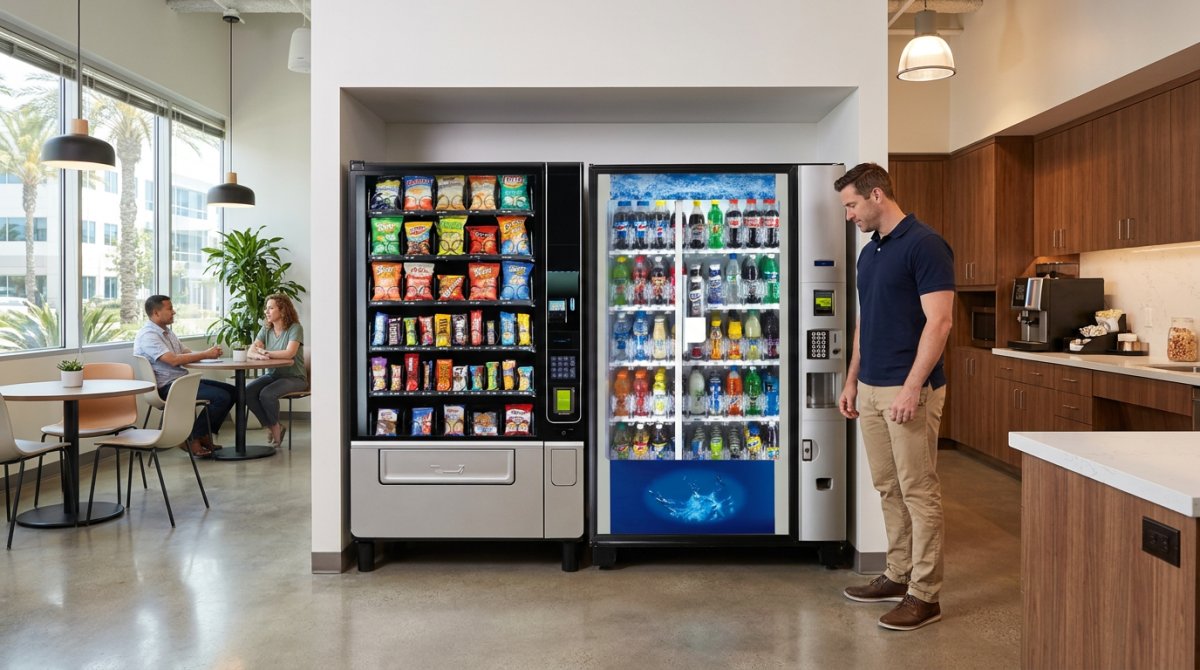
An office breakroom works best when vending fits the existing routine. Consider where employees gather, how they enter the lounge, and whether visitors use it. A combo machine puts snacks and drinks together, while separate machines may suit a larger lounge with distinct areas. Choose a location that keeps walkways clear and makes purchases convenient during breaks.
Solutions Across Facility Types
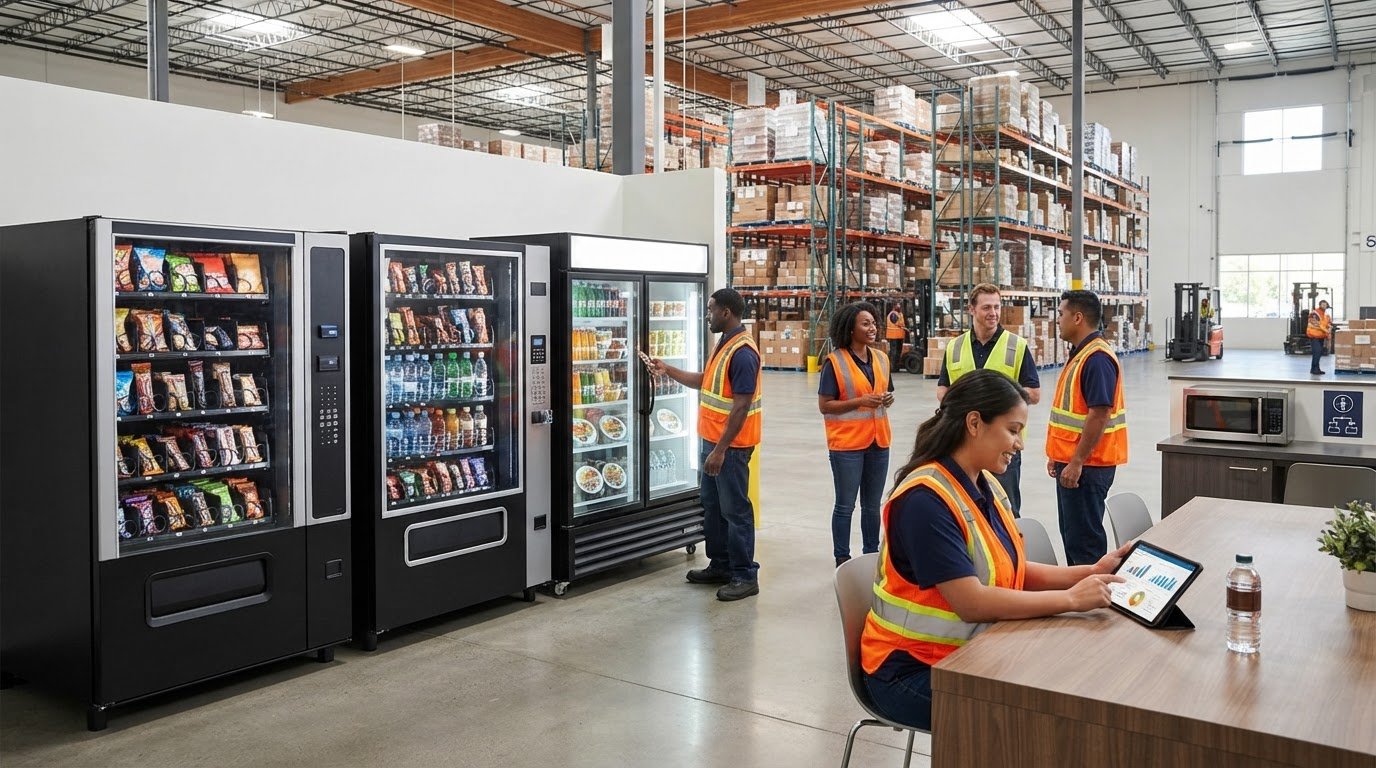
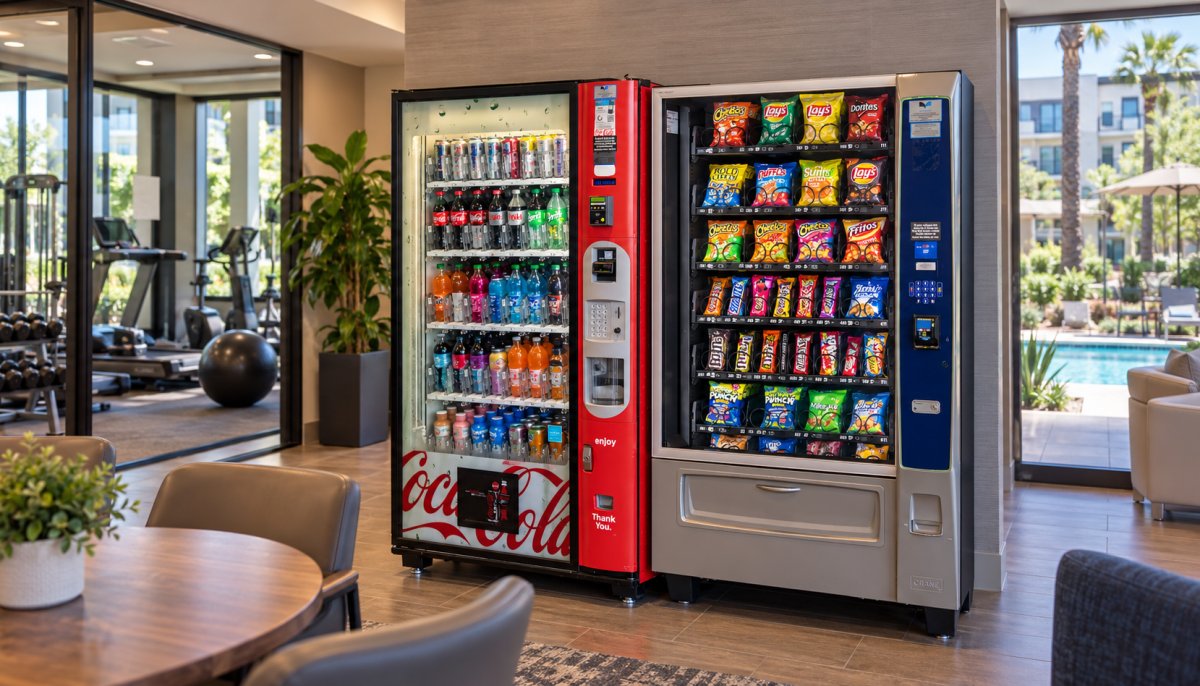
Warehouses may serve employees across different shifts, so placing a machine near a shared break area can improve access. In apartment communities, a common room can offer residents convenient snacks and drinks. A gym may call for drink choices near member areas. At care facilities, consider staff, visitors, and daily movement through the building when planning placement and products.
Each setting brings different practical considerations. In a warehouse, consider whether employees can reach the machine during scheduled breaks. In an apartment building, think about resident access and commonly used shared spaces. Gym traffic may cluster around workout periods. In a clinic or hospital, choose a location that serves staff and visitors without interrupting regular activity.
Product categories can also reflect the setting. A manufacturing site may prioritize convenient breakroom access for its workforce. A residential common area may benefit from a combination of snack and drink choices. In a medical clinic, consider who uses the space and when. These details help turn a broad facility type into practical choices about placement and selection.
Office Vending, Micro Markets, and Smart Fridges
Traditional vending offers a compact format for individual purchases. Micro markets create a different shopping experience, while smart fridges provide another option for workplace refreshment. Micro markets outperform traditional vending in satisfaction scores by 15%. Compare each format against available space, how employees shop, and the level of facility management the setup requires.
Available space and site routines can guide the setup. A single machine may suit a small lounge with limited floor area, while a larger breakroom may accommodate more than one machine. Before choosing, consider the employee experience, available space, and who will oversee the area. The setup should support the building’s routines, not add unnecessary work for facilities staff.
Review the facility by identifying its main users, busy periods, and a convenient machine location. Then match the machine type and product categories to the setting. An office lounge, warehouse breakroom, apartment common room, gym, and care facility each have distinct needs. Planning around those details helps serve the people who use the space.
How do office vending, micro markets, and smart fridges compare?
Different refreshment formats come with different space, product, and oversight needs. Compare the footprint, shopping experience, and day-to-day management against your facility. An office with one small breakroom has different requirements from a large campus with several employee areas.
Traditional vending uses a machine where customers select and purchase items individually. It can suit workplaces that want a defined selection in a contained space. Snack, drink, and combo machines serve different needs. A compact office lounge, for example, could use one combo machine rather than separate units.
A micro market uses an open self-service layout where customers browse items before paying. It may suit a larger breakroom where employees want to see several products at once, but requires room for displays and customer movement. A narrow hallway or small staff room may not have enough space. Vending SoCal focuses on managed vending machines, not micro-market kiosks.
A smart fridge provides a refrigerated self-service option, with product range and shopping process depending on the setup. Consider whether chilled items match employee preferences and whether the facility can accommodate the unit. A workplace seeking refrigerated choices, for example, can compare that format with a standard drink machine.
Match the format to the site. Assess available breakroom space and employee traffic, then consider desired products and shopping preferences. Also account for the work needed to keep the setup clean, stocked, and operating. A compact office with limited room may favor traditional vending, while a larger employee lounge may accommodate another format.
Payment and oversight matter too. Consider how customers will pay and who will handle routine tasks. A vending machine keeps products within a single unit, while an open market changes how products are displayed and accessed. A smart fridge centers the experience on refrigerated items. Choose an arrangement that fits site routines and the facility team’s responsibilities.
- Choose vending when a contained machine suits the space.
- Consider a micro market when an open browsing layout fits the breakroom.
- Compare a smart fridge when chilled selections are a priority.
No format fits every office. Measure the planned location, identify likely users, and define the products and shopping experience the workplace wants. Those details create a practical basis for comparing office vending, micro markets, and smart fridges in Orange County.
Vending SoCal: Hotel Vending Service
Vending SoCal provides Hotel Vending Service for properties seeking managed vending. Its placement and management services also support apartment, industrial, and school settings. For a hotel, consider how guests use shared spaces and which products suit the property. For any workplace, start with the site, its users, and daily routines.
Vending SoCal also provides Apartment Vending Service, Industrial Vending Service, and Schools Vending Services. Each service can be tailored to its facility rather than treated as a one-size-fits-all arrangement. Share the setting, intended machine location, and users’ needs to start planning a practical setup.
Contact Vending SoCal to discuss vending for your facility.
Make the next step fit your facility
Before choosing a setup, identify what vending should do for your facility. Consider who will use it, where the machine will go, and how managed service can support day-to-day operations. These details create a practical starting point for corporate vending solutions in Orange County.
Vending SoCal provides Hotel Vending Service, Apartment Vending Service, and Industrial Vending Service. If you manage one of these facilities, share the setting and your priorities to begin planning a suitable vending setup.
A workplace refreshment plan starts with clear decisions about users, placement, and products. Contact Vending SoCal to discuss a managed vending setup for your facility.
Frequently Asked Questions
Which corporate vending machine companies serve Orange County, California?
Vending SoCal provides commercial vending services in Anaheim, Brea, Buena Park, Costa Mesa, Cypress, Fountain Valley, Fullerton, Garden Grove, Huntington Beach, Irvine, La Habra, La Palma, Newport Beach, Orange, Santa Ana, Tustin, Westminster, and Stanton. When assessing a setup, consider whether the machine type, product mix, and ongoing restocking and maintenance fit your facility. An Irvine office and a Garden Grove warehouse, for example, may need different placement plans.
What vending solutions are available for Orange County offices and businesses?
Options include snack, drink, and combo vending machines, with placement and product choices tailored to the facility. An office might use a combo machine in a shared breakroom, while a distribution hub may need a machine near employee areas. Vending SoCal serves offices and settings such as manufacturing facilities, gyms, clinics, hotels, and apartment communities.
Do Orange County vending providers offer free equipment and installation?
Vending SoCal’s managed service includes professional installation, regular restocking, and maintenance. The company manages vending machines rather than selling or leasing equipment. When planning a workplace setup, identify the intended location, user groups, and access details. This information helps shape the installation plan and how the service will operate at your facility.
What snacks, drinks, and fresh food options can employees request?
Employee preferences can guide a tailored mix of packaged snacks and drinks. Vending SoCal provides snack, drink, and combo machines. Fresh food is a separate consideration: a standard snack or drink machine doesn’t automatically provide it. When sharing preferences, distinguish between packaged snacks, bottled drinks, and fresh items.
What should businesses check in vending service contracts, cancellation terms, and data policies?
Review the written terms for service responsibilities, restocking and maintenance arrangements, agreement length, and how cancellation or changes are handled. For cashless machines, also understand what transaction or machine-use data is collected, who can access it, and how it is used. For example, a facilities manager may need operational sales information without access to individually identifiable employee details.
Which Orange County areas and business types do local vending providers serve?
Vending SoCal serves Anaheim, Brea, Buena Park, Costa Mesa, Cypress, Fountain Valley, Fullerton, Garden Grove, Huntington Beach, Irvine, La Habra, La Palma, Newport Beach, Orange, Santa Ana, Tustin, Westminster, and Stanton. Its commercial vending services support offices, hotels, apartments, schools, colleges, industrial sites, logistics hubs, gyms, government buildings, and medical facilities.
How do Orange County businesses request quotes and set up vending service?
Submit a service request; the form takes about 60 seconds, and the company says it will contact new inquiries within 24 hours. Share the site address, employee and visitor patterns, preferred products, and access details to help plan the setup.
Frequently Asked Questions
Vending SoCal provides commercial vending services in Anaheim, Brea, Buena Park, Costa Mesa, Cypress, Fountain Valley, Fullerton, Garden Grove, Huntington Beach, Irvine, La Habra, La Palma, Newport Beach, Orange, Santa Ana, Tustin, Westminster, and Stanton. When assessing a setup, consider whether the machine type, product mix, and ongoing restocking and maintenance fit your facility. An Irvine office and a Garden Grove warehouse, for example, may need different placement plans.
Options include snack, drink, and combo vending machines, with placement and product choices tailored to the facility. An office might use a combo machine in a shared breakroom, while a distribution hub may need a machine near employee areas. Vending SoCal serves offices and settings such as manufacturing facilities, gyms, clinics, hotels, and apartment communities.
Vending SoCal’s managed service includes professional installation, regular restocking, and maintenance. The company manages vending machines rather than selling or leasing equipment. When planning a workplace setup, identify the intended location, user groups, and access details. This information helps shape the installation plan and how the service will operate at your facility.
Employee preferences can guide a tailored mix of packaged snacks and drinks. Vending SoCal provides snack, drink, and combo machines. Fresh food is a separate consideration: a standard snack or drink machine doesn’t automatically provide it. When sharing preferences, distinguish between packaged snacks, bottled drinks, and fresh items.
Review the written terms for service responsibilities, restocking and maintenance arrangements, agreement length, and how cancellation or changes are handled. For cashless machines, also understand what transaction or machine-use data is collected, who can access it, and how it is used. For example, a facilities manager may need operational sales information without access to individually identifiable employee details.
Vending SoCal serves Anaheim, Brea, Buena Park, Costa Mesa, Cypress, Fountain Valley, Fullerton, Garden Grove, Huntington Beach, Irvine, La Habra, La Palma, Newport Beach, Orange, Santa Ana, Tustin, Westminster, and Stanton. Its commercial vending services support offices, hotels, apartments, schools, colleges, industrial sites, logistics hubs, gyms, government buildings, and medical facilities.
Submit a service request; the form takes about 60 seconds, and the company says it will contact new inquiries within 24 hours. Share the site address, employee and visitor patterns, preferred products, and access details to help plan the setup.