
How to Switch Vending Machine Companies Without Disrupting Your Workplace
November 22, 2026 · 9 min read
Switching vending machine companies involves six moves: review the current contract, qualify a replacement vendor, give proper notice, arrange equipment removal, coordinate installation, and tell your staff. Careful planning reduces disruption, but it cannot guarantee zero downtime. Vending SoCal evaluates prospective locations and coordinates installations around confirmed site access and removal schedules. It cannot cancel contracts or remove equipment that belongs to another vendor.
Key Takeaways
- Read the current agreement before you contact anyone or send notice.
- Confirm that a replacement provider can serve your site before ending existing service.
- The outgoing vendor handles removal of its own machines under its agreement.
- Share only confirmed installation dates with employees.
How to Switch Vending Machine Companies: Step-by-Step
This process suits office managers, HR managers, facility managers, property managers, and business owners. Follow the steps in order.
- Review the existing vending agreement. This shows your term, notice rules, and removal terms before you act.
- Evaluate potential replacement providers. Comparing options early keeps you from choosing under deadline pressure.
- Get a proposal and confirm site qualification. A written proposal confirms the new provider can actually serve your location.
- Provide notice according to existing contract terms. Following the agreement protects you from avoidable disputes or renewals.
- Confirm equipment ownership and removal arrangements. Knowing who owns each machine tells you who removes it.
- Coordinate new installation and notify employees. Aligned schedules and clear messages shorten the gap in service.
- Test the new machines and confirm service contacts. Early testing catches setup problems and gives staff a clear way to report issues.
Do not end your current service until the replacement site is qualified and you have a workable transition plan. Otherwise your breakroom could sit empty.
Review Your Current Vending Machine Agreement
Your agreement sets the pace of any change. Look for these items:
- Contract expiration date
- Automatic renewal clauses
- Termination notice requirements
- Early cancellation fees
- Equipment ownership and removal terms
- Exclusivity provisions
- Property access rules
Terms differ from one agreement to the next, so avoid assuming a universal rule. If wording is unclear or disputed, have a qualified professional review it. The written agreement governs your obligations.
Identify Problems With Your Current Vending Provider
Write down what is going wrong before you shop. Common reasons include frequent sold-out favorites, machines left out of order, limited payment options, a stale product mix, and slow answers when you report a problem. A machine can look full while popular items are gone. Specific notes, such as dates, machine locations, and the items employees ask for, help you compare proposals fairly and show a new provider what to fix.
How to Choose a Replacement Vending Machine Company
Compare providers on the same criteria:
- Equipment condition: clean, modern machines.
- Product selection: choices matched to your employees and visitors.
- Payment options: many machines accept cash, credit cards, debit cards, Apple Pay, Google Pay, and tap-to-pay, depending on the machine and setup at the location.
- Restocking and maintenance: who handles each, and what drives restocking frequency, such as traffic, shifts, and popular products.
- Issue reporting: how you reach someone, and what details they need.
- Pricing and subsidies: employee-paid vending provides convenient refreshments without an employer-funded product budget. You may consider it first or discuss a subsidy during the initial evaluation.
- Commissions: where available, they are discussed individually based on the location and proposed service terms. Read more on whether businesses get paid to host vending machines.
- Installation logistics: delivery access and timing. No provider should promise response times or installation dates before the site is reviewed.
Review what a business is responsible for when hosting vending machines so you know what the host provides. Specific host obligations are set by the written service agreement. To see the equipment types a replacement provider might offer, browse our commercial vending machines.
Coordinate Old Machine Removal and New Installation
Treat this as a handoff between two companies, each handling its own part.
- Verify ownership. Confirm in writing which machines belong to the outgoing vendor.
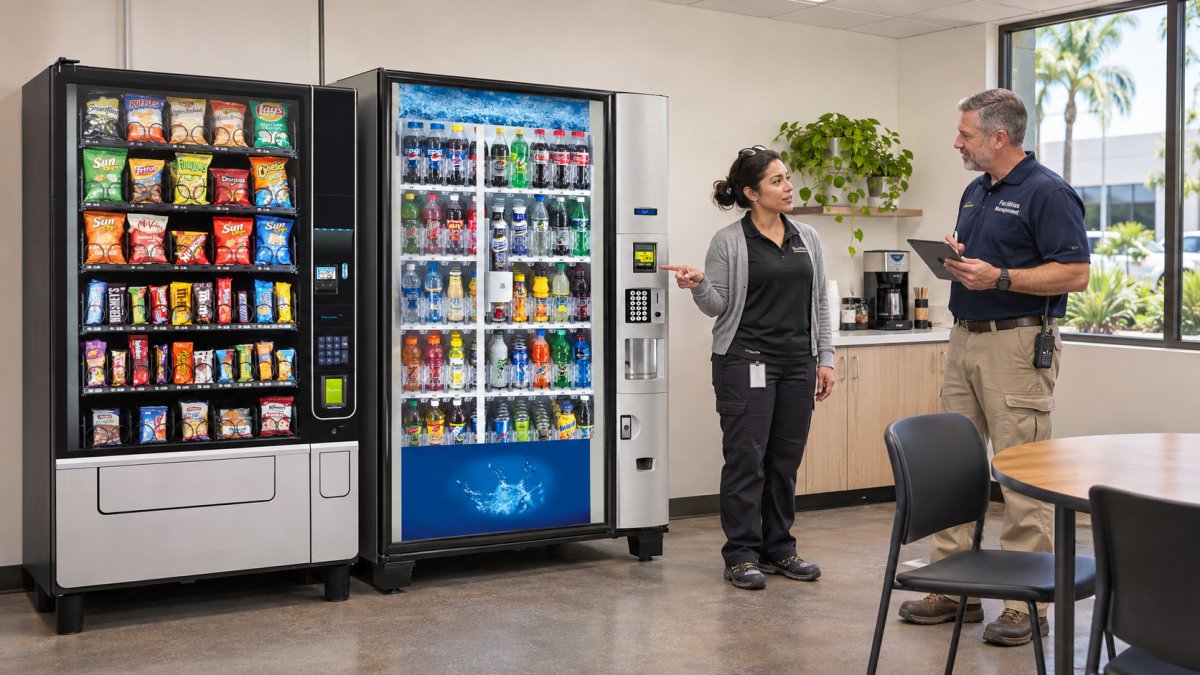
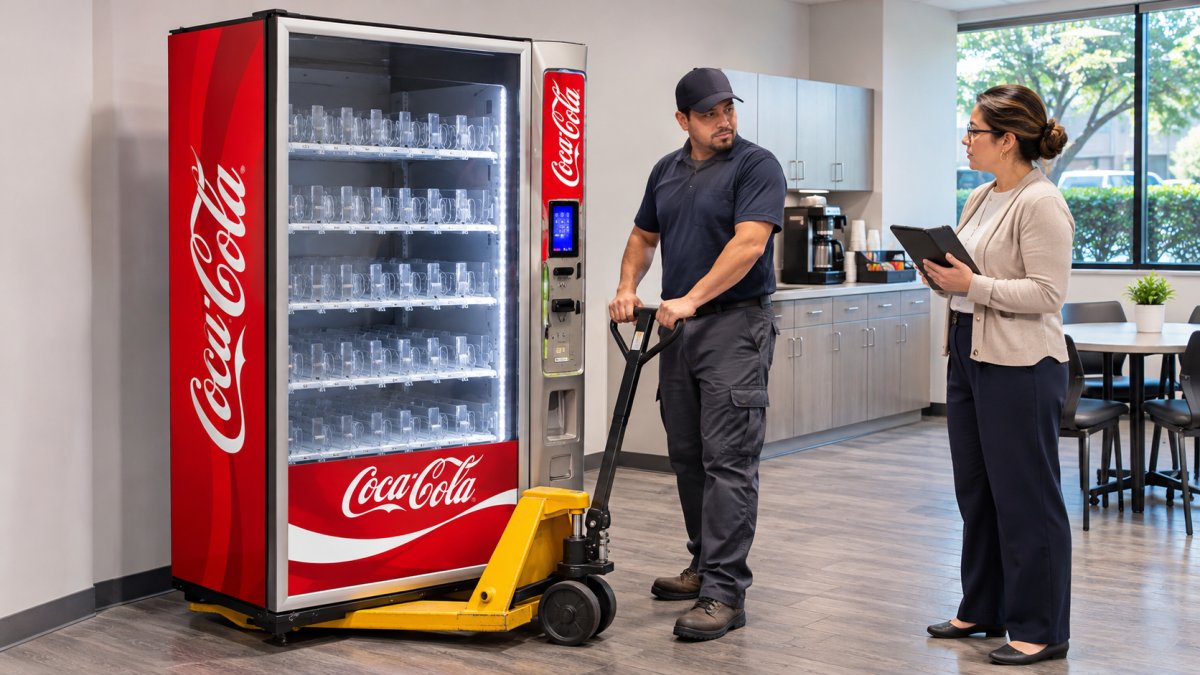
- Let the current vendor remove its machines under its agreement. A new provider does not remove another vendor's equipment. Nobody else should move or disconnect an incumbent vendor's machines without authorization.
- Check the space. Measure doorways, hallways, and the machine spot, and confirm a standard electrical outlet is nearby. The guide to placing vending machines in your workplace helps with the layout.
- Arrange access. Reserve elevators or loading docks and give both vendors the building rules.
- Schedule off-peak. Pick quiet hours so deliveries do not collide with shift changes.
Same-day replacement can be possible when removal and installation line up, but it is not guaranteed. Your facility contact approves the location before installation.
How to Minimize Workplace Disruption During the Switch
You cannot promise uninterrupted service, but you can limit the gap.
- Align removal and installation dates where both vendors allow it.
- Avoid your busiest shifts and delivery windows.
- Give staff a clear timeline, such as which machine is offline and when replacement is expected.
- For multiple sites, stagger the schedule so one location is finished before the next begins.
- Check that each new machine vends and takes payment before you announce the rollout as complete.
For example, a warehouse manager can post a notice for each shift once dates are confirmed. A manager who shares only confirmed details avoids a second round of corrections. The process for requesting vending machines also covers the information to gather up front.
Workplace Vending Provider Transition Checklist
| Transition Task | Why It Matters | Responsible Party |
|---|---|---|
| Review current agreement | Reveals renewal, fee, and removal terms | Facility manager or business owner |
| Check termination notice requirements | Prevents missed deadlines and unplanned renewal | Facility manager |
| Evaluate new provider | Compares service, products, and payment options | Facility manager |
| Confirm location qualification | Avoids ending service without a replacement | New provider and facility manager |
| Approve proposed equipment | Matches machines to users and space | Authorized facility contact |
| Confirm outgoing machine ownership | Clarifies which machines the old vendor removes | Facility manager and outgoing vendor |
| Arrange removal with existing vendor | Keeps removal under the original agreement | Outgoing vendor |
| Coordinate new delivery and installation | Reduces the gap between machines | New provider and facility manager |
| Notify employees | Sets expectations about downtime | Facility or HR manager |
| Verify new machine payments and dispensing | Catches setup issues early | New provider and facility contact |
| Share new service contact information | Speeds up problem reporting | New provider and facility manager |
Formal written agreements govern the specific legal and operational obligations of each party.
Common Mistakes to Avoid When Changing Vending Companies
- Overlooking auto-renewal terms, which can quietly extend an agreement you meant to leave.
- Sending termination notice before reviewing your contractual duties.
- Assuming you own the old machines, or expecting the new provider to remove them.
- Choosing a provider before confirming site qualification.
- Ignoring electrical and loading logistics, such as outlets, elevators, and dock access.
- Telling employees an installation date that is not yet confirmed, which forces corrections later.
How Vending SoCal Helps Orange County Businesses Switch Providers
Vending SoCal serves Orange County businesses. For qualified locations, it provides vending equipment, delivery, installation, stocking, maintenance, and repairs without upfront or recurring service fees. Vending SoCal retains ownership of its equipment under the service arrangement. Snack, drink, and combo machines are considered based on the site, and product selections are customized using sales patterns and employee feedback. Many machines accept cash, credit cards, debit cards, Apple Pay, Google Pay, and tap-to-pay, depending on the equipment installed.
Employees pay for products unless your business arranges a subsidy. Qualification depends on foot traffic and demand, headcount, hours, space, electrical availability, and route logistics. It is not automatic, and no delivery date is promised. Vending SoCal coordinates installation around confirmed site access and removal schedules. It does not cancel contracts or remove machines owned by another vendor.
The company serves offices, warehouses, and other facilities. See its office vending service and industrial vending service for details. If you are planning a provider change, contact Vending SoCal to discuss a facility evaluation.
Ready to Switch Vending Machine Companies?
Orange County businesses can request a free workplace vending evaluation through our contact page. To help us review your site, include:
- Workplace city
- Approximate employee count
- Current vending setup
- Reason for switching providers
- Existing contract end date, if known
- Desired replacement timeframe
Vending SoCal can assess the location and discuss a transition plan. Qualification, installation dates, and uninterrupted service are not guaranteed.
Frequently Asked Questions
Can I switch vending machine companies before my contract expires?
Possibly, but it depends on your existing contract. Look for termination, early cancellation, and renewal language, and ask a qualified professional about unclear wording. Vending SoCal cannot cancel contracts on your behalf.
How much notice do I need to give my current provider?
The notice requirement is set by your agreement, so check the termination clause and how notice must be delivered. Do not assume a standard period applies. Send notice only after you understand your obligations.
Who removes the old vending machines?
The outgoing vendor generally removes its own machines under its agreement. Confirm ownership in writing first. A new provider does not remove another vendor's equipment.
Are there cancellation or equipment removal fees?
Some agreements include them and others may not. Review the fee and removal sections of your contract, and ask the outgoing vendor to clarify any charges in writing.
Can the new vending company install machines on the same day?
Sometimes, if removal and installation line up, but it depends on provider availability, site access, and the outgoing vendor's schedule. No date is guaranteed before the location is reviewed.
How long does switching vending machine providers take?
Timing varies with your contract terms, site qualification, provider availability, and site conditions such as access and electrical setup. A written plan with confirmed dates gives you the most reliable timeline.
Can we keep vending machines available during the transition?
Planning can limit the gap, for example by aligning removal and installation where both vendors allow it. Uninterrupted service cannot be promised, so tell employees which machines are offline and when.
What should I do if my current provider is unresponsive?
Put your request in writing and keep dates of each attempt. Follow the notice method in your agreement, and use that record when you discuss next steps with a qualified professional and a replacement provider.
Frequently Asked Questions
Possibly, but it depends on your existing contract. Look for termination, early cancellation, and renewal language, and ask a qualified professional about unclear wording. Vending SoCal cannot cancel contracts on your behalf.
The notice requirement is set by your agreement, so check the termination clause and how notice must be delivered. Do not assume a standard period applies. Send notice only after you understand your obligations.
The outgoing vendor generally removes its own machines under its agreement. Confirm ownership in writing first. A new provider does not remove another vendor's equipment.
Some agreements include them and others may not. Review the fee and removal sections of your contract, and ask the outgoing vendor to clarify any charges in writing.
Sometimes, if removal and installation line up, but it depends on provider availability, site access, and the outgoing vendor's schedule. No date is guaranteed before the location is reviewed.
Timing varies with your contract terms, site qualification, provider availability, and site conditions such as access and electrical setup. A written plan with confirmed dates gives you the most reliable timeline.
Planning can limit the gap, for example by aligning removal and installation where both vendors allow it. Uninterrupted service cannot be promised, so tell employees which machines are offline and when.
Put your request in writing and keep dates of each attempt. Follow the notice method in your agreement, and use that record when you discuss next steps with a qualified professional and a replacement provider.