What Is a Business Responsible for When Hosting Vending Machines?
November 20, 2026 · 8 min read
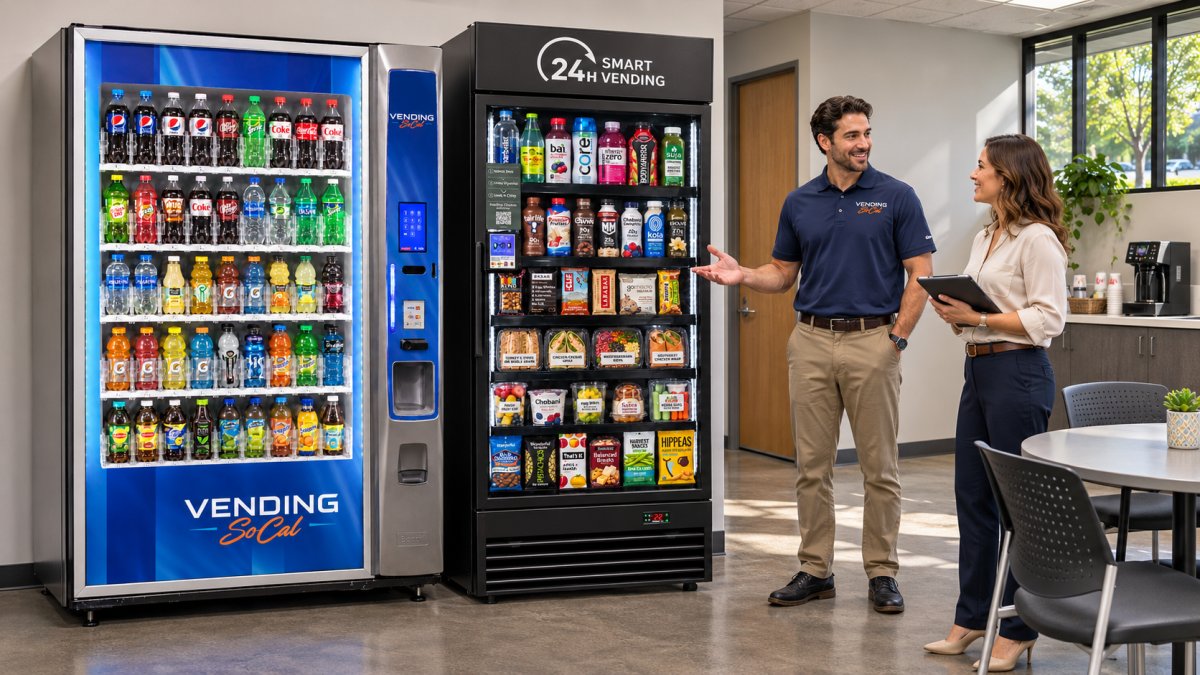
Under a full-service arrangement, a business that hosts vending machines is responsible for providing a safe indoor space, access to a standard electrical outlet, reasonable access for users and service staff, a point of contact, and prompt reporting of problems. Vending SoCal retains ownership of its equipment and handles installation, stocking, maintenance, and repairs. Employees pay for products unless the business chooses a subsidy, and the written service agreement governs the exact terms.
Key Takeaways
- Hosts supply space, power, access, and communication. They do not manage inventory, money, restocking, or repairs.
- Qualified locations receive equipment, delivery, installation, stocking, maintenance, and repairs without upfront or recurring service fees.
- Responsibility for damage, theft, and vandalism depends on the agreement and the circumstances.
- The workplace owner or an authorized facility manager approves the location before installation.
What Is a Business Responsible for When Hosting Vending Machines?
The host's role is small and practical. The business provides the location, keeps access open, and tells the provider when something changes or breaks. Specific host obligations are set by the written service agreement, so review it before installation.
The business is not expected to buy stock, collect payments, refill machines, or fix them. Employees, visitors, or guests pay for the products they choose. Many businesses start with this employee-paid setup because it offers convenient refreshments without an employer-funded product budget. Others discuss a possible subsidy during the initial evaluation.
Host Business vs. Vending Provider: Responsibilities Compared
| Responsibility | Host Business | Vending SoCal |
|---|---|---|
| Machine ownership | None | Retains ownership of its equipment |
| Space | Provides a safe indoor location | Recommends a suitable setup |
| Electricity | Provides a standard outlet | None |
| Installation | Approves the location | Delivers and installs |
| Inventory purchasing | None | Buys and manages product inventory |
| Restocking | None | Stocks and rotates products |
| Pricing | Does not routinely manage vending prices; may agree to subsidy or pricing terms | Manages retail product pricing, subject to agreed pricing or employer subsidy arrangements. Product selection and mix are handled separately. |
| Maintenance and repairs | None | Handles both |
| Problem reporting | Reports malfunctions and complaints | Evaluates and services |
| Service access | Keeps reasonable access open | Schedules service around site rules |
| Optional subsidies | Decides whether to subsidize products | Discusses options |
| Damage, theft, vandalism | Depends on agreement terms | Depends on agreement terms |
Liability for damage or loss is not assigned automatically. The written service agreement should spell it out.
What the Business Must Provide
- A suitable location. Choose a safe indoor area with room for users and for service. The guide to placing vending machines in your workplace compares breakrooms, lobbies, and warehouse break areas.
- A standard electrical outlet. Place the machine close to power.
- Reasonable access. Users and service personnel both need to reach the machine.
- A point of contact. Name one person who can report issues and answer questions.
- Prompt updates. Report machine problems, access-rule changes, and planned building changes such as construction or a closed area. Also mention shifts in headcount or demand.
- Approval. The workplace owner or an authorized facility manager approves the location before installation.
Staff do not count stock, handle money, open machines, or repair them.
What Vending SoCal Handles
For qualified locations, Vending SoCal provides the machine, delivery, installation, stocking, maintenance, and repairs without upfront or recurring service fees. Hosts supply power and space. Product rotation and customized selections are part of the service, and the mix is adjusted based on sales patterns and employee feedback. Product suggestions are examples, not fixed lists.
Restocking follows demand, product popularity, shifts, and service logistics rather than a universal calendar. For a deeper look at upkeep, read who is responsible for vending machine maintenance at work. Warehouses and plants can review the industrial vending service, and offices can review the office vending service.
Who Pays for Electricity and Vending Products?
The host provides the electrical outlet, so the machine draws power from the host's building. Vending SoCal does not state a specific electricity cost, and the agreement is the place to confirm how power is handled.
Products are paid for by the people who buy them. "No upfront cost" describes the service to the host, not free snacks and drinks. A business may subsidize products if it chooses, and that is an optional decision made with the provider. Many machines accept cash, credit cards, debit cards, Apple Pay, Google Pay, and tap-to-pay, and payment options depend on the machine and setup used at the location.
Some hosts ask about being paid for placement. Any commission or revenue-sharing arrangement, where available, is discussed individually based on the location and proposed service terms.
Who Is Responsible for Damage, Theft, and Insurance?
Responsibility for machine damage, vandalism, theft, or stolen products is not automatic. It depends on the agreement and the circumstances, so the agreement should address it clearly.
If you notice damage or suspected theft, report it through your established contact process, with the machine's location and what you saw. The provider can then inspect the machine and decide on follow-up. Staff do not investigate losses or count stock.
Vending SoCal carries business insurance, and property managers may request a certificate of insurance to review coverage. Ask whether the host needs any additional coverage, and confirm any requirements in writing.
Permits, Safety, and Accessibility Considerations
Good placement protects users and your building. Use these guidelines:
- Keep walkways clear so the machine does not create a bottleneck.
- Leave exits and exit routes unblocked.
- Keep the machine reachable for users, including people with disabilities. Available floor space alone does not make a placement accessible, so review the position in context. Federal ADA Standards for Accessible Design are a useful reference.
- Place the machine near an outlet and away from food prep zones.
- Leave room to open the door for service.
Vending SoCal handles permits and licensing applicable to its vending operations. Host-specific building approvals, property requirements, or tax obligations should be confirmed separately with the appropriate authority or professional. This does not mean every host business needs its own vending permit. For space planning, see how much space you need for vending machines at work.
What Should Be Included in a Vending Service Agreement?
Because the written agreement governs host obligations, read it carefully before installation. Verify these items:
- Ownership. Confirm the provider retains ownership of the equipment.
- Costs. Confirm there are no upfront or recurring service fees for your qualified location.
- Maintenance. Confirm who handles upkeep and repairs.
- Issue reporting. Identify who to contact and how.
- Access. Describe service access and any site rules.
- Pricing and subsidies. Note who sets product prices and whether any subsidy applies.
- Damage and insurance. Look for clauses on damage, theft, vandalism, and insurance.
- Term, cancellation, and removal. Understand how the arrangement ends and how machines are removed.
- Commissions. If a commission is discussed, confirm it in writing.
Changes such as relocating a machine depend on the site and the agreement, so ask about them up front.
How Vending SoCal Makes Workplace Vending Easy
Vending SoCal is a locally operated Orange County company with over 10 years of experience. It reviews each location individually, looking at daily traffic, purchasing demand, facility type, shifts, available space, electricity, and route feasibility. It then recommends a snack, drink, or combo setup where the site fits.
Qualified hosts avoid buying machines, managing inventory, or handling service calls. That leaves your team free to focus on its own work.
Request a Free Workplace Vending Evaluation
Request a free workplace vending evaluation and share your location, headcount, hours, and available space.
Frequently Asked Questions
Does a business have to buy the vending machines?
No. Vending SoCal retains ownership of its equipment, and qualified locations receive it as part of the service arrangement.
Who pays for electricity?
The host provides the standard outlet the machine uses. Confirm any specifics in the written agreement.
Who restocks and maintains the machines?
Vending SoCal handles stocking, product rotation, maintenance, and repairs. Staff do not refill or fix machines.
Is the business responsible if a machine is damaged?
It depends on the agreement and the circumstances. Report any damage promptly through your contact process.
Does the business need vending machine insurance?
Vending SoCal carries business insurance, and property managers may request a certificate of insurance. Confirm any additional requirements in the agreement.
Does the employer pay for snacks and drinks?
Not unless the business chooses to. Employees pay for products by default, and a subsidy is optional.
Can the business request different products?
Yes. Product mix can be customized and adjusted over time based on sales patterns and employee feedback.
What happens if the business wants the machines removed?
Removal terms are set in the written service agreement, so review that section before installation.
Frequently Asked Questions
No. Vending SoCal retains ownership of its equipment, and qualified locations receive it as part of the service arrangement.
The host provides the standard outlet the machine uses. Confirm any specifics in the written agreement.
Vending SoCal handles stocking, product rotation, maintenance, and repairs. Staff do not refill or fix machines.
It depends on the agreement and the circumstances. Report any damage promptly through your contact process.
Vending SoCal carries business insurance, and property managers may request a certificate of insurance. Confirm any additional requirements in the agreement.
Not unless the business chooses to. Employees pay for products by default, and a subsidy is optional.
Yes. Product mix can be customized and adjusted over time based on sales patterns and employee feedback.
Removal terms are set in the written service agreement, so review that section before installation.